-
CENTRES
Progammes & Centres
Location
16775 results found

The US needs to seriously reconsider its policy of advising African countries about how they go about their foreign policy or risk losing any goodwill it has left in the region. Also, perhaps, Obama's Africa visit has come too late in the day and his promises are too little to entice the Africans.
Barack Obama's strategic problem now is to reassure east Asian allies of the strength of American commitment to them without provoking an unwanted conflict between the US and China.
Myanmar hosted US President Barack Obama this week in Nay Pyi Taw for the ASEAN and East Asia Summit. Obama, who visited the former 'paraiah State' for the second time in three years, said that the reforms in Myanmar were real but incomplete.
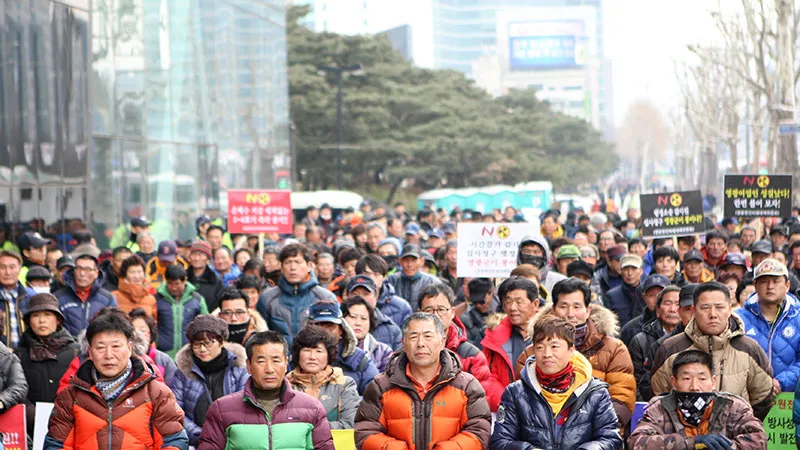
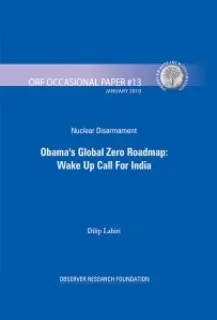
His 2009 speech electrified the world when he announced "as the only nuclear power to have used a nuclear weapon, the US has a moral responsibility to act."
As US President Obama reshapes America's relationships in the Middle East, new equations are likely to emerge within the region and more Space will be created for China to win over the old allies of the US.
The basic purpose for Obama to have undertaken the nocturnal visit to Kabul is to show the Republicans as the misguided war mongers who thrust two wars on a nation in recession. True, Afghanistan was a war of choice but now unpopular at home. He would like to appear to be the leader who called back the troops.
Even as the United States tries to retract from being labelled the global policeman, it still cannot ignore the calls that come from being the sole superpower in the world, notwithstanding debates about its relative decline.
Following President Obama's State of the Union address, polls show Obama leading the Republican Presidential frontrunners Mitt Romney and Newt Gingrich. The next few months will tell us whether Obama will be able to convert this into another Presidential term.
At the Obama- Xi talks, there has been some movement forward on the so-far intractable issue of Hydroflurocarbon (HFCs) emissions. Washington and Beijing have agreed to work together to eliminate the use of HFCs and persuade countries like India to join this effort. This could mean trouble for the tenuous alliance of BASIC.
It might be an interesting detail for a US President who has come up the Civil Rights ladder. The role caste politics in India has played in boosting Indo-US ties in recent years.
The first meeting of the ORF-Pacific Council Task Force on India-US Relations was held at Jamnagar on March 18-19, 2004.
The Afghan Election Commission has set the next presidential elections for April 5, 2014. This move has been welcomed in the country as well as by the international community as a positive development.
The advent of yet another coalition regime at the Centre has suddenly raised questions about ¿coordination¿ between the party and the Government. Already there are talks of power-centres, in turn setting a bad precedent at one level, and leaving a bad taste at another.
Reports that the Centre is considering the winding up of the Task Force on the possibly over-ambitious project for the inter-linking of rivers need to be received with concern. It is nobody's case that the report, or the project, should be accepted in toto,
Whoever thought that ¿terrorising¿ the people of one¿s own country through dictatorial methods is equivalent to terrorism, as generally understood, is learning a new lesson in Iraq. With the failure to prove that Saddam Hussein had weapons of mass-destruction even months after the despot¿s exit, the US is finding that to the average Iraqi, it is not a ¿liberator¿ but an ¿occupier¿.
Egypt, because of its huge population and central role in history has traditionally been the heart of "Arab Street" in world affairs. It has always been the cultural capital of the Arab world - Egyptian Arabic is understood throughout the Arab world,
Tax heavens will exist as long as corrupt corporations and looting dictators do. The only way in which tax heavens can be countered is through technological development, and systems like Swift, which increase transparency of transactions, suggested noted investment analyst Mr. K. Arunachalam.
The tragedy of the Rohingya Muslims in Myanmar has got much attention from the Organisation of Islamic Cooperation. Indonesia, the world's largest Muslim nation and a leader of the Association of Southeast Asian Nations, has sought to promote a constructive engagement between the OIC and Myanmar, which is a member of the ASEAN, on the Rohingya problem.
A week ago, oil giant Chevron-Texaco's Nigerian unit decided to keep its production of 23,000 barrels a day shut till its oil facilities attacked and damaged by members of the Ijaw tribe are found to be in order. Disruption of oil operations, hostage taking, inter-ethnic clashes are not new for Nigeria¿s oil-rich Niger Delta.
There will be no respite from rising international oil prices, according to internationally renowned oil expert Dr. A.F. Alhajji. Delivering a lecture at Observer Research Foundation (ORF), New Delhi, on July 26, 2005,
Though India and Pakistan have been working on improving bilateral trade, the recent meeting of Experts' Group on Trade in Petroleum and Petrochemical Products come in the wake of the ongoing energy crisis in Pakistan.
Though the imbroglio over the strategic sale of BPCL/HPCL is far from over, the mandarins within the government have come up with yet another proposal to meet the year's disinvestment targets. A booming stock market has inspired the bureaucrats
In mid-June, the oil giant Shell was forced to declare force majeure in its Nigeria unit excusing it from liability and contractual obligations due to sabotage by local militias on its oil pipelines.
Nepal is in deep turmoil. At the centre is the 8-year-old Maoist insurgency, the cost of which has been enormous ¿ 10,000 lives, a disrupted economy and a sharply fragmented society along ethnic, caste, regional and religious lines. The worst chaos is in the political arena where the government stands discredited and paralysed and the State is gradually sliding towards total collapse.
Like the US, India, too, is grappling with its own version of the fiscal cliff, the biggest challenge before Finance Minister P. Chidambaram. The UPA has exhausted its fiscal space even as growth has fallen to a 10-year low. The challenge is to effect a sharp reduction in the fiscal while not adversely affecting quality public investment, which can in turn give a fillip to private investment.
The gap between India and China in this regard is quite big. So it makes sense for India not to make any peaking commitment until it meets the backlog of providing basic energy needs to the majority of the poor
In short, the principle of subsidiarity demands that India’s national government take some cues from global trends and cede more powers to the city government in capital territory. The current bill by the Centre not only betrays the concept of “cooperative federalism” often espoused by the Union government, but will further complicate governance in India’s fastest growing mega-city.
The COVID-19 pandemic has once again highlighted the increasing frequency of spillover of infectious disease from wild animals into humans. The SARS coronavirus type 2 (SARS-CoV-2) almost certainly “jumped” into humans from bats, evolved towards efficient human-to-human transmission, and caused a global pandemic. Ecological changes such as deforestation, increasing greenhouse gas emissions, and climate change are important drivers of disease
Few days before the fourth anniversary of the Mumbai terrorist attacks, Lashkar-e-Tayyeba (LeT) is planning a two-day training convention at Muridke (near Lahore), its former headquarters from where the terror attack was planned and executed.
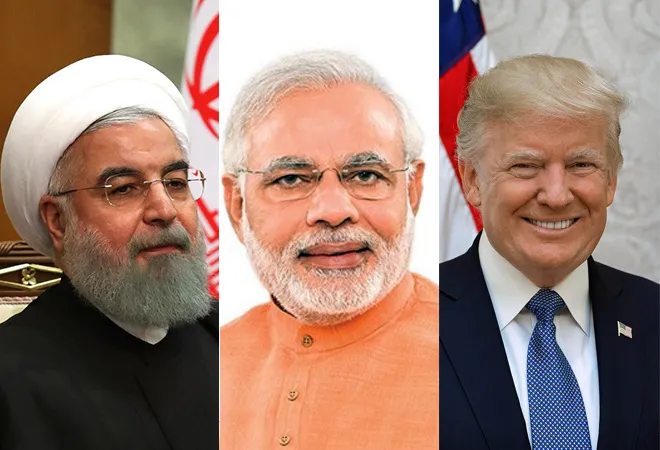
If India aspires to be a 'leading power', it may soon have to choose between its strategically autonomous goals, and those which the Trump administration has in mind for the region.
Kautilya said that the worst enemy is the enemy within. In Arthshastra, he stated, ¿Arrows may not kill a soldier but skillful intrigue can kill even those in the womb.¿
As a responsible nuclear power, India is ready to work with like-minded countries in strengthening the global non-proliferation system. That was the clear message from Prime Minister Manmohan Singh at his recent joint press conference with the visiting German chancellor, Gerhard Schroeder.
The Finance Minister has addressed the various deficiencies in agricultural production which are responsible for high food inflation. But the actual measures announced are not enough to shake up agriculture and as Dr MS Swaminathan pointed out - it will not make the youthful population take up farming.
In the aftermath of the serial train blasts in Mumbai on July 11, in which 179 people were killed and 772 wounded, the question uppermost in public mind is ¿why has India become the most affected target of terrorism?¿ Ever since June 1985, when Air India¿s ¿Kanishka¿ was blown up over the Ireland coast, India¿s share of terrorists¿ incidents and civilian casualties has risen to become the highest in the world.
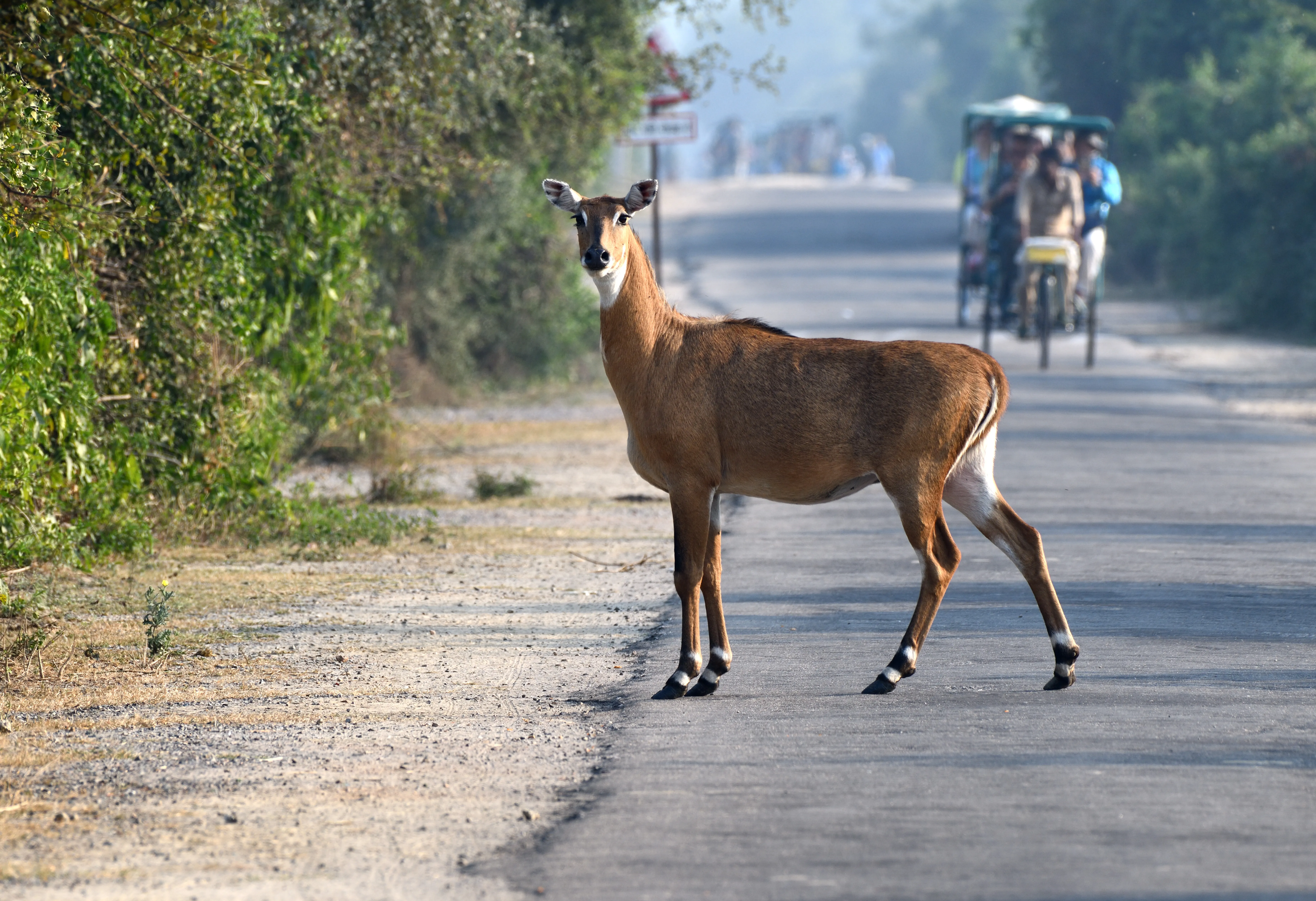
Can we bring ‘nature’ beyond the confines of just protected forests into a city, while allowing the wildlife with it?
It would be premature to blame any one party or organisation for the violence in Muzaffarnagar. Though it is apparent that, once the violence erupted, parties have been trying to make political capital from it. Primary blame must fall on the Samajwadi Party which has been ruling the state for the past one year.
Relaxation of China's One Child policy reform proposed in Third Plenum is not a full proof plan. President Xi Jinping has a perfect analogy with Deng Xiaoping in grappling with a compulsion of sorts. Deng was faced with a bulging population; Xi finds the challenge in ageing one.
The coming together of cognitive computing, digital devices with capabilities to touch, feel, smell and hear and super-speed Internet is poised to transform telemedicine.
One does not need a historiographer's findings to understand the central problem that the Indian state is facing in its defence procurement in current times. It lies with intentions, structure and accountability.
The primary aim of the ISPS Code was to strengthen the security of international shipping, ports, waterways and the high seas by directing the governments, shipping companies and port operators to enhance security of the maritime edifice.
This brief analyses the impact of the Christchurch Call to Action, issued to gather countries and technology companies to stop the use of the internet for disseminating violent extremist content. The Call was the result of a summit organised shortly after a terrorist attack in New Zealand in March 2019. This brief finds that the Call lacks clear conceptual definitions and is singularly focused on social media platforms. It also raises questions a
That India and China are rivals in Myanmar is a widely accepted premise. Much of the Indian and international reporting on Prime Minister Manmohan Singh's just-concluded visit to Myanmar reflected this understanding.