53 results found
अण्वस्त्रांचा प्रश्न पुन्हा जागतिक सुरक्षेच्या चिंतेच�
दुनिया एक नए शीत युद्ध की ओर बढ़ती नजर आ रही है लेकिन इस बा�
The nuclear question has returned to the centre of global security anxieties, as great-power rivalry, renewed testing signals, and expanding arsenals
अमेरिका पुन्हा आण्विक चाचण्या सुरू करण्याचा विचार करत आ�
The US plan to restart nuclear testing signals a shift in strategic posture with potential ripple effects for India’s deterrent choices.
भारतासमोर असलेल्या तीव्र अडचणी आणि चीनच्या तुलनेत अण्व�
The acute challenges India faces and weaknesses in its nuclear capabilities vis-à-vis China mandate an accelerated and dedicated commitment to overco
प्रॉक्सी वॉरफेअर आणि राजकीय मुत्सद्देगीरीच्या पार्श्व�
The latest episode of India-Pakistan hostilities exposes the erosion of nuclear deterrence in the face of proxy warfare and political brinkmanship
Recent Russia-North Korea interactions indicate a clear understanding between the two, likely involving North Korean military and diplomatic support a
সর্বশেষ সিপরি রিপোর্ট বিশ্বব্যাপী অস্ত্রাগারের আধুনিক�
स्टॉकहोम इंटरनॅशनल पीस रिसर्च इन्स्टिट्यूट (SIPRI) चा अलीकड�
The latest SIPRI report indicates the concerning trend of modernisation and growth of arsenals across the globe.
अलीकडे चीनच्या सैन्यातील विविध विभागांच्या वरिष्ठ पदां
The recent leadership rejig indicates that by being tough on graft, Xi is overhauling PLA’s combat capabilities for the looming battles ahead
With China potentially overturning the moratorium on nuclear testing, India must augment its military strength in the nuclear and missile domains to t
বৈদেশিক সম্পর্ক সংক্রান্ত আইন বা ফরেন রিলেশনস ল-এর মাধ্য
Evidence suggests that China’s approach to its nuclear strategy is evolving. It is vital to understand the drivers of these changes.
फॉरेन रिलेशंस लॉ (विदेशों से संबंध को लेकर कानून) के साथ च�
With the Foreign Relations Law, China has added a new weapon to its arsenal against sanctions and further consolidates the Party’s grip on foreign e
Despite Pakistan’s deployment of a wide range of nuclear capabilities as part of its FSD strategy, there is no need for India to be alarmed
Amidst Pyongyang’s spy satellite and Beijing’s hegemonic aspirations, the convergence of Seoul and Tokyo’s perspectives is changing the dynamics
भले ही आज की नई नई तकनीकें इंसान की अक़्ल की बराबरी करने क�
The use and deployment of nuclear weapons must firmly remain in the hands of human beings and never be delegated to any technological marvel, no matte
A recent report by Pentagon states China’s intention of tripling its nuclear arsenal by 2035. This has significant implications for India
India has a formidable arsenal of digital skilling programmes for youth, but significant gaps remain, which are a cause of concern for young Indians,
An arms race seems to be brewing in the Korean Peninsula as both North and South Korea are expanding their arsenal at an alarming rate.
Silo-based missile capabilities increase the odds of survivability for China’s small arsenal and are integral to Beijing’s nuclear modernisation e
इस हालत में फाइटर एयरक्राफ्ट पर 15-20 अरब डॉलर का भारी-भरकम ख़�
Rapid transformation in disruptive technologies is going to change the nature of nuclear deterrence. Artificial intelligence, cyber weapons, hypersoni
An internationally accepted ‘redback’ and financial institutions under Beijing give China the requisite arsenal to project economic influence and
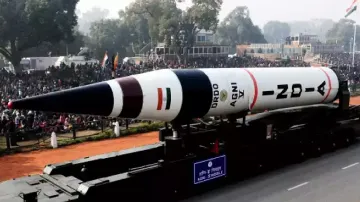
Our hypersonic Shaurya and canisterized Agni capabilities aim to preserve strategic deterrence and thus maintain stability
An end to the New START in 2021 will leave the arsenals of the two major nuclear powers unencumbered by any pact
China’s evolving security dynamics with the United States have compelled it to rethink its nuclear strategy to achieve effective deterrence. It is aiming to modernise its nuclear arsenal and increase its nuclear ambiguity through conventional-nuclear entanglement. Ambiguity will increase the risks of mischaracterisation and can have a destabilising impact on the Indo-Pacific region. This paper highlights two areas where India ought to be most c
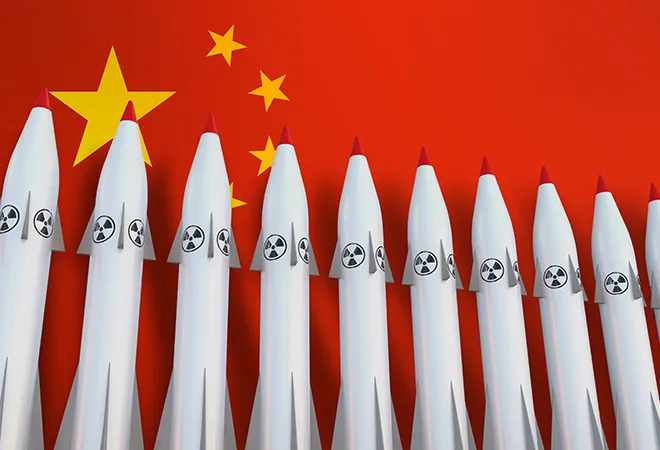
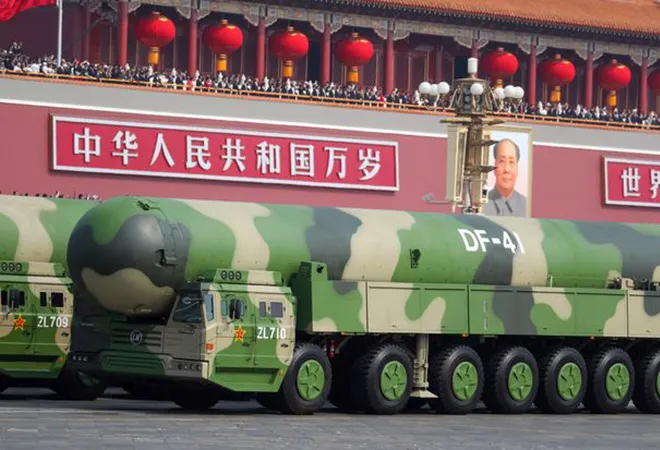
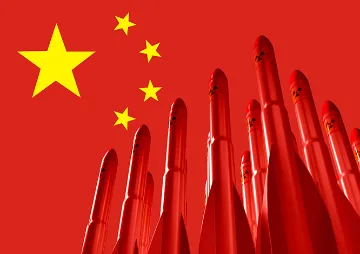
China’s nuclear weapons arsenal has grown and modernised over the recent years, and current estimates say the country has 350 operational warheads ready for delivery, over 248 land-based ballistic missiles, and 72 sea-based ballistic missiles. China also has 20 nuclear gravity bombs and additional warheads intended to be armed on land- and sea-based missiles. This brief outlines a history of China’s nuclear weapons programme, scrutini
My revered teacher late professor Matin Zuberi had once remarked that major states in global affairs, real or aspiring, end up possessing superfluous arsenals often times through superficially planned and mostly ad hoc manners.
Defence structures around the world are seeing a technological upheaving as new and emerging technologies like artificial intelligence (AI) are being added to military arsenals. However, military AI largely lacks precision and is often developed without any threat-modelling which takes gender into account, examples of which are already being seen in civilian applications of AI. Translated into a conflict environment, deploying such AI systems cou
In the conventional escalation along the LAC, India cannot afford to ignore China’s expanding nuclear arsenal
Even as India has had a long-running debate about many aspects of its nuclear doctrine, most importantly, its No First Use (NFU) policy, the country continues to maintain the NFU. This paper makes a critical assessment of recent arguments made by Christopher Clary and Vipin Narang that India may be reconsidering its NFU policy because of counterforce “temptations”. The paper dissects the evidence they present—statements made by mostly retir
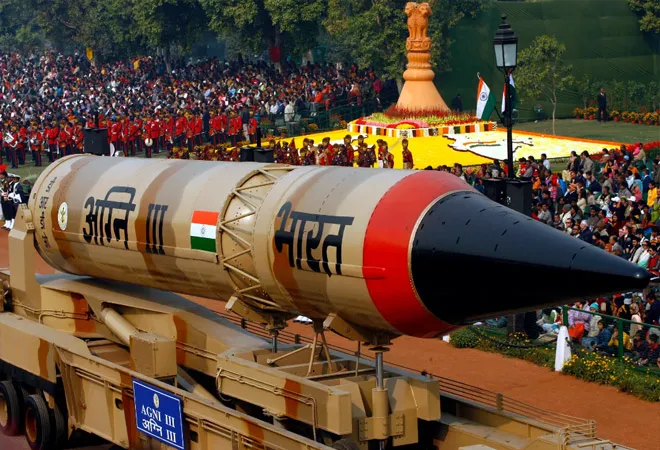
Obsolescence and numeric deficits in the Indian arsenal are a result of a host of factors, from planning to procurement processes. The blame game is easy within defence establishments as any stakeholder can accuse the other without much accountability.
The country has good reason to want first-strike capabilities. But the actual state of its arsenal suggests that it won’t get them.
A Pentagon report highlights a transformation in both the quantity and the quality of its arsenal, which India must note
Through concerted attack on India from the usual suspects in recent days, India is first being made the whipping boy for the failure of the American non-proliferation lobby in their own country. Then it has to accept blame for the complex relations the U.S. shares with Pakistan and China that is driving these Asian allies to increase their arsenals. Can we get real, please?
Deterrence 3.0 has to create a new consensus for a multipolar nuclear world, a world not of nuclear parity but asymmetry in terms of both sizes and nature of arsenals.
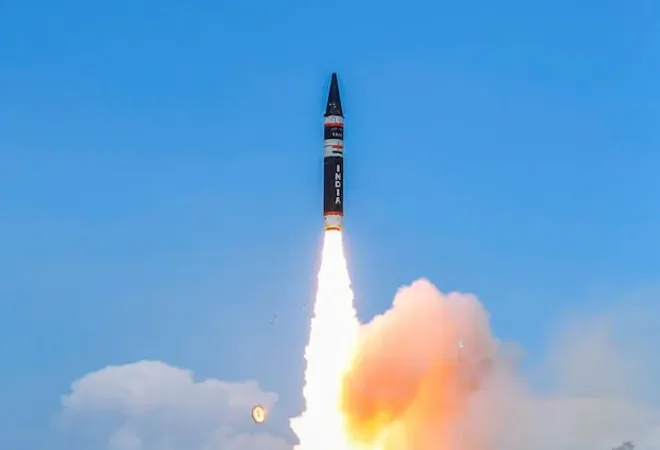
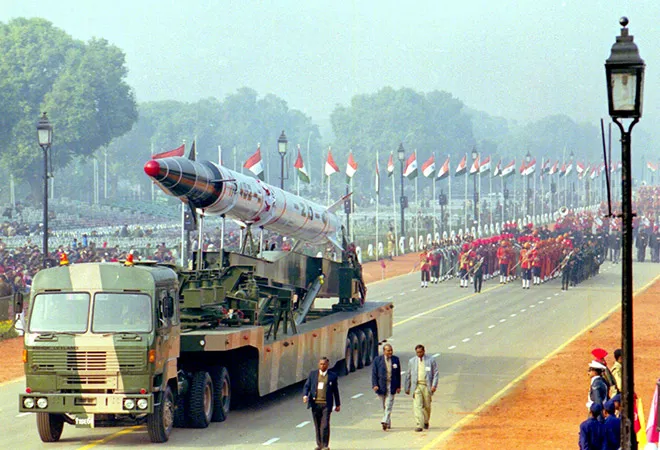
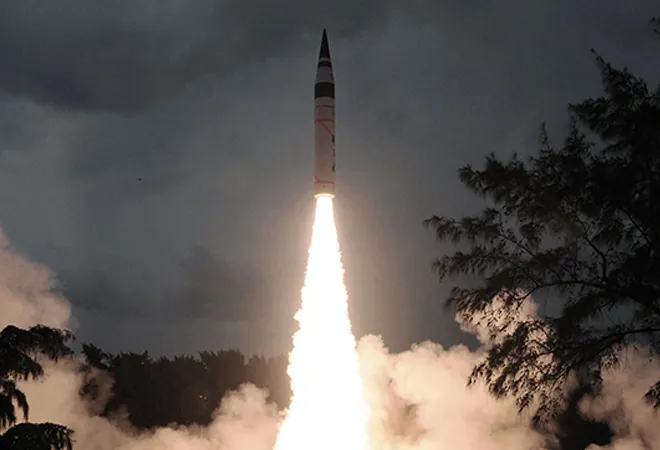
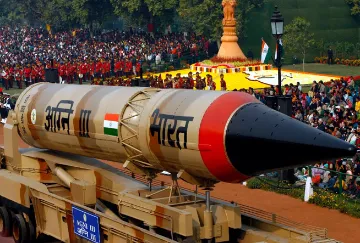
As a China-specific missile, the successful test of the Agni-5 MIRV missile enables India to reach a milestone
With more nations building their nuclear arsenal, the Indo-Pacific is becoming a high-risk place.