1578 results found
During his visit, PM Modi and President Mohamed Muizzu reviewed the entire gamut of relations and agreed to strengthen the multifaceted relationship by implementing the Joint Vision Document
The historic election verdict offers Narendra Modi an unprecedented opportunity. A truly transformative election that was fought on the issues of leadership, economy and governance has raised unprecedented hope and expectations among ordinary Indians. This is a verdict for change and Modi represents the face of that change.
The next round of bilateral summit entails a US presidential visit to India. Should Modi become Prime Minister, then he and his Govt would expect the visiting President to lend greater clarity than Ambassador Powell's meeting now would entail.
PM Modi's queue for a reality check to balance diplomacy, with domestic interests, for keeping the economic interests higher.
In the light of the fact that India is not a member of the Trans-Pacific Partnership, it is important for the country to forge a deal in RCEP. In the current scenario, there have been increasing attempts by Indo-Pacific region members to voice growing concerns regarding Non Tariff barriers hindering trade prospects in the regional bloc.
After the loss in Bihar, now it is incumbent on Modi and his team to start rolling out reform, iron out the wrinkles and implement his promises, otherwise, 2019 will be a distant dream. The days of waiting are over.
Prime Minister Narendra Modi, leading a majority government after a gap of 25 years, took charge of the country on May 26 this year at an impressive swearing-in ceremony.
Parrikar's off-the-cuff remarks have strengthened China's case against India on both counts.
Building one hundred smart cities, towns or townships will not change India's urban landscape much. India needs an overall smart, well-discussed, thought-out, and lastly effective and efficiently implemented urban development strategy in a holistic urban policy framework. Now is the time to shape it.
Indian concerns over a 'rising China' is more about China's 'increasing influence' in the South Asian neighbourhood than over the possibility of a revived border episode or a return to war between the two Asian giants.
Prime Minister Narendra Modi's recent visit to South Korea has further strengthened and expanded India-Korea strategic and economic ties. Modi's call to take the bilateral relationship to a higher level was responded positively by the South Korean leadership.
Whether Indians have great expectations from their new Prime Minister Narendra Modi or not, India's neighbours, who see in the emergence of Modi from a grassroots-level politician to become the Prime Minister of the world's largest democracy, seem to have expectations and aspirations unmatched in the recent past.
If anyone in southern Tamil Nadu, or across the Palk Strait in Sri Lanka, thought that there would be a grandiose shift in India's policy towards the southern Sri Lankan neighbour under a new, BJP dispensation, Prime Minister Narendra Modi has given a lie to their hopes and claims.
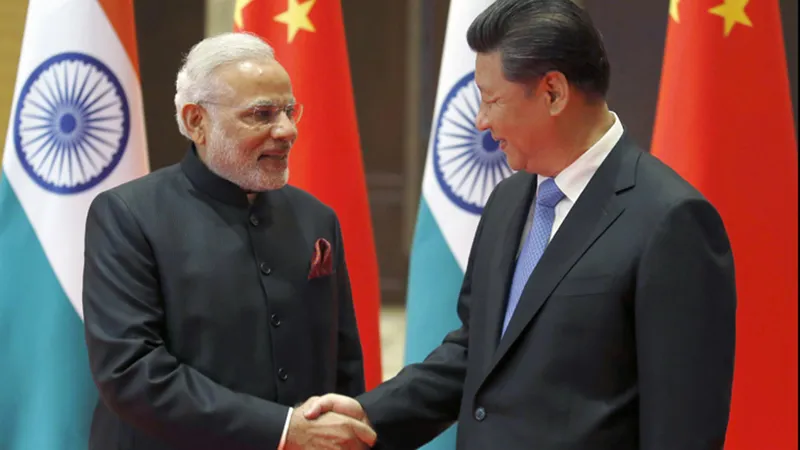
Sino-Indian relations have entered uncharted territory as New Delhi seeks to engage Beijing strictly on reciprocity.
Taking care of the urgent requirements, the new Cabinet Committee on Security of the Modi government should insist on a radical overhaul of the national security system before funding new acquisitions.
Unlike the Indo-Pacific where the payoffs are limited, West Asia offers India vast energy resources that are vital for development and investment opportunities.
After Sushma Swaraj's successful visit to Beijing, which managed to create a certain degree of 'warmth' in China's attitude towards India, now all eyes will be on Mr Modi's visit to China in May. But before that the border talks that are going to be held soon will play a key role in determining the course of events.
Speculation was rife that the bilateral relationship had lost its strategic sheen and had become a transactional one, where Russia was just a convenient one-window stop for some military equipment.
There is hope among the politicians of various political groups in Kashmir as well as the people of Kashmir that Narendra Modi as Prime Minister would take some decisive action in keeping with their expectations. Modi himself has moderated his stand to that there should be a discussion on Article 370.
France is set to host the most important of climate conventions at the end of this year, one that will determine the successor to the Kyoto Protocol. This makes for an important area where India and France can cooperate.
As the Modi government brings in a renewed push to India's Look East policy with an "Act East" policy, Myanmar's geostrategic position becomes all the more important for India to put the necessary connectivity links with the country and the wider region.
The interesting thing is that almost all the current crop of leaders who enjoy connect with their people at the regional level are prime ministerial aspirants in 2014. Everyone is positioning himself or herself in subtle ways already.
Mr Narendra Modi's decision to invite the Head of Governments of India's neighbouring countries for his swearing-in was appreciated by Dr Sanjaya Baru, former Media Advisor of Dr Manmohan Singh. Modi's emphasis on the economy was also noted.
Modi has redefined strategic autonomy as an objective that is attainable through strengthened partnerships.
Modi himself is on record saying that it would take him 5-7 years to fulfil his agenda. That is a reasonable amount of time. The issue, however, is not how much time he deserves, but how much he will actually get, and no one can forecast that.
The real test for any government is elections - both state and central. The Narendra Modi government faces one later this year when elections will take place to the Bihar.
Looking at a decade of India-Bangladesh partnership
The Chinese understanding about the border has changed many times and while a swap agreement would be a feasible solution to the issue, the Chinese have asked for more concessions on the East, says Dr. Manoj Joshi
India should not lose sight of the fact that it needs strong regional partnerships if the challenge of China’s rise is to be managed effectively.
His party claimed to be different from the effete government led by the Congress and its foreign policy therefore needs to be held to a higher standard.
Whether New Delhi likes it or not, it is becoming increasingly clear that domestic issues are affecting ties with its neighbors and partners and that the costs of this are increasing.