"; exit; ?>
1578 results found
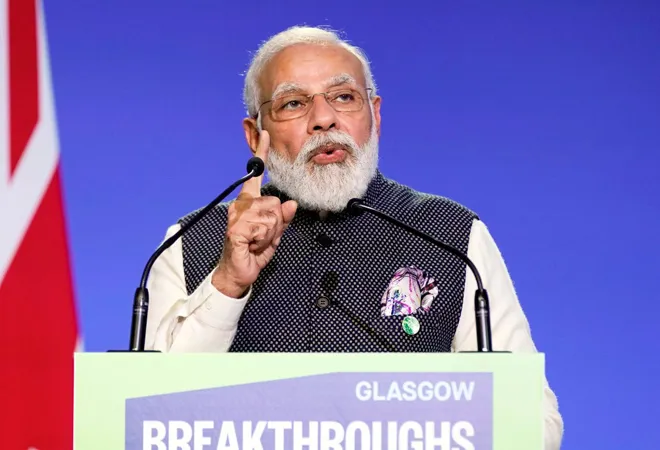
Prime Minister Narendra Modi's fluent Hindi, through which he engages foreign interlocutors and the rhetorical instinct for catchy phrases, is helping expand India's diplomatic lexicon.
In the post BRICS narrative, Modi government’s recent policy towards Pakistan has been described as a "game changer" but has it's own limitations
Modi's forays into the global investment hot spots will pay dividend only if we reform ourselves, if we decide once and for all that this is the economic agenda which we need to chart out for future proofing India, one that improves our structural inadequacies bogged down by an iron willed bureaucracy.
The Chinese and Russians have replaced the US and the West as the lead singers in the international orchestra for Indo-Pak amity. Instead of telling them to mind their own business, Modi appears to have recognised that he can use the weight of Beijing and Moscow to facilitate India's engagement with Pakistan.
No matter how you nuance the outcome of the recent Sharif-Modi meeting, the fact is that continuity, rather than change, marks the Indian PM's new Pakistan initiative. And, Time has shown the success of this strategy because India has, if anything, become more resilient, while Pakistan has come to the brink of collapse.
The prime minister has shown a refreshing approach towards Indian agriculture, but for the real challenges to be surmounted he needs a massive dose of digital technology in all part of the value chain.
Modi needs a credible domestic strategy to ramp up India's maritime infrastructure. A strategy of seeking multiple partners for India's maritime development would help Modi end New Delhi's current defensiveness on China's Maritime Silk Road initiative.
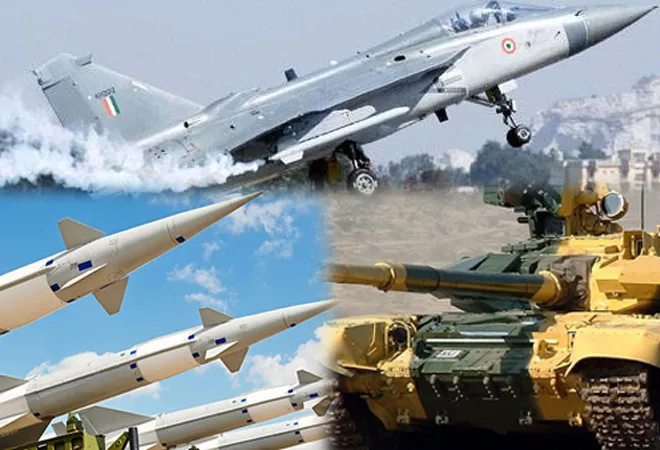
A decade of far-reaching defence reforms under Modi has transformed the Indian military’s reputation and capabilities
Other than neighbouring countries, any future Indian government's principal focus will be on the vast swathe that begins in Sri Lanka and ends in Sydney, and can be described under a variety of rubrics: Look East, Indian Ocean Region, the Indo-Pacific. Countries such as Japan, Indonesia and Singapore present India big windows as it strives to become an economic and maritime power.
To improve South Asian regional cooperation, Modi has three options. The first is to focus on a two-speed Saarc. The second is to build on transregional institutions like the BIMSTEC. However, it is the third way -- unilateral action -- that offers Modi the greatest opportunity. For example, Modi has already proposed to build a Saarc satellite for use by its neighbours.
As he swings across the Indian Ocean this week, Prime Minister Narendra Modi's biggest challenge is not about countering China. His real problem is in Delhi, afflicted by a condition called continentalism, which has proved rather difficult to overcome.
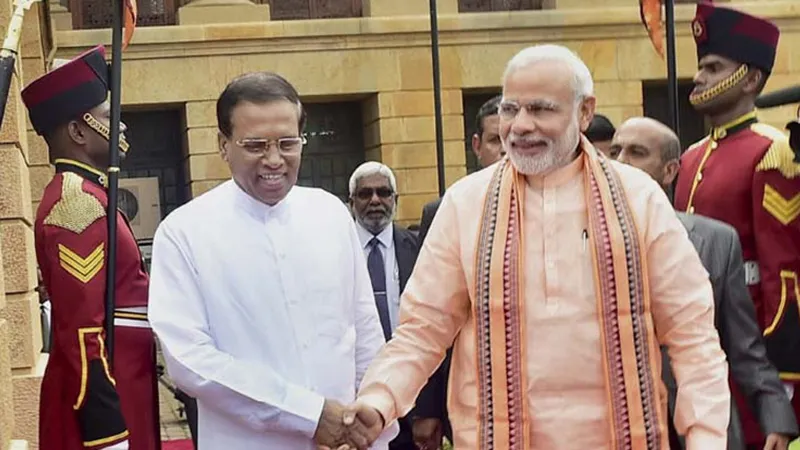
For a bilateral visit at the highest-level after an undesirable and inexplicable gap of 28 long years, Prime Minister Narendra Modi's three-day tour of Sri Lanka was noted as much for what it achieved as for the optics.
New Delhi can't really expect that the Americans can or will solve India's problems with Pakistan. India can better leverage support from the US and other international partners only when it has a strong and sustainable engagement of its own with Pakistan.
The question remains as to how the Modi government will choose to address nuclear liability issue, balancing both the supplier and the domestic concerns. Dilution of the Liability Act is not an option, which is an important lesson learnt globally.
Former Ambassador to Nepal Jayant Prasad says that the relationship between India and Nepal should not depend on the number of projects or the amount of credit sanctioned. It should be a more sensitive political relationship.
Prime Minister Narendra Modi's visit to Vietnam later this week will mark the first visit by an Indian prime minister in the last 15 years.
Modi's visit to Dhaka is likely to focus on greater economic cooperation and engagement. Some of the major highlights of the visit will be on rail, road and water connectivity as well as coastal shipping services.
Modi's foreign visits resemble roadshows with their attendant hype, even though they also have a larger strategic purpose. But like all roadshows there is a time for publicity, and a time to get down to work on the MoUs, agreements, promises and commitments.
If elected to power, Narendra Modi's success on the diplomatic front will depend on an emulation of the last BJP prime minister, Atal Bihari Vajpayee, who successfully carved out foreign policy autonomy from his party's antediluvian world view.
Britain's strong endorsement of India's regional interests marks an important shift in the way two countries relate to each other in the Subcontinent and the Indian Ocean.
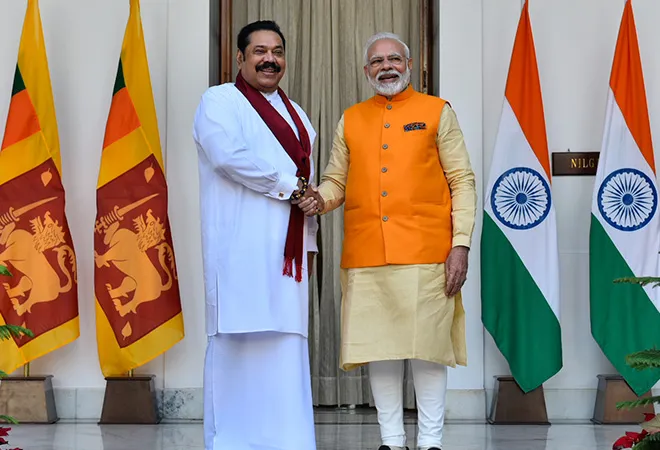
India's Prime Minister-elect Narendra Modi, has set a healthy precedent for all of South Asia to follow by inviting all Neighbourhood leaders for his inauguration, including Sri Lanka's President Mahinda Rajapaksa.
New Indian Prime Minister and Sri Lankan President should attempt to take forward the fishers' talks, promised to be continued/revived by their respective Heads of Government at their Delhi meeting, and then have their officials create the structures and super-structures aimed at implementing those decisions.
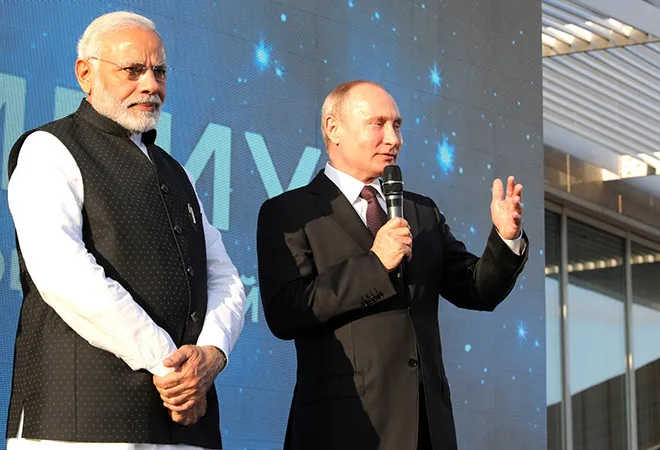
Some nuances can be captured from the opening remarks made in Sochi. Modi thanked Putin for helping India get a permanent membership in the Shanghai Cooperation Organisation. In turn, Putin noted: “Our defence ministries maintain very close contacts and cooperation. It speaks about a very high strategic level of our partnership.”
The expected meeting has seen a focus on what both sides could agree to on the defense side.
To characterise the Modi-Sharif meeting and joint statement in Ufa as a "breakthrough" would be a gross exaggeration. It is another move - a positive move, but only one small move in the larger reckoning - in the elaborate chess game of India-Pakistan relations.
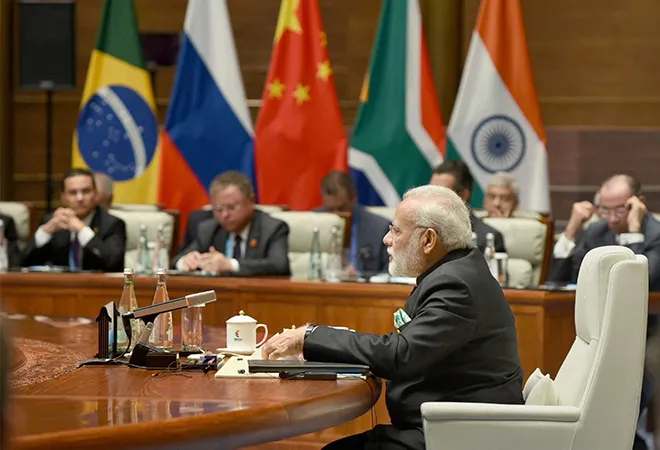
Alternatively, for India, BRICS remains a non-West platform as reiterated by PM Modi at the Russia summit that the organisation must not foster a notion that it seeks to replace international institutions.
The informal nature of the summit — namely the absence of pressure involved in putting out a joint statement, among other aspects — helps create an environment for better understanding of each other’s concerns.
Mr Modi was one of the first to warn the developed world that terrorism was a hydra which strikes rich and poor alike.
We need to restructure government and administration in each of India's 568 districts. The District Collector/Deputy Commissioner, like his ICS predecessor, must become the executive head of the district with all branches of government subject to his/her authority and power. This must particularly include the police.
The issue of NRC, especially in Assam and West Bengal, is inherently linked to the problem of migration.
New Delhi has ambitious plans to bolster its armed forces with French procurements, but it is unclear how these deals are to be delivered
In his Kozhikode speech, Modi managed to underscore how Pakistan was going against the forces of history and how isolated it stood today as a result.
India's newly aggressive strategy puts Gulf money and Israeli weapons first.
The Modi government should have put in place systems, structures and strategies that would make it politically very difficult for any future government to slide back to the pusillanimous policy on Pakistan.