1578 results found
Bilateral ties between India and the United States have strengthened remarkably in recent years and nowhere has cooperation been greater than in the area of security. Despite certain divergences, both countries realise that there is a need for cooperation in combating terrorism to keep their homelands safe from extremist threats. Ever since the election of Prime Minister Narendra Modi in May 2014, India has invested political capital in improving
On June 14, the British newspaper, Times London, broke the story about issuing of British travel documents, on the recommendation of External Affairs Minister Sushma Swaraj in 2014,
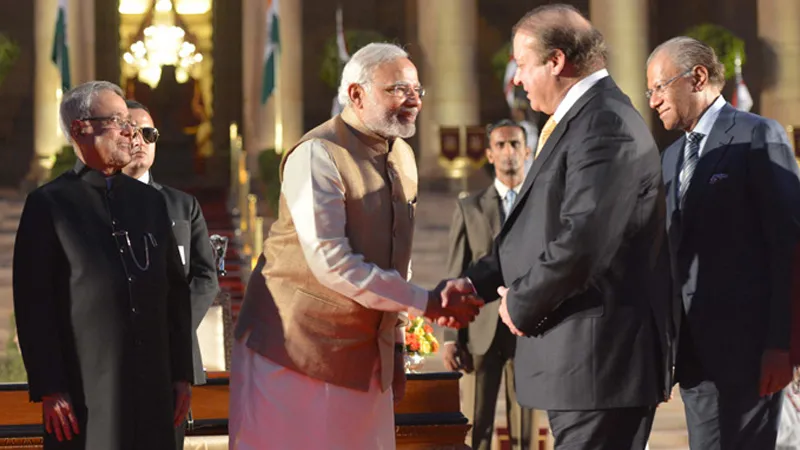
On 26 May, Bharatiya Janata Party (BJP) leader Narendra Modi assumed office after he was sworn-in as the country's 15th Prime Minister by President Pranab Mukherjee.
The Bharatiya Janata Party-led National Democratic Alliance (NDA) government under the leadership of Prime Minister Narendra Modi, which was sworn-in on May 26, has completed 100 days in power.
Mismanagement at home and increasing protectionism abroad have ensured that India has dropped out of that group of fast-growing emerging economies
In the past decade, India has successfully demonstrated the three pillars of effective deterrence—capability, credibility, and communication—in its strategic posture towards China. It has bolstered its defence diplomacy with key partners in South Asia and Southeast Asia, and across the broader Indo-Pacific region, through regular joint military exercises, military officers exchange programmes, frequent high-level diplomatic visits, and the co
Evidence suggests the Maoists have their back against the wall. India can take a leaf from the successful negotiation by the Columbia govt and FARC.
The Indian prime minister’s national security credentials are poised to have benefits at the polls.
The Commodity Transaction Tax (CTT) was imposed on non-agricultural commodity derivatives trading in India from 1 July 2013. This paper investigates the impact of the CTT on some of the efficiency parameters of the commodity derivative markets in India. The authors analysed daily trading data from January 2006 to December 2019 of Multi Commodity Exchange (MCX) of India for five non-agricultural commodities: aluminium, copper, crude oil, gold, and
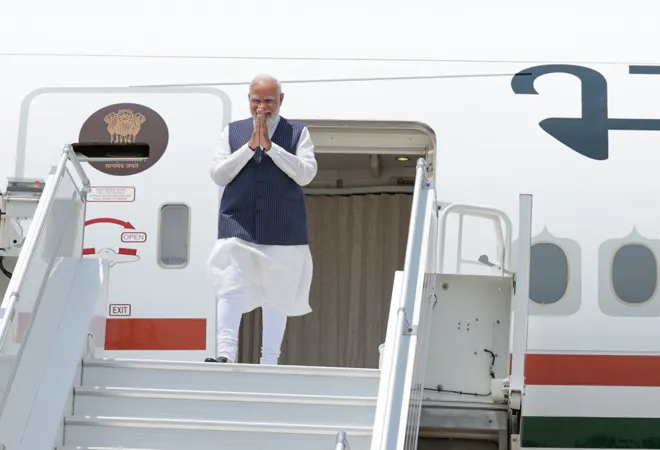
The wide ramparts of Delhi’s historic Red Fort have set the stage for prime ministers to grandstand every year since 1947.
Policy reforms in the field of taxation in the commodity futures market is of critical significance as various taxes and levies are a significant component in the overall cost of transaction.
Many are agnostic to Modi, some may even be sympathetic. Why are they nonplussed?
The four characteristics of the "strong Chief Minister" today - authoritarianism, constitutional subregionalism, a "business-friendly" approach, and political welfarism - were first combined into a coherent whole by Jayalalithaa
Kazakhstan aspires for economic cooperation between China and Europe, and connectivity within itself and with its neighbours.
If the final list of prime ministerial candidates consists of only Narendra Modi, Rahul Gandhi and possibly a third front candidate like Nitish Kumar or anyone else, Arvind Kejriwal will surely be there as the people's candidate. And, in the final analysis, the chances of Kejriwal clinching the highest leadership in the country are brighter than those of Narendra Modi or Rahul Gandhi.
It is now clear that the heft of the Prime Minister’s persona alone or the goodwill he enjoys cannot drive India’s external engagement.
The land amendment bill, brought in by the Modi government, represents a crucial plank of his government's economic agenda to turbocharge Indian growth. The government would find it difficult to execute its Make-in-India policy without improving the legislative framework for land acquisition.
The Modi government is encouraging less dependence on agriculture and the creation of smart cities. To make agriculture more remunerative and attractive, especially for the youth, a lot has to be done - farm credit, access to farm machinery and use of IT. So many villages even today are without power and many more do not have internet connectivity.
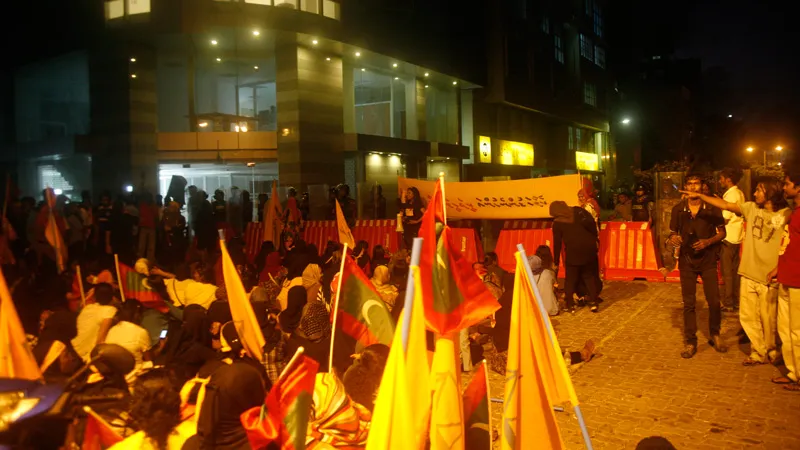
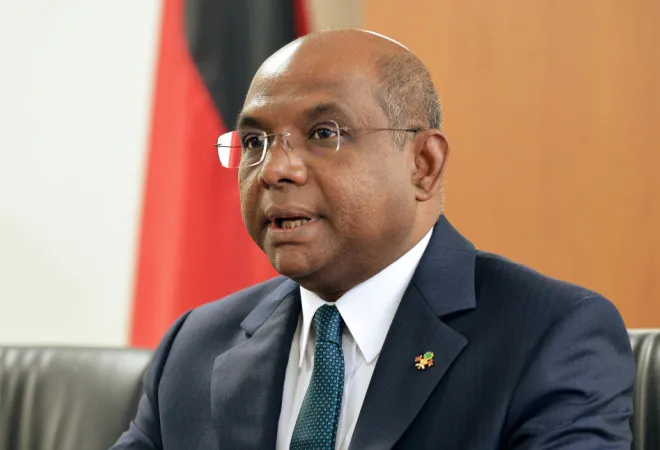
Indian Foreign Minister Sushma Swaraj undertook a two-day weekend visit to Maldives, setting the stage for Prime Minister Narendra Modi to follow suit, but possibly based on the quick-changing domestic developments in the Indian Ocean archipelago.
Boosting further the relations between India and Bangladesh, West Bengal Chief Minister Mamata Banerjee recently undertook a three-day visit to Dhaka. The successful visit is expected to create a positive ground for Prime Minister Modi's visit likely later in the year.
Theresa May arrived in India in her first bilateral visit outside Europe to reinvigorate the India-UK strategic partnership.
As usual there is speculation about the normalcy of the monsoons. A deficient monsoon this year will certainly aggravate the stress of farmers who suffered losses due to the unseasonal rains in the last winter season. It will also dent the high growth profile that India is currently enjoying. Such a situation will test Modi's ability to manage crisis.
One needs to be cautious in pronouncing that the recent Myanmar Operation by the Indian army is a new, all-purpose security and counter-insurgency/counter-terrorism doctrine for every eventuality, circumstance and geography. In the case of Pakistan and the Kashmir theatre, for example, things will not be as simple.
International politics rather than law or policy will also play a key role in a future Modi visit to the US. There is certainly an element of the hyperbole in Obama's declaration that the American relationship with India is "a defining partnership of the century ahead". But it contains more than a grain of truth.
Like the Arab Spring, the netizen revolt was against a "perceived" threat to their empowerment. In this case, cheap access to the internet, which ironically is also one of PM Modi's promises to the entire nation.
India has a need for some 40,000 anti-tank missiles and the 8,000 or so Spike missiles would fill only part of its requirement.
For the young and aspiring India, Narendra Modi signifies hope.
Bandwagoning with the US cannot be a substitute for a working foreign policy in our own region and near abroad.
If the reports that Narendra Modi has sent emissaries to Pakistan are true, they indicate a recognition of the need to reassure leaders across the border that, were he to become prime minister, he would not be throwing a grenade at the bilateral relationship.
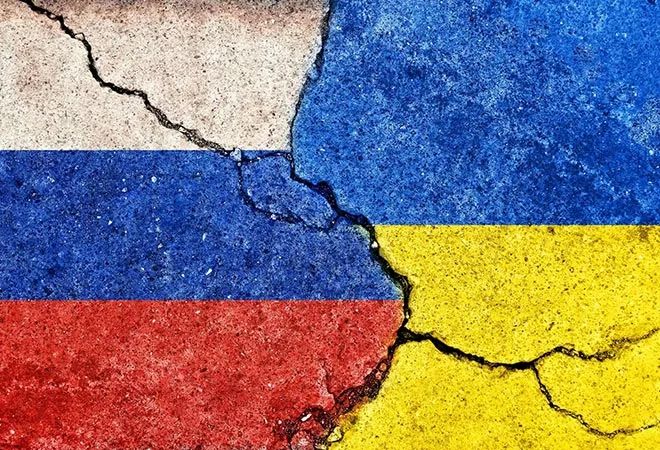
रूस यूक्रेन युद्ध के बीच शंघाई सहयोग संगठन में आखिर पीएम मोदी ने समरकंद में क्या कहा. उनके इस भाषण पर रूस ने क्या प्रतिक्रिया दी. इसके क्या निहितार्थ हैं. मोदी के इस संबोध
Why has Modi chosen to be India's first prime minister to visit Mongolia? Mongolia is indeed a very sensitive neighbour of China, and the investment of the PM's time in Mongolia seems worthwhile. To be sure, there has been a geopolitical dimension to India's engagement with Mongolia.
Given the ground realities - where China's power exceeds ours by orders of magnitude - we need allies. That is where relationships with the US, Japan, ASEAN and Australia come in.
Prime Minister Modi has come to symbolise an aspirational India who has been chosen as "an agent of change rather than continuity." Experts think it is unfair to judge him in such a short time. His success depends on whether the rhetoric of the elections would translate into governance.
The rise of Narendra Modi from the Gujarat chief ministerial chair to that of the prime minister of the world's largest democracy within a short period of 18 months as a phenomenon is being studied, analysed and written about across the world but there is more to come.
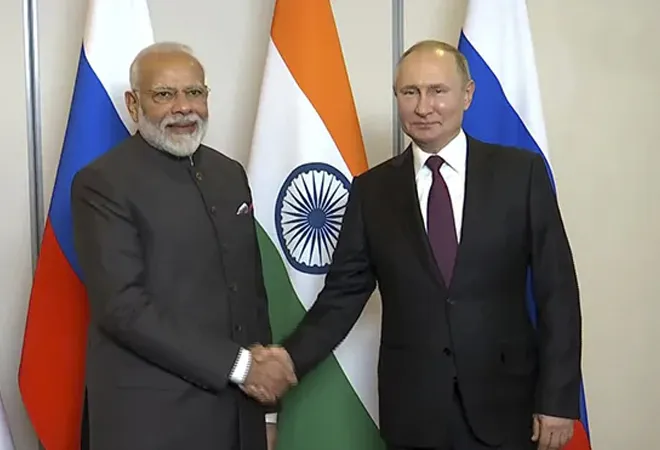
Modi's strategy to navigate the impossible trinity of US, China and Europe-Russia is clear. Engage with the US, Japan and Germany aggressively and integrate into their value chains. Keep expectations low but exchange lofty targets with the Chinese and the Russians.
Prime Minister Narendra Modi has begun yet another important foreign visit, this time to all the five Central Asian republics. It is a well-timed visit. India cannot possibly replace or compete with China and Russia, but it can definitely improve its visibility in the region and provide much needed room for strategic manoeuvrability.