1578 results found
In two sets of visits to the Central Asian region in 2013 and 2014, Xi Jinping set a scorching pace for Modi to follow. Unfortunately for India, even a super-star Prime Minister cannot do the impossible. He lacks the vast investible resources that China has already deployed and is deploying in the region.
Prime Minister Narendra Modi's problem is the sheer scale of the challenges he confronts. He has to juggle several balls at the same time, and though he may vary the juggling routine, he cannot afford to let any of the balls drop.
Modi must now bridge the growing strategic gap with China through both internal and external balancing. This must run parallel to a significant expansion of economic cooperation with Beijing at the bilateral and regional levels. But can Modi play three-dimensional chess with China?
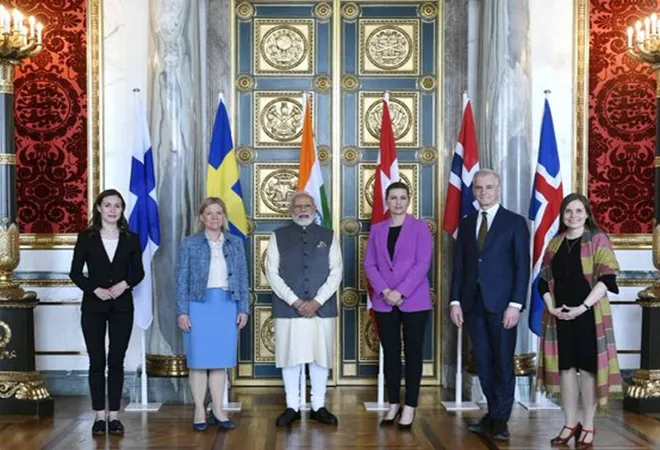
As PM Modi attends the G7 Summit, China watches closely, concerned over rare-earth diplomacy and India's balancing act between the West and Global South amid growing geopolitical unease.
In Beijing, the overwhelming question a visitor faces is: What will be the outcome of the visit of Prime Minister Narendra Modi? Will he bring a package to resolve the border question, or will he come with a basket of measures to attract Chinese investment in India?
Tibet and the Dalai Lama's status continue to worry the Chinese. India's stated policy that Tibet is part of China notwithstanding, Chinese feel that India has a hidden agenda. The fact that Lobsang Sangay was invited to Modi's swearing-in has made the Chinese nervous.
This forward-looking brief examines India’s economic reforms over the past decade and argues that in his third term, Prime Minister Narendra Modi would need to shift gears. Working to his advantage is the expectation of political and policy continuity. This must now be tempered by the slightly weaker political mandate. In the past 10 years, Modi moved the reforms needle with his dexterous stance; he now needs to work with a new idea—that of c
If a crisis was needed to reform a nation, perhaps COVID-19 it is. Recall the 1991 reforms, when India was facing a balance of payments crisis. The crisis pushed the Indian state into action and economic reforms were quickly ushered in.
Although it may look like a "sudden development", Chinese observers pointed out that a "quiet but significant" shift in China-India relations had already been underway in the past few months.
Along with proposing new measures and initiatives, the Narendra Modi government should focus on completing the already proposed projects that would benefit the region like the implementation of the Kaladan Multimodal transit project with Myanmar.
Constructing a border of cooperation with Bangladesh should liberate India from one of major geopolitical constraints imposed on it by the Partition of Bengal. When he travels to Dhaka in the near future, Modi is in a position to unveil a genuine strategic partnership with Bangladesh.
India and the European Union continue to struggle to conclude a bilateral Free Trade Agreement even a decade after the negotiations were first launched in 2007.
Oil is critical to India as it imports almost two thirds of its need, constituting 37% of its total imports. A $1 drop in oil prices could approximately save 40 billion rupees. The drop in oil prices currently looks like a blessing for India, but there could be some downslides too in the long run.
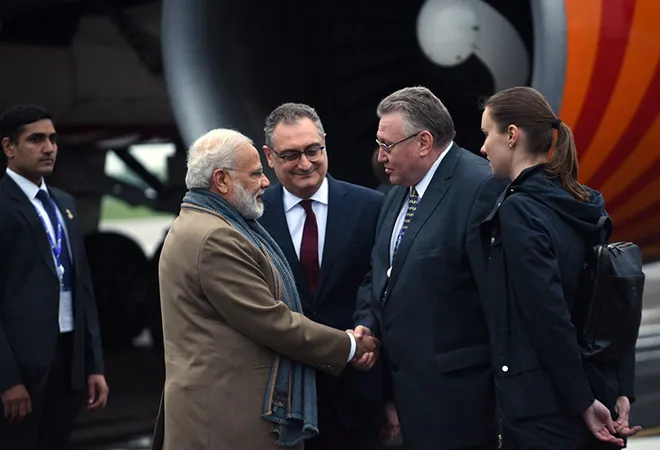
Indian PM Narendra Modi this week makes his maiden visit as Prime Minister to Russia, one of India's closest strategic partners. This seeming delay in travelling to Russia may surprise some, given that the Prime Minister has travelled to almost all the major powers as well as most of India's immediate neighbourhood.
The crucial factor that can help transform India-China bilateral is Modi himself. For the first time, the Chinese will interact with an Indian leader who can be politically strong in safeguarding India's sovereign interests, while at the same time being very welcoming in embracing China economically.
Launching the new book of Dr. C. Raja Mohan, 'Modi's World' on Friday, Indian Foreign Secretary Dr. S. Jaishankar explained the changes brought out by the foreign policy of the Modi government.
Donald Trump’s engagement with the Kashmir issue has a lot to do with his need to secure Pakistan’s backing for his Afghanistan policy.
Not since the era of Indira Gandhi and Deng Xiaoping, perhaps even since that of Nehru and Mao, have India and China been led by such dynamic and forceful politicians as Narendra Modi and Xi Jinping. These leaders are due to meet later this month in Xi's first official visit to India.
Rolling out a half-baked populist agenda is likely to backfire and be detrimental to the public health agenda.
The Indo-US agenda is vast – there are issues to be clinched, points to be clarified and misunderstandings to be cleared.
The thaw in the India-Pak relations has opened a new window of opportunity. In the first stage, it will assist in India hosting the Heart of Asia conference next year and may also lead to a fruitful visit by Modi to Islamabad for the SAARC Summit.
There is a strong sense in Japan today that Prime Minister Shinzo Abe and India's new Prime Minister Narendra Modi would take India-Japan relations to a new height, say senior officials and scholars in japan.
Much more than of two global politicians, ‘Howdy, Modi! was a celebration of the Indian community in the US.
Water needs a multidisciplinary approach that exceeds the capacity of reductionist engineering and myopic neoclassical economics.
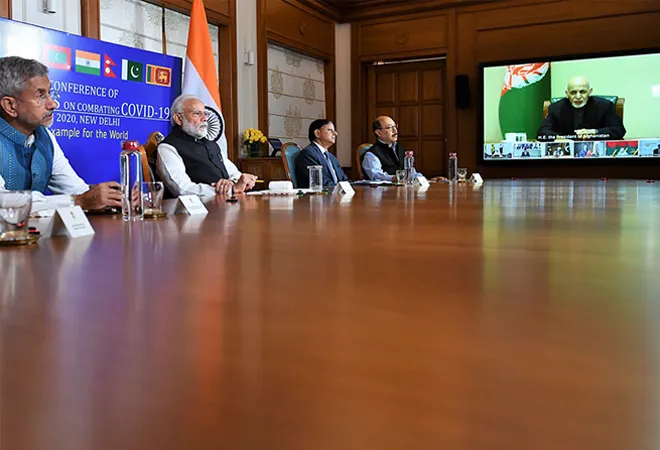
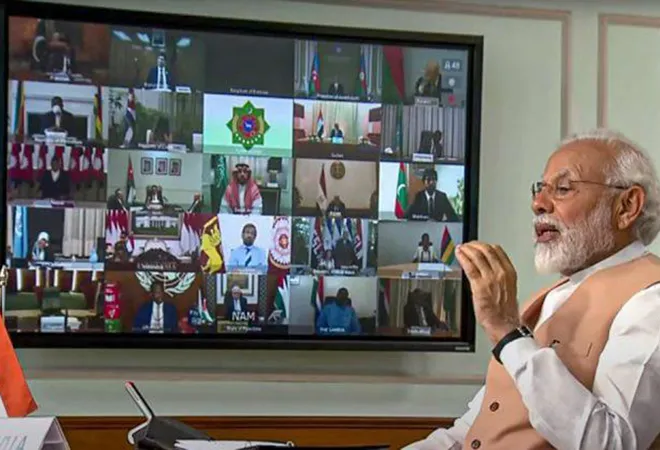
Disrupting conventional thinking, Prime Minister Modi held a video conference to fight Covid-19 with all SAARC leaders.
Narendra Modi's visits out of New Delhi last week have emphasised the new government's understanding of India's Grand Strategy. In some ways, it marks a continuity with the policy of past governments, but in important ways it presages a departure.
A demonetisation of this kind may have been necessary, it’s likely that Modi pushed it through a few years too soon.
A hard look at our politics and society suggests it may be a good idea to go by seniority alone till we become more complete ‘Indians’
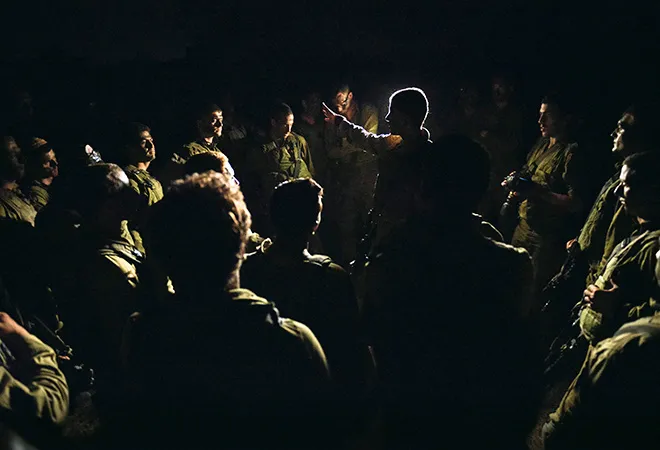
In bragging about the Indian Army post the surgical strikes by comparing with Israel Prime Minister has ignored the reality
While India cannot match China's economic heft which is luring sections of the European political elite, it can entice Europe with the values which it espouses.
In Modi’s second term, India needs to be pragmatic and clear-eyed about the challenge that Beijing poses for its interests.
India is a dialogue partner of the Pacific Island Forum (PIF), and PM Modi has acted to enhance India’s involvement with the region.
Commercial interests in the outer space domain calls for new innovative thinking if India has to be able to retain its presence. The Indian political leadership needs to take ownership of this domain and dictate new plans and priorities for the future.
Modi does it again.
With the upcoming 3rd India-Africa Forum Summit (IAFS-III) this month, Prime Minister Modi is set to prove a point to the country that he indeed follows a proactive foreign policy with exuberance and austerity. IAFS-III seems to be critical for reshaping and nourishing historical India-Africa ties and is considered as not just another diplomatic event.
Keeping in mind the historical and civilisational ties of India and Bangladesh and their geographic proximity, ORF-Kolkata undertook a year-long study on India-Bangladesh connectivity, using extensive field visits and interviews with relevant stakeholders. The findings of the study were collated in a report, titled, India-Bangladesh Connectivity: Possibilities and Challenges, and released just before the visit of Prime Minister Narendra Modi
Displaying a shift from the previous administration, the Narendra Modi government has initiated high-level political engagement with Israel. Modi met with Israeli PM Benjamin Netanyahu in New York, sent his Home Minister to Tel Aviv, and received former President Shimon Peres in Delhi recently.
Despite some disappointments on both sides, the India-Japan relationship looks set to further deepen in the face of an aggressive China.
Since Narendra Modi came to power in 2014, the Indian prime minister and his Japanese counterpart, Shinzo Abe, have been instrumental in what has been the most dramatic leap forward in India-Japan bilateral relations. While the two countries have made strides in strengthening cooperation in recent years, there are limitations that need to be overcome. This brief examines the challenges that remain in the relationship, including their sub-par bila
The decision about whether to escalate or not is much more complex than it appears.