6250 results found
India’s tepid response to the PGII seems odd given Delhi’s opposition to the BRI, which the new G-7 initiative seeks to counter.
India's external balance is changing fast with new equations being worked out. We need to set our house in order - refurbish our political apparatus, rebuild the crumbling state of our institutions and reorient and revamp our governance capacities.
With government overshooting its fiscal deficit target for the current financial year by a larger margin simply spending more and more might well hurt
India and Thailand have long-standing civilisational ties shaped by centuries of cultural and commercial interaction. Despite the establishment of diplomatic relations in 1947, bilateral cooperation between them gained real momentum only after the Cold War, driven by shifting regional dynamics and deeper integration into multilateral forums. In recent years, mutual initiatives such as India’s “Act East” and Thailand’s “Act West” polic
Indian investments in Africa, from both public and private sector entities, have increased considerably in the last decade. Yet despite the growing importance of Indian investments in Africa, only a few empirical studies have been carried out on the subject. This paper undertakes a disaggregated analysis of Indian foreign direct investment outflows to Africa from 2008 to 2016, and presents three main findings. First, it confirms earlier analyses
UK's Deputy High Commissioner in Chennai, Mr Bharat Joshi, has said that Indian investments in the UK have created over 5000 jobs while UK investments in Chennai alone have generated several thousands.
‘Invest in Women: Accelerate Progress’ is the theme of this year’s International Women’s Day. This is a clarion call with particular resonance for India given the barriers to women’s economic participation. Imagine the extraordinary economic tailwinds that can be generated for India if these barriers are dismantled and women have access to capital and technology and supportive public policy frameworks
This report discusses India's economic resilience, investment opportunities, and growth amidst global turmoil, highlighting foreign investment, sectoral reforms, and geopolitical factors influencing India's status as a top emerging market.
Latin American companies that have invested in India since the 1990s have had varied experiences: some have achieved considerable success and remain in business, while a number of them have exited. This paper is a primer on enterprises from the Latin American region that have engaged the Indian market in the past 30 years. It finds three key factors that have pulled these businesses into India: the country’s myriad value chains, the massive con
In response to increasing criticism of the existing international investment regime, various countries, including India, have been revising their model investment treaties. is paper analyses India's recently approved Model Bilateral Investment Treaty (BIT). It makes an assessment of the text's practical implications from the perspective of ongoing negotiations of investment agreements with several countries, as well as India's transition towards
The sudden and inexplicable way in which an 'investor-row' involving the Indian infrastructure group, GMR, is getting a new twist in recent days in Maldives, if unchecked, has the potential to rock the bilateral relations.
India is in need of both FIIs and FDIs, to grow at the targeted 7.5 to 8 per cent growth. They go to countries with high growth potential and laws that are flexible and allow greater investor freedom. India is constrained by certain important considerations related to the rights of the people and protection of the poor.
Participants at an interaction at ORF Chennai called for a multi-disciplinary task force to investigate scams of the kind of 2G, rather than individual investigating arms of the Government, like the CBI, Enforcement Directorate, Income-tax and other authorities undertaking parallel and separate investigations.
The Finance Minister, P Chidambaram, managed to present a fairly balanced Union Budget. There were no big unforeseen surprises and it was relatively measured given that we are in a pre-election year. It is hard to ignore that the global economy continues to be in turmoil.
Thinking India can induce enough private investment just because of the size of its market is a big mistake
Though the imbroglio over the strategic sale of BPCL/HPCL is far from over, the mandarins within the government have come up with yet another proposal to meet the year's disinvestment targets. A booming stock market has inspired the bureaucrats
Infrastructure investments are required to enable economic growth and provide the services required by a growing population. The infrastructure already available is threatened by climate change, damaging existing assets and reducing future productivity. Investment in new infrastructure has to increase to fill the gap; as this occurs, the operation and maintenance cost of infrastructure are also expected to rise. Furthermore, as resources are scar
The early years, particularly the first 1,000 days, are a critical period in a child’s development, with lifelong impacts. Evidence shows that one of the most effective strategies for economic growth is investing in the developmental growth of at-risk young children. However, early childhood development (ECD) programmes are severely challenged by the sheer scale of need in the face of early childhood care and education losses due to COVID-19 me
Governments are right to worry about outsiders snapping up struggling companies amid the pandemic.
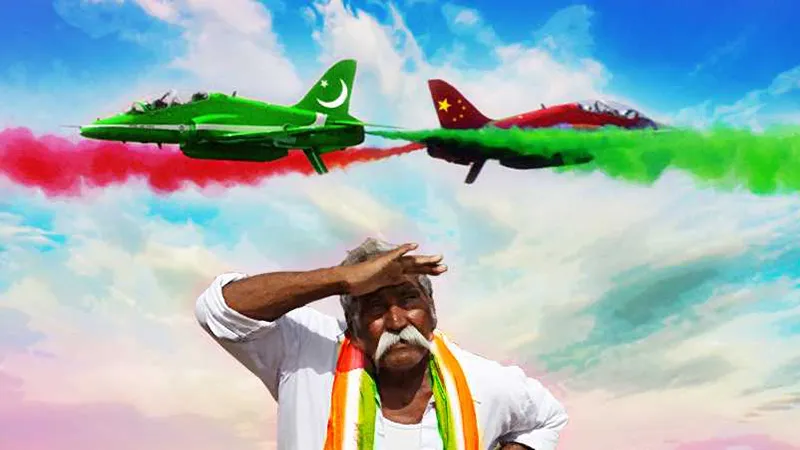
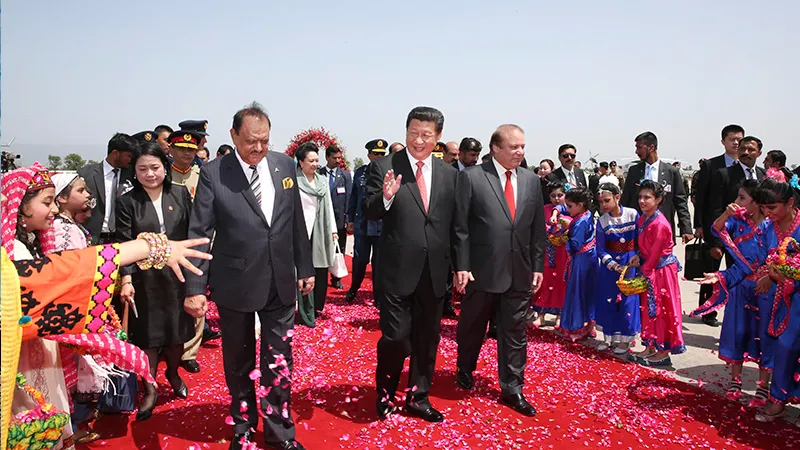
China has considerably increased its investments in Pakistan. Given Pakistan's fragile IMF dependent economy, the idea of an economic rationale behind the substantial Chinese investments seems far-fetched.
Can New Delhi use new trade agreements to fix its abysmal record on contract enforcement?
This report is part of the Observer Research Foundation’s “Financing Green Transitions” series which aims to find potential linkages between private capital, in all its forms, and climate action projects. The series will primarily examine domestic and international barriers to private capital entry for mitigation oriented climate projects, while also examining potential avenues for private capital flow entry towards adaptation and resilienc
The US is keen on investing in alternate energy sources, especially in Southern India where there is high potential for such innovations, says Samuel F Rothenberg, Political/Economic Officer at the US Consulate-General in Chennai. He said around $1 billion has been earmarked by the US Exim Bank to ensure the implementation of such plans.
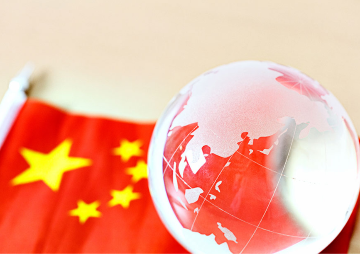
China invested more than USD 100 billion overseas last year alone. Its cumulative investments in Myanmar total USD 14.2 billion. The real question is why Chinese investment in India has lagged so far behind. Political mistrust is certainly a large part of the answer.
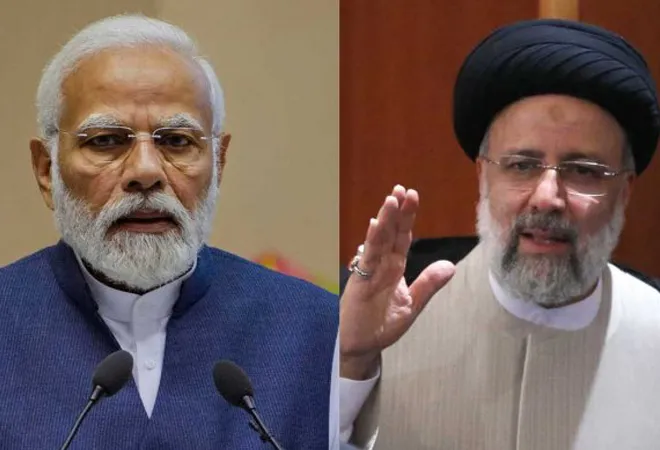
The opening of Iran will alter the geopolitics of south-western Asia. Even so, India needs to tread with care. But this should not in any way constrain our initiatives with Iran. We need to move beyond the phase of dithering that has characterised our ties with Tehran for the last decade.
In the Union Budget, the Finance Minister needs to restore the confidence of the middle class investor who now have little faith in anything other than gold and real estate as the means of preserving and growing her savings.
We should be prepared for a lower rupee unless the RBI steps in and boosts the rupee by releasing a huge amount of dollars. In this situation, wooing back the FIIs would not be easy. Proping up exports will also not be easy. It would be very difficult for the rupee to regain its former value unless commodity prices decline.
The indecision of the AAP since the announcement of the Delhi poll results has the potential for the national voter to prefer national parties or alliances, rendering regional parties minimal players with maximalist muscle-flexing.
The motor vehicles agreement between BBIN nations is a welcome development and marks a good beginning. But now what is needed is a sustainable approach to infrastructure development in the region.
The solution is simple in concept but difficult to implement. Judicial administration will have to be separated from the administration of justice. A separate class of court administrators, reporting to the presiding officer but not having to take orders from him, may have to be formed.
An 'Agreed Line of Administrative Control' in the place of the existing Line of Actual Control (LAC) could free India and China from some of current problems at the bilateral border talks, feels Mr R Swaminathan, former Secretary and Director-General (Security), Government of India.
Experts at a conference on "Internet Governance and India: The Way Forward" have unanimously agreed that "anonymity" in cyber world is important for protection of dissenting voices. They also accepted that internet stands on three basic tenets of openness, freedom, universality.
Experts at a discussion on Indus Water unanimously agreed that a 'blue revolution' must follow the 'green revolution' so that the human possibilities for development are not compromised in the basin.
Reported jihadi threats forcing the down-grading of a New Year Eve entertainment programme and those regarding seven more Maldivians joining the civil war in Syria have revived the on-again-off-again national discourse on religious radicalism in Maldives.
By ratcheting up tension, China is causing alarm in other countries that use the busy South China Sea as the shortest and most convenient link between the Pacific and Indian Oceans. The Chinese could well end up the losers as the countries affected could band together to offset Chinese aggressiveness. Worse, it could well trigger off Japanese nationalism and rearmament.
What was not acceptable to Karnataka have been made acceptable to Sikkim now. Naturally, advocates in Sikkim too would not want to have a judge, allegedly tainted by misdemeanour, to be their Chief Justice.
The attack on Union Agriculture Minister Sharad Pawar at a function in New Delhi, where a kirpan-wielding individual popped up to hit him, should be viewed not as a stand-alone case.