6251 results found
The ‘Compact with Africa’ (CWA) is the main pillar of a renewed G20 partnership with the continent. Its objective is to attract more private investment to Africa, especially for infrastructure. African countries face the challenge of diversifying their economies and promoting industries and services that can absorb a rapidly growing labour force. Lack of investment and Africa’s massive infrastructure gap are major obstacles to this economic
The G20 Digital Agenda: Cross-Presidency Priorities white paper, co-authored by the World Economic Forum and the Observer Research Foundation (ORF), underscores the importance of a cohesive digital strategy within the G20.
At a time when the world order is intensely polarised, India remains one of the few nations which can engage with both the G-7 and BRICS in a matter of days with élan.
Moves and counter-moves in Indo-Pak relations, like in a game of chess, continue to leave the actors in a mood to fight further. However, unlike in a game of chess, no endgame seems to be in the offing. This vicious circle of moves, counter moves, stalemate, warmongering, dialogues and so on is a direct impact of a precarious lack of an ultimate solution to the basic issue in Indo-Pak relations.
It is a troubled world that we live in today. However, so far India has been a sea of tranquility and it is too early to say if there is a link between the storm brewing on both flanks, but the security agencies, indeed the entire country, have a task on their hands.
Nuclear weapons, the ultimate symbol of power, are no assurance or guarantees against blowback from religious radicalism. Only when the State decides to put a stop to this and takes a lead against the beliefs and practices of radicalism, will society learn to follow and resist.
Two immediate observations can be made from Pakistan President Pervez Musharraf's address to the nation on July 22, 2005. One, he is not willing to take strong and decisive action against extremist and terrorist groups in Pakistan. Two, he cannot take such an action.
The global climate finance architecture tends to restrain emerging economies from mobilising and accessing global private commercial capital for energy transition. This brief explores the different global financial regulations that influence climate capital flows between countries, and argues that institutions must enhance their role in facilitating the optimal allocation of capital. It evaluates the role of Multilateral Development Banks from a
Structural changes need to be brought to allow different financial sectors to invest in the green future of developing nations.
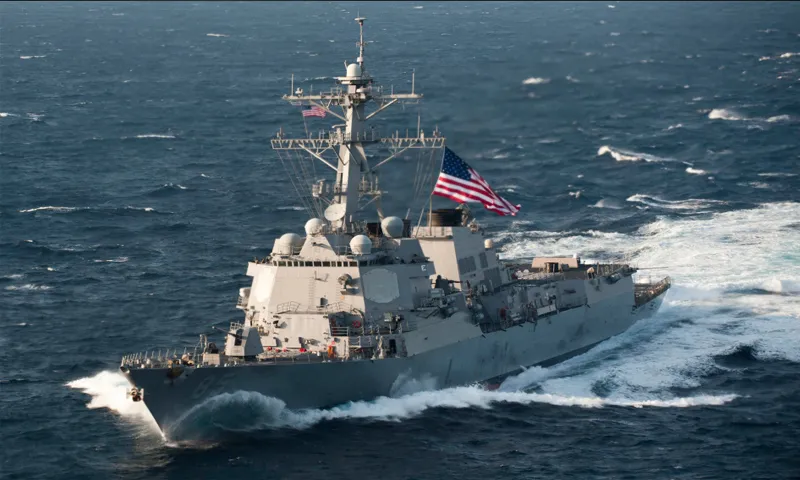
China's new gas pipelines from Myanmar will provide an alternative route for Beijing to import energy supplies. This is important for China given US maritime supremacy in the region. But the strategic advantage that Beijing gains out of the pipelines in the long-term depends on developments inside Myanmar and China's relations with it.
The idea was to capture the different dimensions of the war on terror as has been perceived and to locate the war in the larger geo political context in order to appreciate and understand the consequences, according to Dr Ashley Tellis, a well-known senior US policy analyst.
There has rarely been a period in modern history, when the world has not been confronted with terrorism; somewhere or the other, in some form or another, for some reason or the other. As a mean of coercion through violence, terrorism ebbs and flows and keeps undergoing many mutations.
Eminent Indian nuclear scientists have been expressing their concern about the contents and direction of the Indo-US nuclear deal signed last July. Strategic analysts, former diplomats, prominent politicians and knowledgeable commentators have repeatedly cautioned the government about the minefields ahead. Ought not the government pause and clear these doubts? There is little effort towards this end, and we all seem to be running blind.
The Obama Administration is putting it out as though the withdrawal is a great achievement. But the reality is shoddier - we are witnessing yet another western retreat from Afghanistan, one that can have baleful consequences for others.
The forthcoming general election is being watched with bated breath and ever increasing curiosity by different observers. Although the election arithmetic remains more or less the same as it was in 1999, the sheer intensity in which the election is being fought and the issues that are being contested in the public debate may have some implications on the future of Indian politics.
In a stratagem that would make Sun Tzu proud, the government first velvet-gloved an iron fist and then clamped down hard on digital freedom and enterprise
Closer home, the Great Power Game will be played in the unstable fields of Ayatollahs' Iran, a Talibanised Afghanistan, whose leaders have their own world view, and a Sunni radicalised nuclearised Pakistan. The main contestants will be China and the US and our strategic planners may have to start planning for an uncertain future.
Narendra Modi, who is projected by the exit polls done by the media to become the next prime minister, will have to embellish his strong governance image where he has to be fair and seen to be fair in his actions. If winning an election was tough, governance and delivery in India is going to be much tougher.
With natural resources being exploited beyond scope of regeneration, excessive pollutants accumulating in the biosphere, and ecosystems and biodiversity undergoing life-threatening degradation, industrial policies that steer investment towards a greener economy have become an imperative. This paper examines the green component of the industrial policies of 14 Indian states which have been found to be responsible for more than 80 percent o
There is no doubt that the Chinese have overcome their earlier phase of "biding time" and have started taking a more assertive and at times more aggressive posture at sea. A pattern that is also being witnessed in other spheres as well.
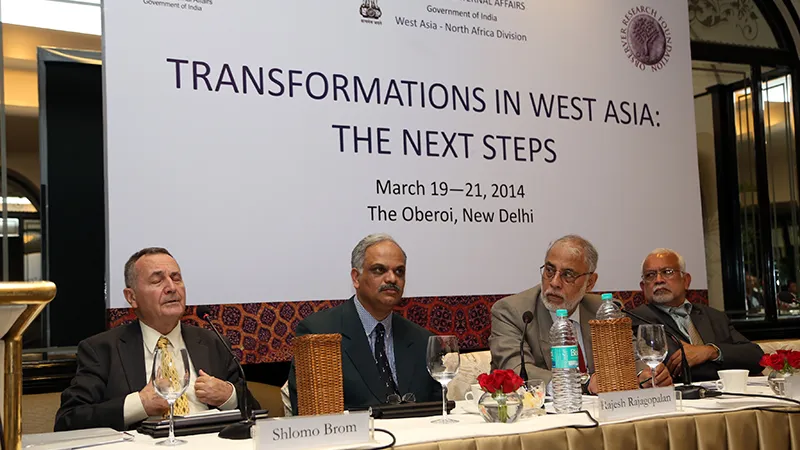
Observer Research Foundation (ORF) and the Hague Institute for Global Justice (THIGJ) recently hosted the second workshop of 'The Hague Initiative on Global Governance' in New Delhi between 21st and 23rd November, 2013.
The tragedy last week snuffed out over 750 lives and injured over 800 pilgrims, during the annual Hajj ritual of stoning the Devil at Mina, a few kilometres from Mecca. This incident again highlights a recurring theme that has dogged the Hajj for hundreds of years.
People's power, if not checked, would devour all Monarchies unless "all of us clasp each other's hands". That is when Al Jazeera traded its credibility to join the regional Jihad. Because of this summersault, the network has been the most effective tool in Libya and Syria.
A large mass of uneducated and undereducated would become part of the labour force over the next decade, adding to the potential of the mid-career education market. Neither the government nor the private sector seems to be gearing up for this opportunity.
Hypocrisy of the political leadership of all hues in Tamil Nadu is completely exposed if we focus on the refugee issue. There are presently over 1,20,000 Tamil refugees living in India. Of this, nearly 70,000 still live either in the hundred odd general (open) or the three special (closed) refugee camps in Tamil Nadu.
India, currently the chair of IBSA (India, Brazil and South Africa), is responsible for steering the agenda for trilateral collaboration. In its capacity as chair, it is incumbent upon India to revitalise the geopolitical group, which has been so central to the construct of "South-South Cooperation" that engages most political thinkers today.
As the International Court of Justice at The Hague moves forth with proceedings on the cases involving India and Pakistan, it is worth considering whether a decision in favour of the Republic of Marshall Islands would truly be the beginning of a new era.
Cyber war is a subject that is highly contested among strategists and experts. This brief assesses the impact of cyber operations against strategic targets and demonstrates that while cyber war is a real phenomenon, it is far from producing decisive outcomes. The cyberspace is a medium to conduct military operations and several countries have made investments in capabilities to both attack and defend against cyber-attacks. The brief evaluates the
This paper highlights the likely impact that the Trump energy policy reset may have on Washington’s approach to energy transitions domestically and globally. It seeks to identify any recalibration that this changed approach may have triggered in the long-term agenda of US partners. The paper focuses on the United Arab Emirates (UAE)—a country that has substantiated its commitment to clean energy pathways with sizeable investments of political
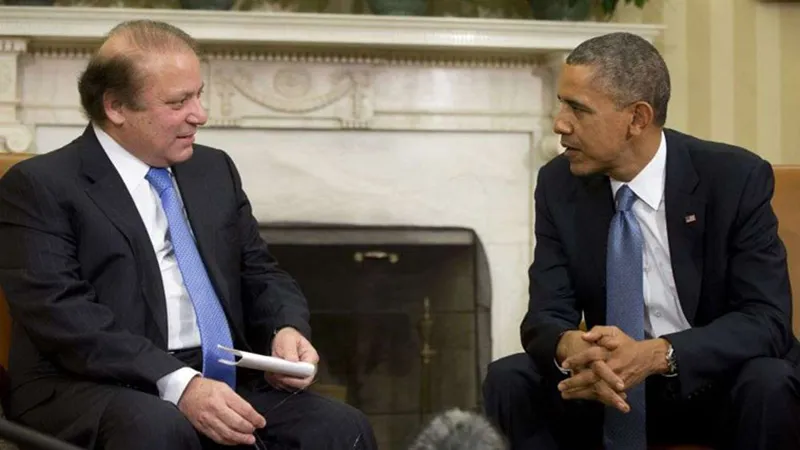
After PM Nawaz Sharief's visit to the US, now General Raheel Sharif will be visiting the country. Gen. Sharif has seemingly controlled terror emanating from FATA, has restored the image of the Army after the setbacks during the time of his predecessors Musharraf and Kayani. He runs a quasi-independent judicial system.
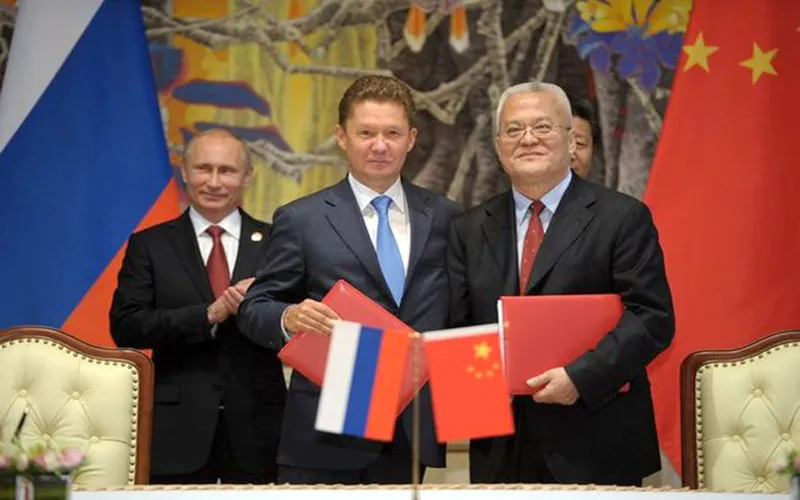
Right now, everyone around Putin is singing paeans to his sagacity. It is his ability to cut through the chaff, determine his priorities and then craft his policies fully cognizant of Russia's current limitations that will see him emerge as a universally acclaimed statesman. Authoritarian he may be, but there is no reason to doubt that he is up to this task.
As major powers like China are deepening their military ties with the Gulf, the need for India to look beyond the imperatives of energy and maritime security is critical to its interests in Oman and the wider Gulf region.
France is set to host the most important of climate conventions at the end of this year, one that will determine the successor to the Kyoto Protocol. This makes for an important area where India and France can cooperate.
As the Modi government brings in a renewed push to India's Look East policy with an "Act East" policy, Myanmar's geostrategic position becomes all the more important for India to put the necessary connectivity links with the country and the wider region.
Human capital is the wealth of nations and is dependent on health, nutrition, skills and knowledge of people. To produce and maintain a healthy, highly skilled workforce, India must make cost-effective investments to improve child health and nutrition
While much of the Indo-Russian relationship appears to be already existing ties, especially in the military-technical cooperation and hydrocarbon industry, trade and economic relations are faced with myriad challenges. It is time to diversify the trade basket to include technology, pharmaceuticals, etc.
It seems like the stakeholders in the U.S economic debate are tired with all the "economic pornography" - with all the apocalyptic warnings about debt ceilings, trade deficits, faltering housing recoveries and stubborn unemployment, and are waiting for externally created solutions.
There has been considerable spin from Islamabad as well as New Delhi regarding the results of the visit of the Chinese Prime Minister, Mr.Wen Jiabao, to the two countries. The fact that the Chinese have carefully refrained from joining this race for spin and
In the 1971 war against Pakistan, had Indian forces managed to push beyond Turtok and capture Thang, the subsequent Pakistani adventure in Kargil in 1999 or the threat to Siachen would have been infructuous.
The India-US Dialogues, hosted by Observer Research Foundation and Network 18 on January 24 with panels ranging from security and international relations to business and economics, encapsulating the range of issues on everyone's minds.
In recent years, startups have been receiving increased attention in many parts of the world. In India, the number of startups has increased fast and more support has become available in all dimensions. This paper analyses the current state of the Indian startup ecosystem and has three goals: to provide an understanding of the growth drivers and motivations of Indian startup founders; identify challenges facing these startups; and outline the pil
The article has been authored by Premesha Saha, an associate fellow, Strategic Studies Programme, Observer Research Foundation.