6248 results found
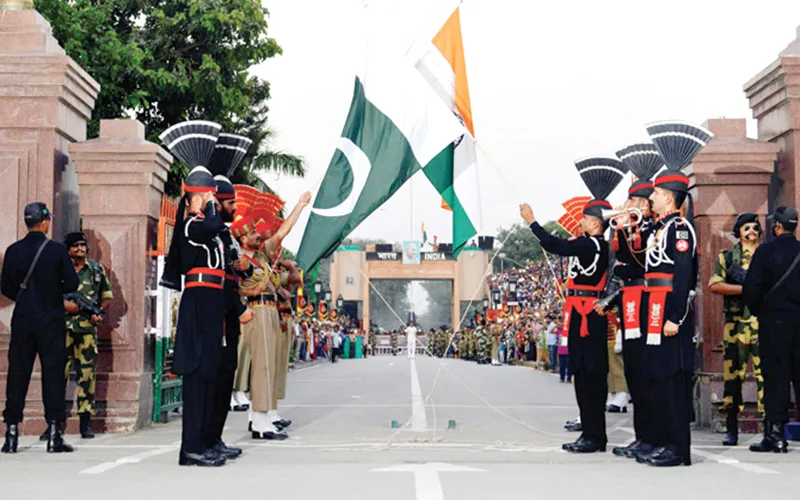
Why do Indian and Pakistani leaders succumb to the predictable? There's so much déjà vu about their peace process being derailed by border firings and terrorist strikes that the wider world has begun to yawn
Nepalese Prime Ministers generally prefer to call on New Delhi for their first foreign visit after assuming office. The urgency for Prime Minister Sher Bahadur Deuba's visit was, however, accentuated by nearly a week-long effective blockade of Kathmandu imposed by the Maoist insurgents.
As digital infrastructure and financial technologies proliferate in India, embedding finance into non-financial platforms has emerged as a compelling business innovation. Across a range of domains, from e-commerce to agritech, embedded finance promises to increase financial inclusion, improve user experience, and enhance the monetisation capabilities of digital platforms. This brief explores the conceptual foundations, current landscape, key oppo
The presence and influence of the Naxalites are increasing dramatically and rapidly in various parts of the country while we remain engaged in endless debates on how to address the problem.
As part of a three-year research project undertaken by ORF and PRIO to study and analyse urban governance, urban security and environment related trends and concerns in selected regions of India, an international conference was organised on "Emerging Challenges in an Urbanising India: Governance, Security and Climate Change".
With Al Qaeda far from being vanquished, and Pakistan and Bangladesh inevitably turning into jihadi outposts in the emerging pan-Islamist network in Asia, India is more than likely to be caught in the vicious tail-wind of the next wave of terrorism, gathering momentum since 9/11.
A single deft move in the 18th century secured the British empire in India many advantages over the advancing Russians. By sending five English dray horses along with a blue velvet upholstered coach to Maharaja Ranjit Singh in Lahore, upstream from Kutch, the British discovered that the Indus was navigable all the way up.
It were thousands of village pradhans who had to be "empowered" as the nodal points most in contact with the people. Legislators and policy makers have to develop institutional mechanisms to liaise with the Pradhans who implement policy at the village level.
Control of China through cooperation could be a more effective policy given the size and closed nature of China's society
With the Opposition-dominated Parliament passing the Judges Bill and the Government coming up with a consensus list of seven Supreme Court Judges that too was passed, there is now hope about an early end to the constitutional deadlock that had engulfed Maldives over the past weeks.
India is the third largest coal producer and the coal industry one of the oldest sectors of commercial involvement
With the death of brigand Veerappan in a police encounter in Tamil Nadu's Dharmapuri district, a long and arodous era in criminality has come to an end in this part of India - nay, even the world. Not many criminals in the world in these modern times would have scalped 130 human victims, apart from the hundreds of elephants and thousands of sandalwood trees to his credit as Veerappan did.
Pakistan is living through turbulent times and, General Musharraf, its self-styled President, is under tremendous pressure. The United States-led anti-terrorism campaign in Afghanistan has shaken Pakistan's polity like no other event in its troubled history.
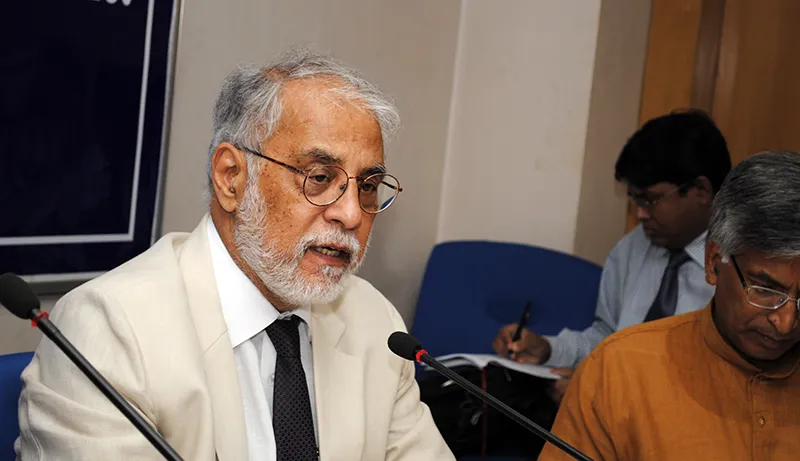
A talk by Prof Dilip Ahuja and Prof D P Sen Gupta
Despite a compelling techno-economic rationale for BIMSTEC nations, regional cooperation in the field of energy has not moved beyond the drawing board. This brief argues that inadequate investment in regional infrastructure, and the lack of political will to invest in shared infrastructure, are the consequence of inadequate cooperation between countries in the region, and not its cause. The electricity industries of BIMSTEC countries are being gr
To meet its poverty eradication, human and economic development targets, India will require much greater availability of energy. Poverty eradication is critical for building resilience to potential climate impacts.
Energy: Power Ministry plans to shut coal-fired power plants with capacity of about 8000 MW.
How can Japan bring in energy reforms with its weak political structures, a very strong nuclear lobby that can influence policymaking, and rising public discontent? Japan has seen five Prime Ministers in the last five years.
The Modi government's biggest challenge is battling a legacy of distrust. The dominant political discourse in India remains deeply suspicious of market liberalization.
Fourteen years ago, in 1996, Dr Vijay Kelkar, one of my distinguished predecessors in the long list of luminaries who have delivered this Lecture, said, "What petroleum was to the 20th century, natural gas will be to the 21st."
The Gulf Cooperation Council (GCC) states have seen strong and accelerating progress in the energy transition, driven primarily by economic more than environmental factors. The adoption of low-carbon energy, including nuclear, renewables and batteries, has been most prominent in the electricity sector. Most of the Gulf countries have set net-zero carbon targets and all have renewable and hydrogen production targets in place as well. A key objecti
Formulating a policy towards China that finds the right balance between engagement and resistance is not easy. We are obliged to engage with China as it is fast on the road to becoming the world's number two power.
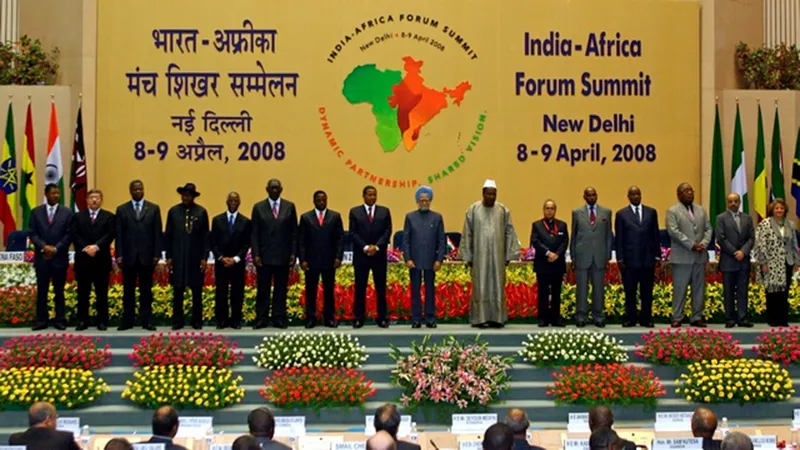
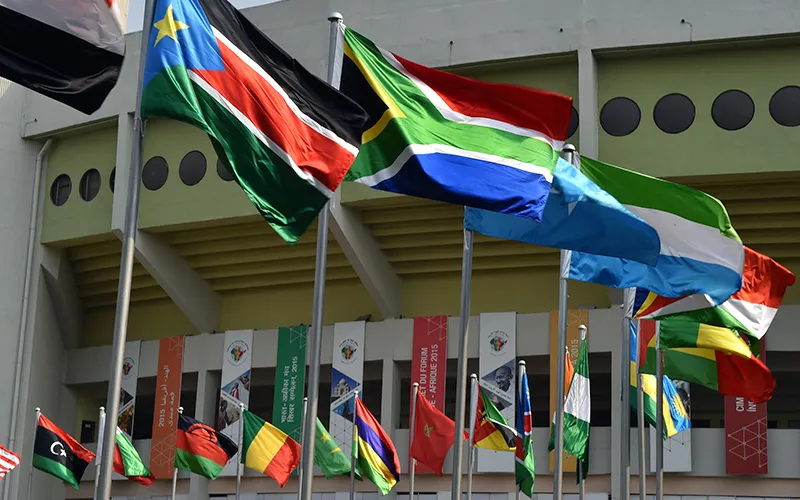
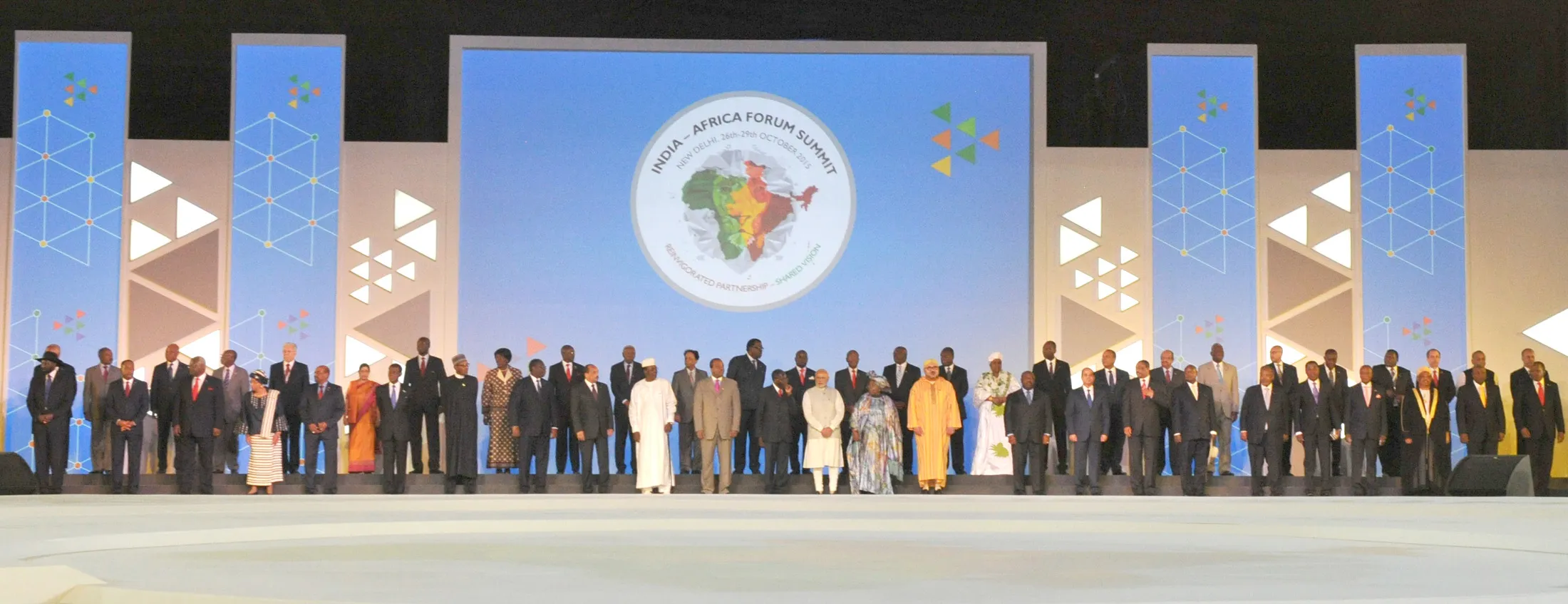
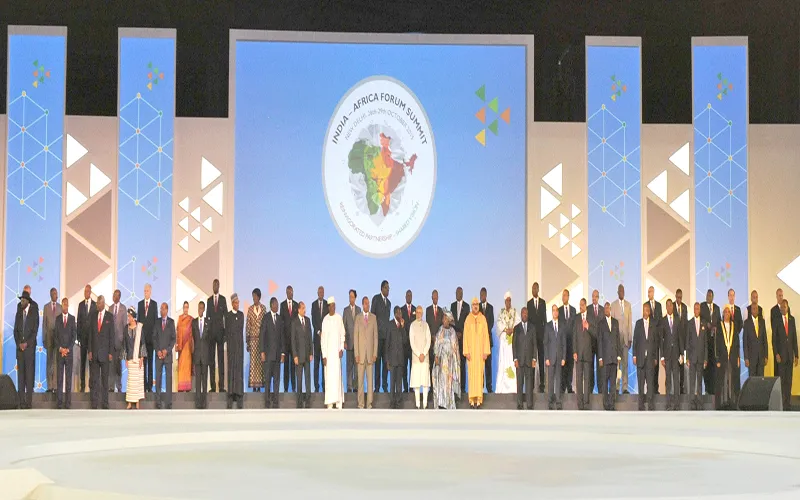
The importance of today's Africa for India is self-evident. India's ambitions of being a global power cannot be achieved without the support of the African continent consisting of 55 countries. Nowhere is the importance of African countries felt more than on the issue of the expansion of the UN Security Council.
SAARC remains the only viable vehicle for South Asian integration, a project vital for India because a viable South Asian economy is a necessary pre-condition for our ability to engage effectively with ASEAN and China. And when we look at SAARC, the key hurdle it must overcome is the India-Pakistan problem.
An international conference on "Engaging with a resurgent Africa" was organised in New Delhi on 20th and 21st of November. It was organised jointly by Observer Research Foundation and Rosa Luxemburg Stiftung of Germany.
London is the most unequal city in the developed world, with its richest 10 percent more than 100 times better off than the poorest ten. London's wealth inequalities are said to be approaching those that "have not been seen since the days of the slave-owning elite."
India and Pakistan can reap multiple benefits from an enhanced cooperation on the economic and energy fronts, according to experts at a recent conference at Observer Research Foundation.
This brief discusses the challenges faced by urban local bodies (ULBs) in India in accessing urban climate finance (UCF), and proposes solutions based on successful strategies used by some of them. The hurdles include institutional barriers and limited capacity. The brief finds that ULBs that have met with success in accessing UCF overcame the obstacles through early sensitisation programmes and global network connections. It offers plausible sol
An enormous amount of capital is required for climate change mitigation and adaptation globally, but especially in emerging markets that have the dual burden of achieving development and meeting national climate goals in the coming decades. Although it is tough to estimate the precise amount of capital required to achieve these goals, it is anticipated to be in the range of trillions of dollars. However, the flow of capital into green sec
This brief examines how India’s Business Responsibility and Sustainability Reporting (BRSR) framework under SEBI’s Listing Obligations and Disclosure Requirements can evolve into a disclosure regime that is globally credible yet locally relevant. Drawing on comparative analysis and stakeholder consultations, it finds that the BRSR suffers from limited regulatory coherence and international comparability. The brief recommends using the Interna
There she was, a wisp of a girl in her teens, out in Mahim at 11.30 in the night, feeding strangers stranded after the bomb blast. This was her answer, and those of countless citizens of Mumbai, to the terrorists who thought they could break the city¿s indomitable spirit. Salaam, Mumbai.