-
CENTRES
Progammes & Centres
Location
36 results found
शुद्धीउप शुद्धीकरण केंद्रापासून घरापर्यंत, हैदराबादच्
आर्सेनिक संकट हे फक्त पाईप आणि पंपांपुरते मर्यादित राहू�
The arsenic crisis underscores the need to move beyond pipes and pumps toward a people-centred approach where safety, transparency, and community part
From treatment plant to household, Hyderabad’s water supply faces recontamination—posing major health risks for thousands in low-income areas.
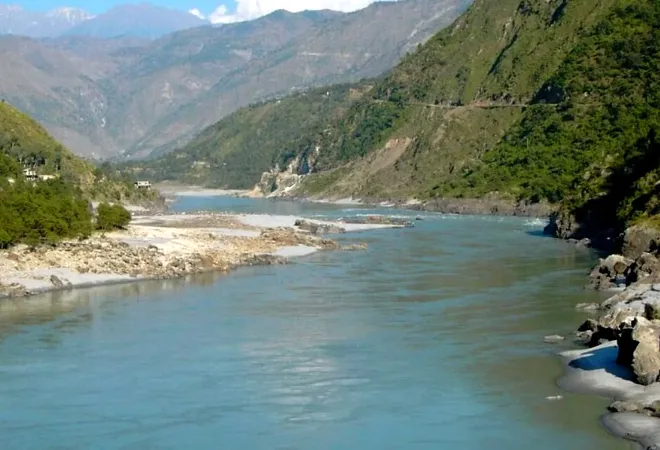
The suspension of the Indus Water Treaty underscores that agreements on transboundary cooperation, however enduring, remain vulnerable when national s
सर्वांना समन्यायी आणि शाश्वत पाणी मिळावे यासाठी पायाभू�
A comprehensive approach involving infrastructure development, improved water management, and effective policies is required to ensure equitable and s
The gendered impacts of heatwaves and water scarcity in India underscore the urgent need for comprehensive strategies that prioritise the well-being a
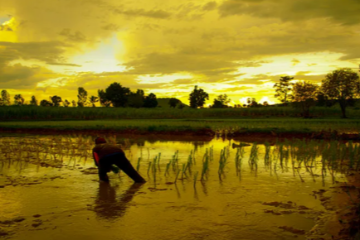
As water scarcity intensifies, its ripple effects cascade through food systems, directly impacting agricultural productivity and food security
There is a need to establish a mechanism that regulates water valuation to achieve a fair and efficient allocation of resources amidst growing water s
हवामान बदलाचा सध्याचा ट्रेंड लक्षात घेता, बाजरी हे अन्न �
Efficient water demand management relies on market prices signalling the availability or future scarcity. India should consider such markets for effec
Given the current trends of climate action, millets provide an efficient solution for circumventing the food and water trade-off
Only by recognising the intrinsic value of water and its central role in our existence can we hope to build a more resilient and food-secure world for
Food insecurity remains a significant challenge in many G20 nations; concerted efforts are needed to address the issue
The politicisation of the water issues of the Indus system has overshadowed the much-required integrated basin governance
Using geospatial technologies is an imperative step for India to make its industrial sector more resilient and sustainable
Both climate risks and non-climatic drivers need to factored in to curb food and water shortages induced by climate change in vulnerable regions of th
In the Middle East, which continuously suffers from chronic disorder, water supply systems are increasingly becoming both political lever and objectiv
Traditional thought processes of conflict resolution and governance are falling flat in the face of the newer water governance challenges.
Unless a sectoral re-allocation of water resources enforcing adequate demand management is done, the issues of water scarcity might not be resolved.
This paper analyses the patterns of virtual water trade (VWT) in agricultural products across the globe—VWT is the flow of water embedded in goods and services when they are traded—and the implications for alleviating water scarcity. Virtual water trade has been crucial in ameliorating water scarcity in virtual water-importing nations. At the same time, it has led to per capita water availability declining at a more rapid rate among the net v
Water futures trading can be an important tool for water-scarce economies. This paper argues that it can help reduce the scarcity value of water (defined here as the value that can be generated if the limit on water availability is relaxed by one unit), even without a physical market. ‘Scarcity value’ measures the degree of deprivation and creates the basis for disputes. The paper argues that water futures trading reduces the scarcity
For decades, global agriculture has pursued an extractive model of relentless yield maximisation—at a devastating cost. Soil degradation, water scarcity, and deepening inequities have made it clear that the promise of perpetual growth in a finite world is an illusion. This brief challenges the dominant narrative of industrialised, high-input farming and reimagines Indian agriculture through the lens of ‘degrowth’—an emerging concept that
Delhi—a city and union territory of India containing the country’s capital, New Delhi—continues to grow in population, posing challenges to civic agencies in the provision of citizens’ essential needs. This brief examines the experience of Delhi’s water agency in obtaining raw water, amid the growing gap in supply and demand that is only being exacerbated by climate change. The brief finds multiple reasons for the inadequacy of raw wate
The African continent faces escalating climate threats, with rising temperatures, sea-level rise, water stress, and extreme weather events causing widespread negative consequences. This brief argues for the need to build a business case for greater adaptation investment in Africa. Climate change is already causing significant economic losses, with African countries losing 2-5 percent of GDP annually, while adaptation investments could yield retur
India is the world’s largest rice exporter, making it a significant player in the global rice market. A global rice shortage is anticipated amid rising geopolitical tensions and commodity prices. To safeguard domestic consumers from exorbitant price shocks, India has banned the export of non-basmati white rice since July 2023. This paper examines the ban's implications, especially regarding welfare redistribution among basmati and non-basmati f
As India's water availability declines, a holistic approach to water pricing will be needed to avoid conflicts
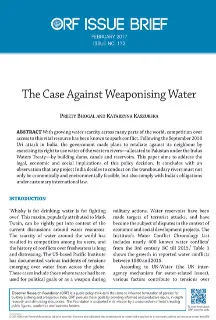
With growing water scarcity across many parts of the world, competition over access to this vital resource has been known to spark conflict. Following the September 2016 Uri attack in India, the government made plans to retaliate against its neighbour by exercising its right to use water of the western rivers—allocated to Pakistan under the Indus Waters Treaty—by building dams, canals and reservoirs. This paper aims to address the legal, econ
China is often viewed through the lenses of commerce, geopolitics, and political economy. At the fringes of these lies Chinese agriculture—and its domestic and global impact. This brief analyses the evolution of Chinese agriculture, from the revolutionary Maoist period to the present. It describes the Chinese government’s strategy to ensure food self-sufficiency for an increasingly voracious consumer base. In particular, it examines the produ
This paper highlights the importance of water valuation and pricing for sustainable and efficient water allocation and management in India. An efficient water-pricing mechanism could be a tool to address the impending crisis of water scarcity, which necessitates a robust, objective, and holistic valuation technique. Every unit of water consumed for economic purposes has an ecological footprint, and this opportunity cost or externality factor need
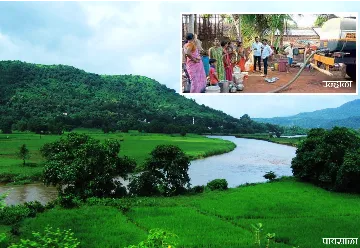
कोकणात दरवर्षी उदंड पाऊस पडूनही, उन्हाळा आला की टँकरने पाणीपुरवठा करावा लागतोय. हे अपयश जेवढे शासन-प्रशासनाचे आहे, तेवढेच तेथील जनतेचेही आहे.
भारतातील पाण्याचे स्रोत संपुष्टात येत असतांना संघर्ष टाळण्यासाठी पाण्याच्या दरांबाबत समग्र दृष्टीकोन आवश्यक आहे.
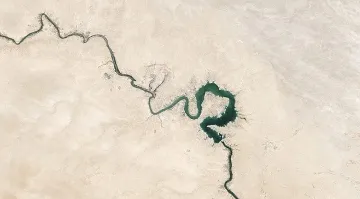
मध्य-पूर्वेतील देशांमधील संघर्ष आणि पाण्यावरून होणार्या युद्धांचे दूरगामी परिणाम या प्रदेशातच नव्हे तर अख्ख्या जगात दिसून येतील.