41 results found
India’s Electricity (Amendment) Bill 2025 seeks grid reform, but vague mechanisms risk leaving DISCOMs burdened and consumers underserved.
As ultra-processed foods expand in India’s evolving food marketplace, stronger food safety policies such as front-of-pack labelling and fiscal measu
ट्रंप की ओर से टैरिफ को लेकर दी जा रही चेतावनी पर चीनी प्र�
China’s response to Trump’s tariff threat intensifies as Beijing retaliates with strategic measures, signalling growing economic tensions and glob
The Union Budget 2025-26 takes a bold step in supporting middle-class consumers but does so at the cost of a weakened tax base
ভারতীয় অর্থনীতি একটি সন্ধিক্ষণে দাঁড়িয়ে, যেখানে ভবিষ্�
भारतीय अर्थव्यवस्था एका निर्णायक क्षणावर आहे. यात भविष्�
The use of digital twin technologies in renewable energy ecosystems will benefit producers, consumers, and governments alike
भारतीय अर्थव्यवस्था एक निर्णायक मोड़ पर है जहां भविष्य म
भारतीय वीज बाजारपेठेचे भविष्य नवीकरणीय ऊर्जा पुरवठादार
The Indian economy is at a defining moment where the future might show a reversal from the trend of the consumption-driven growth phenomenon
भविष्य में भारत में बिजली बाज़ार का झुकाव नवीनीकरण योग्य
The Indian electricity market's future might incline towards renewable energy suppliers, possibly featuring specialised green providers.
A balanced and flexible regulatory environment that can accommodate the changing needs of consumers while protecting their interests is required
As high oil prices hit consumers, President Biden is compelled to change his stance toward Saudi Arabia and rekindle relations.
Urging the world to focus on the overall advantages of growing and consuming the climate-resilient crop 'Millet', as the crop offers hassle-free produ
Affordability is a much trickier factor to deal with to help consumers from economically poor sections to retain their electricity supply.
Rainwater harvesting (RWH) is a useful method to address the problem of water shortage. However, the Delhi government is unable to tap its full potent
The altering behaviour and preferences of consumers are propelling changes within OTT service models.
The new FCI should be a market-friendly agency for food management, with a primary focus on creating competition in every segment of foodgrain supply
भारत में मल्टी-ब्रांड रिटेल व्यवसाय फल-फूल रहा है। ऐसे म�
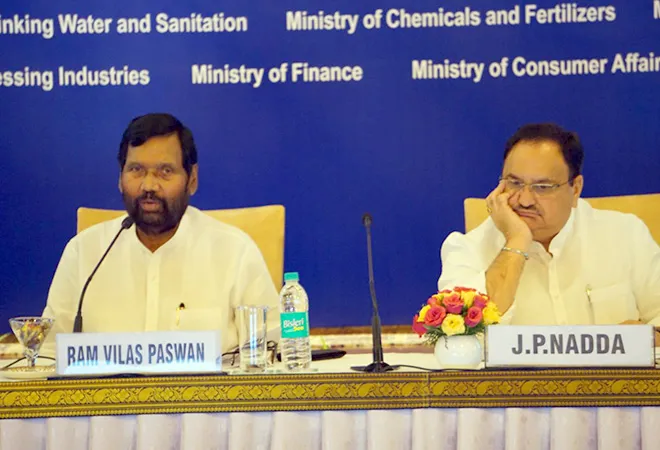
Minister for Consumer Affairs Ram Vilas Paswan has chosen three unorthodox areas to show his department’s proactivity.
A new social contract between citizens, consumers, employees, the state, and enterprise is needed to delineate a new understanding around rights, responsibilities and entitlements. Digital transformations are rapidly altering the nature of work, models of employment, contracts, regulations and protections. Increasingly, the responsibilities of the state are becoming the obligations of,�
The Chinese side noted that the explosion incident and back-to-back targeted killings triggered serious concerns among consumers in Arab countries about the security of electronic products produced in or whose supply chains are controlled by the West.
For decades, global agriculture has pursued an extractive model of relentless yield maximisation—at a devastating cost. Soil degradation, water scarcity, and deepening inequities have made it clear that the promise of perpetual growth in a finite world is an illusion. This brief challenges the dominant narrative of industrialised, high-input farming and reimagines Indian agriculture through the lens of ‘degrowth’—an emerging concept that
Africa is facing a digital divide. Access to the internet and related digital services is low, and in most countries, the supporting regulatory framework is not in place; nor are the necessary data and logistics infrastructure. At the same time, there are various examples of e-commerce success stories across the continent; and the wide use of mobile phone technology has created many new opportunities for African entrepreneurs and consumers alike.
Waste-to-energy projects in India have historically been city-centric. As cities are well-served by LPG and CNG distribution systems, the Bio-CNG produced has to be used for either fuelling urban public transport, or moved to rural areas at considerable cost. Distributed production and distribution of compressed biogas (CBG) from municipal organic waste in rural and peri-urban areas could be a cheaper option for local consumers. Such prod
is paper formulates an analytical framework to assess the impacts of India's Free Trade Agreements (FTAs) on commodity value chains. Existing academic literature have relied on examining Balance of Payments (BoP) to assess the impact of FTAs. is paper views such methodology as reductionist, and instead oers alternative lenses of the impacts on the commodity value chain. is paper brings into fold the concerns for the wellbeing of various stakehold
Lab-grown meats are new, and the health outcome is still unknown. Most consumers prefer natural products and reject foods derived from unnatural sources.
India is the world’s largest rice exporter, making it a significant player in the global rice market. A global rice shortage is anticipated amid rising geopolitical tensions and commodity prices. To safeguard domestic consumers from exorbitant price shocks, India has banned the export of non-basmati white rice since July 2023. This paper examines the ban's implications, especially regarding welfare redistribution among basmati and non-basmati f
The bulk of the new banking consumers are digital natives and don’t think of branches as an interface for financial transactions
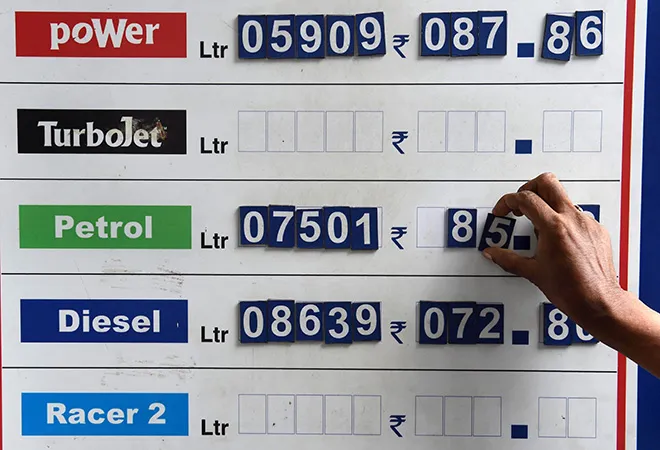
The oil shock poses two risks for India. First, the fear that it will increase the current account deficit. Second, it poses a conundrum of navigating conflicting objectives — preserve the market-based retail oil price mechanism whilst graduating the price shock for consumers and containing inflation.
As global and urban populations continue to grow, and climate change threatens food security, it is imperative that cities—often the largest food consumers—contribute to its production through urban agriculture. Urban agriculture comprises food and non-food products grown for self-consumption or sale. Entrepreneurs, non-governmental organisations, and citizens worldwide are adopting new technologies to optimise production amid space c
Digital financial services have benefits but pose privacy risks that harm consumers, merchants, markets, and nations alike. Some payments systems in India suffer from vulnerabilities because they were not prospectively designed on the basis of the ‘privacy by design’ principle. At the back-end, the centralised storage of data is risky. At the front-end, faulty capture devices enable data misuse. Across the middle mile, data is transmitted wit
This brief discusses Thailand’s Over-the-Top (OTT) industry, focusing on production, consumption and impact. It analyses the rise of online audio-visual business in the country, and the implications for traditional broadcasters. In the context of existing international practices and Thailand’s domestic situation, the brief discusses the current and future regulatory requirements of the OTT industry. It also makes recommendations for a regulat
As industries slowed to a near halt in 2020 due to the COVID-19 pandemic, the digital economy received a boost—especially from consumers forced to rely on virtual means to meet their needs. Businesses turned to the virtual workspace, adopting new productivity tools to retain their workforce. This brief studies the case of Africa, where tech played a role in pandemic response, and e-commerce players reported increases in orders and custo
Massive populations in many parts of the world, including in India, continue to grapple with lack of access to clean and safe water. This paper studies the case of Delhi. It describes the conditions under which water is produced and supplied to domestic consumers in Delhi and explains the capacity of the water and sewerage agency to discharge its duties. The analysis finds challenges in five aspects related to water supply in Delhi: quantity; qua
किसी भी व्यक्ति के अच्छे स्वास्थ्य के लिए सफ़ाई व्यवस्था और सुरक्षित पेयजल महत्वपूर्ण है. लेकिन कई भारतीय शहरों में किए गए एम्पिरिकल रिसर्च से स्थानीय सरकारों द्वारा उपल�