50 results found
हवामान बदलामुळे पाण्याच्या साठ्यांवर ताण वाढत चालला आह�
पानी की अत्यधिक बर्बादी से उसकी आपूर्ति का संकट बढ़ रहा ह�
When water challenges defy quick fixes, hydrocracies must shift—embracing collaboration, local knowledge, and smarter governance.
उच्च पातळीवरील पाणी गळतीमुळे पुरवठा तुटवडा वाढत असून, ग्
With climate change straining shared water reserves, India’s cities and farms are on a collision course unless conservation, reuse, and technology d
As climate-driven extreme events are on the rise, Indian cities must adopt sustainable and adaptive water management to tackle them
High water losses are widening the supply gap, forcing costly and unsustainable fixes across Global South cities.
Natural Springs are essential but neglected lifelines for urban water security in mountain cities. Reimagining them as urban water commons offers a pa
As climate change intensifies risks along the world’s coastlines, inclusive approaches to water governance and the blue economy are essential for bu
सर्वांना समन्यायी आणि शाश्वत पाणी मिळावे यासाठी पायाभू�
A comprehensive approach involving infrastructure development, improved water management, and effective policies is required to ensure equitable and s
नवीन राष्ट्रीय जल धोरणामध्ये स्पष्ट करण्यात आलेला नवीन �
The new water governance paradigm articulated in the new national water policy is ” delineated by a multi-disciplinary and multi-stakeholder approac
जरी पर्यावरणीय समस्यांचे प्रमाण मोठे दिसत असले तरी निसर�
Although the scale of the environmental problems seems overwhelming, nature conservation works.
Considering the role of wastewater in meeting the water requirements of cities, and the negative effects of untreated wastewater, efforts are underway
सर्व शहरांमध्ये पाणी व्यवस्थापन अधिक जलवायु परिवर्तन स�
जलस्रोत हे व्यवस्थापन, संरक्षण शांतता आणि दीर्घकालीन स्�
A collective will to integrate climate resilience into urban water governance and embrace innovative management strategies is imperative to secure con
As water scarcity intensifies, its ripple effects cascade through food systems, directly impacting agricultural productivity and food security
As India navigates the complexities of sustainable development, ensuring gender equality in the waterscape emerges as a pivotal element in creating a
Restoration, management, and protection of water resources can contribute to peace and long-term stability
जलसंवर्धनाच्या अनेक उपक्रमांमध्ये महिलांचा सहभाग वाढव�
Only by recognising the intrinsic value of water and its central role in our existence can we hope to build a more resilient and food-secure world for
Many of the jobs created through large-scale programmes on water can be taken up by women as long as the skilling gap is addressed along with gender i
Using geospatial technologies is an imperative step for India to make its industrial sector more resilient and sustainable
Rainwater harvesting (RWH) is a useful method to address the problem of water shortage. However, the Delhi government is unable to tap its full potent
The Ganges Water Sharing Agreement will expire in 2026. What awaits then?
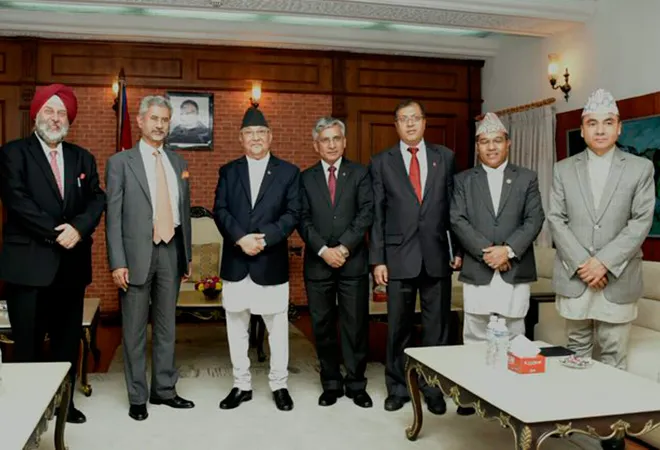
In order to maintain and rekindle the amicability of ties, EAM Jaishankar’s visit is of utmost importance, arranging for India a fortuity to do away
Unless a sectoral re-allocation of water resources enforcing adequate demand management is done, the issues of water scarcity might not be resolved.
The sole reliance on the traditional British engine while constructing Farakka Barrage has created problems at a minimum of two levels.
India’s critical water infrastructure must be built to withstand, respond to, and recover rapidly from climate disruptions
Despite the worldwide call for a change in water management paradigm in favour of demand management and ecosystem restoration (also known as Integrated Water Resource Management), India still adheres to its archaic notions of water resource development.
Extreme water events are affecting cities in various parts of the world. During rainy seasons or in the event of typhoons or cyclones, the sudden inflows of large volumes of rainwater into cities, combined with inadequate preparedness of administrative agencies, result in injuries, loss of lives, and damage to property. This brief examines excess-rainwater-related incidents in select global cities, reviews innovative practices for managing floodi
A comprehensive strategy that includes a mix of crisis response and impact mitigation, while also taking into account urban and rural planning, livelihood issues and health perspective, is needed to mitigate the Northeastern State’s agony.
Now a mobile App for water management? And, the rapidly dropping price of wireless consumer technology such as WiFi and Bluetooth could turn these individual nodes into a data-rich network.
This paper assesses the gendered division of labour for household-level domestic service activities, of which water management remains a primary component, across Indian states and the various dimensions of gender that are relevant in this context. Women have traditionally played an essential role in water management at the household level, devoting a significant share of their day to related unpaid domestic service activities. Such engagements o
India must honour its treaty commitments over a resource that everyday lives depend on.
Despite the call for a global paradigm shift in water governance—from the traditional reductionist engineering approach to the more holistic integrated river basin governance framework—a change is not yet perceptible in India’s water governance architecture. The hesitation to change has led to ecological problems and conflicts at various levels. This paper identifies the knowledge gaps that inhibit the paradigm shift and explores the lacuna
Urban centres that power India’s economy are now routinely drowning under their own weight — victims of poor planning and climate complacency
India’s development trajectory is closely tied to urbanisation. This brief critiques the existing urban planning framework in the country, examining the gaps and unique challenges posed by urbanisation and the impacts of climate change in hilly cities. The brief focuses on India’s ecologically sensitive Himalayan ecosystem, which have historically received little attention in urbanisation discourse. The region’s hilly urban areas have uniqu
Access to safe drinking water and sanitation is essential for maintaining good health and well-being. However, empirical studies undertaken in several Indian cities reveal deficiencies in the quality of water and sanitation services provided by city governments. This brief focuses on the state of water and sewage systems in the National Capital Territory of Delhi, which contains India’s capital city, New Delhi. The brief highlights that many qu
This paper examines current water management ideologies and practices and the impact they create on strategies for pan-Asian connectivity. It suggests that 'business-as-usual' management principles and the harnessing of transboundary rivers tend to undermine efforts at achieving economic and ecological sustainability goals, as well as meeting long-term development challenges. The Mekong and Ganga basin regions, in particular, suffer from inadequa
This paper highlights the importance of water valuation and pricing for sustainable and efficient water allocation and management in India. An efficient water-pricing mechanism could be a tool to address the impending crisis of water scarcity, which necessitates a robust, objective, and holistic valuation technique. Every unit of water consumed for economic purposes has an ecological footprint, and this opportunity cost or externality factor need
The Interlinking of Rivers (ILR) programme in India — an ambitious project, envisioned on a massive scale — will attempt to link 37 rivers, through 30 links, covering a distance of 15,000 km that will transfer 174 trillion litres of water a year.
किसी भी व्यक्ति के अच्छे स्वास्थ्य के लिए सफ़ाई व्यवस्था और सुरक्षित पेयजल महत्वपूर्ण है. लेकिन कई भारतीय शहरों में किए गए एम्पिरिकल रिसर्च से स्थानीय सरकारों द्वारा उपल�
तीस्ता नदीसंदर्भात भारत बांगलादेशासोबत करार करायला अपयशी ठरला. त्यामुळे बांगलादेश आज चीनकडे वळला आहे. यात भारताने संधी गमावल्याचा युक्तीवाद होत आहे.
भारतातील अर्थव्यवस्थेला चालना देणारी प्रमुख शहरे आज स्वतःच्या भाराखाली दबून जात आहेत. चुकीच्या नियोजनाची आणि हवामानविषयक निष्काळजीपणाचे बळी ठरत आहेत.
हवामानातील अडथळ्यांना तोंड देण्यासाठी, प्रतिसाद देण्यासाठी आणि त्यातून वेगाने सावरण्यासाठी भारताने महत्त्वपूर्ण जल पायाभूत सुविधा तयार केल्या पाहिजेत.