As the Afghanistan–Pakistan confrontation becomes a permanent feature of the regional landscape, Central Asia is adjusting its security outlook, trade routes, and connectivity planning to manage sustained instability ...
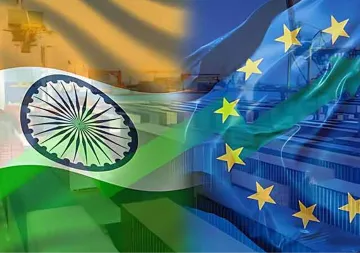
As trade routes fracture and geopolitics hardens, IMEC offers a diversification-driven connectivity model—less about rivalry, more about resilience ...
Despite losing territory, ISIS sustains global influence through digital ecosystems that radicalise, mobilise, and inspire violence with minimal contact or control ...
Forged amid mounting economic strain, the trade deal inked in Busan reflects a fragile de-escalation between the United States and China rather than a durable reset of their economic relationship ...
Cyclone Ditwah has tested the NPP’s crisis governance even as the party retains considerable support in Jaffna, despite stalled reconciliation and unresolved ethnic concerns ...
Climate volatility is exposing the limits of the Indus Waters Treaty, raising urgent questions about whether a Cold War–era framework can continue to govern a warming world ...
Amidst a climate of fragmentation, the Australia–Canada–India (ACITI) trilateral seeks to build resilience and stability in alternative pathways to climate technology. ...
AI adoption by terrorist groups intensifies threats, challenging state-led counter-terrorism efforts ...
India’s engagement with Syria underscores a consistent, interest-driven approach shaped by regional stability, strategic continuity, and geopolitical pragmatism ...
Cyprus’ 2026 EU Council Presidency aims to advance strategic autonomy by strengthening security, competitiveness, and global partnerships, while leveraging its Eastern Mediterranean role amid a fragmented geopolitical order ...
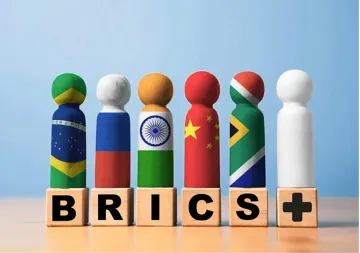
COP30 outcomes reveal mixed progress, BRICS and Global South driving equity, adaptation, and climate finance reforms ...
India’s re-election to the IMO Council underscores its growing influence in global maritime governance and its ability to shape a more inclusive, sustainable, and rules-based ocean order ...
China’s Social Credit System demonstrates how information warfare is embedded within domestic governance, using surveillance and data to shape behaviour, enforce conformity, and suppress dissent ...
China’s Global Security Initiative is formalising long-standing defence ties across South Asia, deepening Beijing’s security footprint and complicating India’s regional leadership ...
While visions of a politically united Africa have repeatedly faltered, the AfCFTA offers a pragmatic pathway toward deeper continental integration through trade integration and institutional alignment ...
As fighting resurges along the Thai-Cambodian border, China’s quiet diplomacy reveals a strategy focused less on resolving conflict than on managing instability and shaping the regional balance ...
China’s smart city push blends digital governance with surveillance, military fusion, and global tech exports—raising alarms over control, data, and security ...
A surge in global conflicts is driving unprecedented demand for solid rocket motors, reshaping missile stockpiles, defence manufacturing, and military space capabilities ...
China’s CEWC signals tech-driven growth, selective foreign investment, and strategic planning in the 15th Five-Year Plan ...
Smart climate governance needs to be set in place that aligns incentives and institutions to de-risk climate finance, unlock public–private synergies, and deliver scalable solutions ...
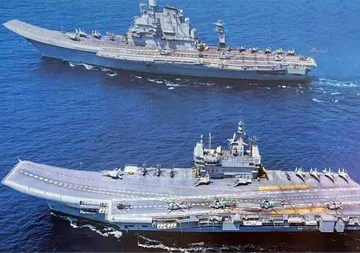
The navy’s expanding constabulary role—encompassing diplomacy, surveillance, and maritime policing—reflects India’s efforts to shape the security environment in the Indo-Pacific ...
With global ocean governance frameworks taking shape in 2025, the success of the Ocean Decade will hinge on stronger coordination, sustained investment, and deeper engagement with communities and industry ...
China’s Military Operational Posture is Changing, and India Should be Worried about it ...
Beijing sees Washington’s pivot to selective engagement and reliance on allies as an opportunity to recalibrate posture and prepare for long-term multi-domain competition in the Indo-Pacific ...
The detention of an Indian citizen in Shanghai illustrates how Beijing uses civilian administrative tools to assert its territorial claims over Arunachal Pradesh while remaining below the threshold of overt confrontation ...
Although India is mentioned sparingly in the NSS, the document’s focus on burden-shifting, Indo-Pacific security, and competition with China presents New Delhi with both risks and strategic opportunities ...
Mitu Sengupta is a Full Professor with the Department of Politics and Administration at Toronto Metropolitan University. She is also a Visiting Professor at the Council for Social Development (CSD) and Senior Adjunct Fellow at Research andInformation Systems for Developing ...
Read More +
Mitu Sengupta is a Full Professor with the Department of Politics and Administration at Toronto Metropolitan University. She is also a Visiting Professor at the Council for Social Development (CSD) and Senior Adjunct Fellow at Research andInformation Systems for Developing ...
Read More +