Japan’s new PM Sanae Takaichi starts strong abroad, but fragile party alliances and domestic pressures raise questions about how long her political honeymoon will hold. ...
Ten years on, the Eurasian Economic Union remains a work in progress, its ambitions for integration tempered by geopolitical tensions and uneven economic realities. ...
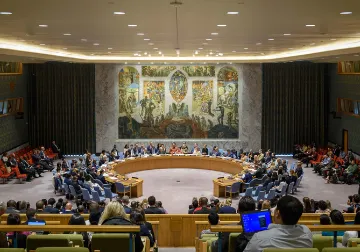
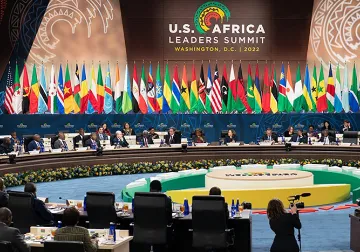
Across regions and geographies, the type of government in power, the degree of political instability, and a country’s ‘regional power’ status influence its openness to multilateral cooperation and the choices made within it, which in turn shape how the country is perceived internationally—sometimes rightly, sometimes ...
India’s gig economy offers flexibility and income opportunities, but without stronger protections, skilling, and formalisation, it risks deepening inequality and trapping workers in low-wage, insecure jobs. ...
As global leaders convene in Belém for COP30, Africa stands at a pivotal moment, with its climate future hanging in the balance. ...
India’s consumption-led expansion and China’s investment-driven model reflect two divergent growth paths now facing tests of sustainability amid a changing global economic landscape. ...
Eroding confidence in Western institutions underscores the need for impartial leadership—an opportunity India is well placed to seize. ...
Madagascar and Seychelles illustrate two opposing currents in Africa’s political seascape — one turbulent and uncertain, the other calm yet cyclical. Whether either can steer toward lasting democratic stability remains to be seen. ...
India now has a strategic opening to build a broad political consensus on the use of force against Pakistan and China, grounded in lessons from past governments and recent military responses. ...
From balancing neighbours to courting Beijing, Bangladesh’s evolving China ties signal a new chapter in South Asia’s geopolitical realignment. ...
The expanding US footprint in South Asia is unsettling China’s long-held regional calculus, complicating its ties with key partners like Pakistan. ...
Takaichi’s opening week compresses Japan’s twin imperatives — alliance reassurance and Indo-Pacific outreach — into rapid diplomacy. ...
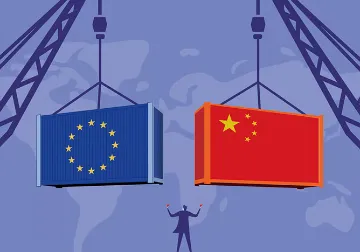
The EU’s new strategic agenda with India signals Brussels’ intent to transform a traditional donor-recipient dynamic into an equitable partnership that advances trade, technology, and sustainable development across the Global South. ...
The AUKUS revival marks a test of Washington’s resolve to reassert leadership and stabilise the Indo-Pacific’s fragile maritime security order. ...
As the United States tightens its skilled migration framework through higher costs and stricter visa rules, Europe is positioning itself as a stable and rights-oriented alternative for Indian professionals. ...
As Thailand’s third prime minister in two years, Anutin Charnvirakul faces the challenge of restoring faith in institutions, rebuilding economic confidence, and navigating shifting regional dynamics. ...
The creation of Rudra brigades and Bhairav battalions marks India’s bid to refine its coercive doctrine and sharpen operational readiness against China and Pakistan. ...
As private firms enter cyber geopolitics, state dominance online is eroding—reshaping power, legality, and the ethics of modern cyber warfare. ...
Expanding railway links are reshaping Northeast India’s connectivity, opening new trade corridors and economic opportunities across borders. ...
Bhutan is redefining its nationalism by embracing technology, mainstreaming or mandating national services, and symbolising the Gelephu Mindfulness City project. ...
As Bolivia elects Rodrigo Paz, its move away from socialism could inspire a wider regional recalibration toward centrist governance. ...
While policy momentum is building, addressing the gap in patenting and research output is crucial to turn its design strength into a competitive manufacturing and innovation base ...
As India’s pharma prowess grows, its South Asian neighbours walk the fine line between benefiting from humanitarian aid and enduring strategic dependence. ...
Safeguarding global supply chains depends on collective action to secure maritime routes against rising physical and cyber threats. ...
Integrating marginalised coastal communities into the blue economy is key to breaking poverty cycles and realising Southeast Asia’s ocean-based potential ...
Teacher time is India’s scarcest educational resource. Leveraging AI as an adaptive teacher support system can sustain equity and promote excellence, particularly in resource-constrained contexts ...
Mitu Sengupta is a Full Professor with the Department of Politics and Administration at Toronto Metropolitan University. She is also a Visiting Professor at the Council for Social Development (CSD) and Senior Adjunct Fellow at Research andInformation Systems for Developing ...
Read More +
Mitu Sengupta is a Full Professor with the Department of Politics and Administration at Toronto Metropolitan University. She is also a Visiting Professor at the Council for Social Development (CSD) and Senior Adjunct Fellow at Research andInformation Systems for Developing ...
Read More +