-
CENTRES
Progammes & Centres
Location
25 results found
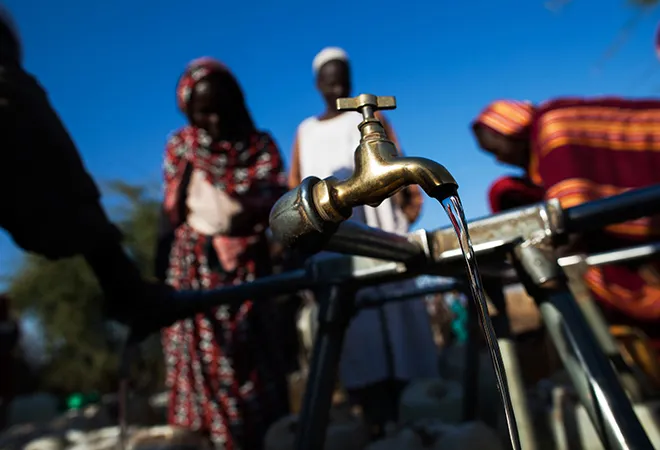
The 2026 UN Water Conference could provide an impetus to South Asia’s water cooperation if it addresses the region’s unique challenges
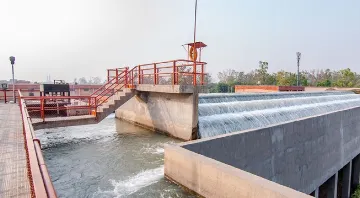
As climate-driven extreme events are on the rise, Indian cities must adopt sustainable and adaptive water management to tackle them
नवीन राष्ट्रीय जल धोरणामध्ये स्पष्ट करण्यात आलेला नवीन �
The new water governance paradigm articulated in the new national water policy is ” delineated by a multi-disciplinary and multi-stakeholder approac
A collective will to integrate climate resilience into urban water governance and embrace innovative management strategies is imperative to secure con
Restoration, management, and protection of water resources can contribute to peace and long-term stability
Climate-Smart Agriculture holds promise in building a robust agri-food system amidst the intensifying effects of climate change, however, there is a p
दिल्ली में पानी से जुड़ी चुनौतियों से निपटने और जलापूर्त
दिल्ली के जल स्त्रोतों की समीक्षा से ये पता चलाहै कि, राजध
The Virtual Water alternative presents itself essentially due to the highly tradeable nature of agriculture products.
Unless a sectoral re-allocation of water resources enforcing adequate demand management is done, the issues of water scarcity might not be resolved.
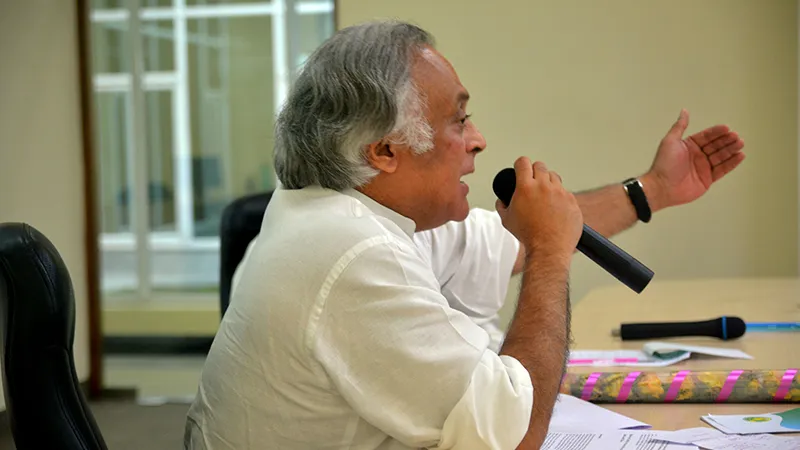
India and China should begin a full-fledged dialogue on water resources in order to address the suspicion that China is diverting river water away from India, according to former Union Minister Jairam Ramesh.
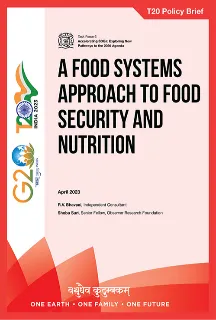
The world is currently witnessing an increase in the prevalence of undernourishment as well as a rise in the incidence of overweight, obesity, and non-communicable diseases. Addressing issues of food security and nutrition would not be possible without adopting a food systems perspective—from farm to fork. Indeed, in 2021, countries developed national pathways to transforming food systems to accelerate progress towards the Sustainable Developme
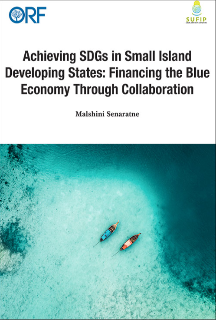
The geographical and socioeconomic characteristics of small island developing states (SIDS) expose them to unique challenges. Climate change, in particular, poses a severe threat to SIDS, with rising sea levels, ocean acidification, and changing precipitation patterns negatively affecting their ecosystems, economies, and communities. This brief assesses the challenges faced by SIDS in accessing traditional climate financing and analyses the effec
In the domain of water cooperation between India and Pakistan, maybe it is important to look at actors beyond the Ministry of Water Resources. Greater cooperation between the farming communities could be one more logical step towards building a substantial peace constituency in Pakistan.
Anti-India sentiments have gone viral in rural Nepal and unless urgent steps are not taken, this could lead to a widening gap between India and Nepal, according to former Minister of Water Resources of Nepal, Dr. Dipak Gyawali.
This paper analyses the patterns of virtual water trade (VWT) in agricultural products across the globe—VWT is the flow of water embedded in goods and services when they are traded—and the implications for alleviating water scarcity. Virtual water trade has been crucial in ameliorating water scarcity in virtual water-importing nations. At the same time, it has led to per capita water availability declining at a more rapid rate among the net v
Wetlands are important ecosystems that provide benefits such as flood control, water purification, and biodiversity conservation. In India, however, wetlands are threatened by pollution, encroachment, and rampant real estate development. This brief assesses the East Kolkata Wetlands to illustrate the challenges of preserving urban wetlands in India. It also presents recommendations to establish more comprehensive wetlands management and conservat
India and Nepal are fellow riparian nations in South Asia and thus could potentially use their shared water resources as avenues for collaborative effort. Using water to generate hydropower for maximum benefit comes from a place of mutual interest, allowing for optimum leverage for the socio-economic development of both countries. This brief outlines a history of the India-Nepal hydroelectric power scenario, and offers recommendations for growth.
The second Mekong-Ganga Dialogue, held in Laos and Thailand, effectively threw diverse and comparative insights into wide range of water issues plaguing both the regions and deliberated upon possibilities of cooperation and collective actions to sustainably manage water resources.
Despite the call for a global paradigm shift in water governance—from the traditional reductionist engineering approach to the more holistic integrated river basin governance framework—a change is not yet perceptible in India’s water governance architecture. The hesitation to change has led to ecological problems and conflicts at various levels. This paper identifies the knowledge gaps that inhibit the paradigm shift and explores the lacuna
With the Cauvery Water Disputes Tribunal announcing its final award, water, in general, and inter-State river water issues, in particular, are once again in the national focus. There are varying concerns about the socio-political fallout of the Tribunal award in the riparian States, with Karnataka and Kerala expressing unhappiness to differing degrees, and Tamil Nadu and Puducherry, respectively, expressing 'relief' and 'satisfaction'.
This paper examines current water management ideologies and practices and the impact they create on strategies for pan-Asian connectivity. It suggests that 'business-as-usual' management principles and the harnessing of transboundary rivers tend to undermine efforts at achieving economic and ecological sustainability goals, as well as meeting long-term development challenges. The Mekong and Ganga basin regions, in particular, suffer from inadequa
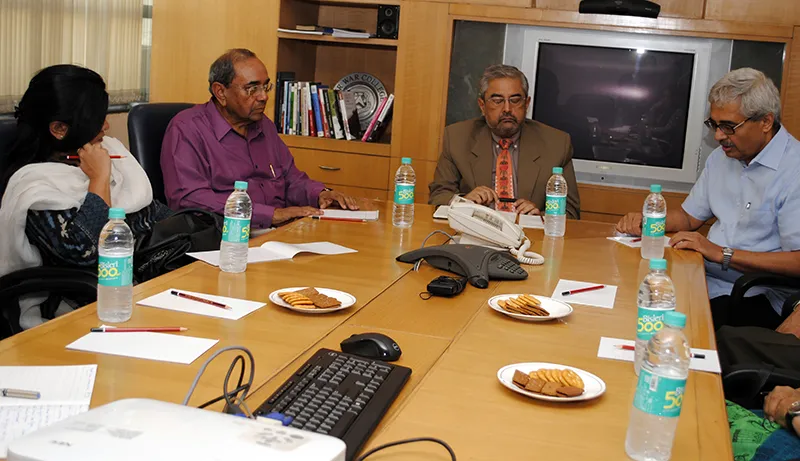
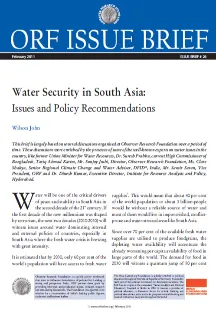
This brief is largely based on several discussions organised at Observer Research Foundation over a period of time. These discussions were enriched by the presence of some of the well-known experts on water issues in the country, like former Union Minister for Water Resources, Dr. Suresh Prabhu, current High Commissioner of Bangladesh, Tariq Ahmad Karim, Mr. Sunjoy Joshi, Director, Observer Research Foundation, Ms. Clare Shakya, Senior Regional C
महाराष्ट्रात सध्या निवडणुकीचे वारे जोरात वाहताहेत, पण महाराष्ट्रातील बहुसंख्य जनता आज दुष्काळाच्या आगीत होरपळतेय याकडे मात्र दुर्लक्ष होते आहे.