-
CENTRES
Progammes & Centres
Location
6455 results found

In the 'Bhullar case', the Supreme Court could now be construed to have applied the 'reasonable restriction' theory in the larger application of Article 14 of the Constitution, promising 'equality before law and the equal protection of the laws'.
Bhutan's reported decision to establish diplomatic relations with China marks an end to the system of buffer states that the British Raj had created in the 19th century to secure the subcontinent against encroachments from external powers.
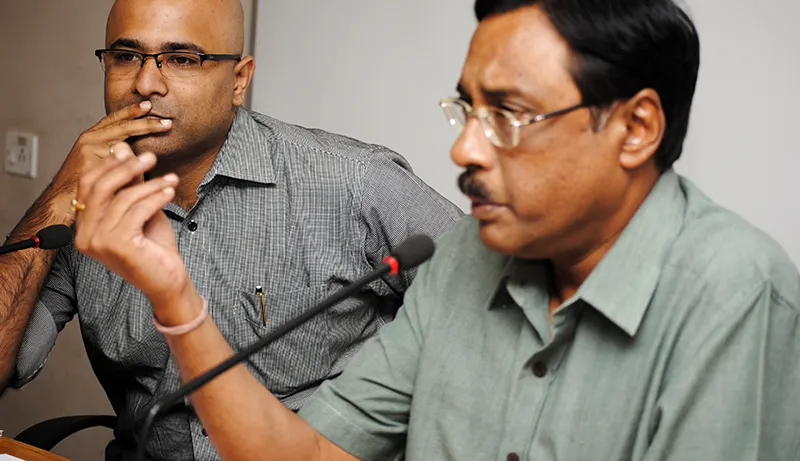
Noted author of a book on Bhutan, Omair Ahmad, argued that the way forward for India was to acknowledge that it could no longer insulate Bhutan. In the past, India engaged the monarchy and the elite, and the time has come to broaden the relationship, he said.
The announcement on the side-lines of the Rio+20 Summit that Bhutan and China have decided to establish diplomatic relations is not only a reflection on the evolving foreign policy of the Kingdom but it also carries with it broader implications for the political dynamics of Asia.
The landlocked Kingdom of Bhutan, which borders two Asian giants--China in the north and India to the south-- is some sort of a misfit in this tightly enclosed geographic space. Its two neighbours when compared to Bhutan are a world apart,
The Bhutan cabinet's scrapping of the allotment of some 1,000 acres of land proposed for the proposed education city has put the ambitious project based on public-private partnership (PPP) in a limbo.
Popularity of India as an education destination for Bhutanese students is a reference-point for close bilateral ties. Today, as many as one third of Bhutan's student population are pursuing higher education in India,
Bhutan has announced its support for Japan's bid for a permanent seat in the UN Security Council. This was announced by Bhutan's Prime Minister, Tshering Tobgay, who completed his official visit to Japan on July 2.
A parliamentary delegation from the tiny Himalayan kingdom witnessed the log-jam in Indian Parliament on 10 August. The combined Opposition's Rajya Sabha tirade against the government over allegations of corruption involving ruling BJP's ministers was the main reason for the log-jam in the Indian Parliament.
A new leadership has assumed office in Bhutan defying all pre-poll surveys that were predicting an adverse result for the country's opposition party. The People's Democratic Party (PDP), led by Tshering Tobgay won the elections by winning 32 seats out of 47.
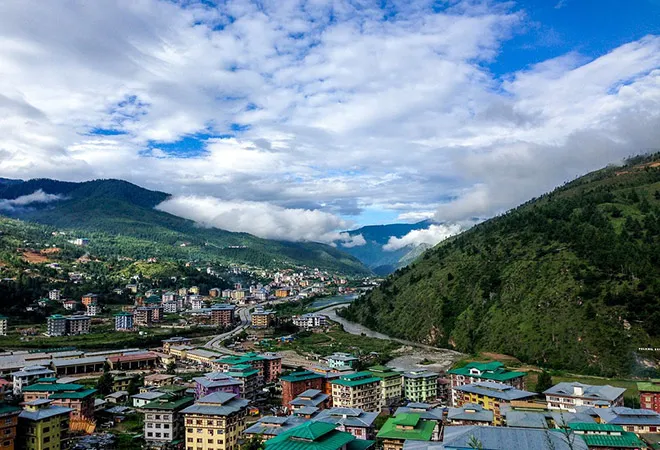
The launching of the Nu. 1.2 billion CSI and startup flagship has been a major initiative undertaken by the present government that has professed the motto of “Narrowing the Gap.”
As Bhutan prepares for its second general elections this year, the political landscape of the nation has yet to undergo significant change from the first one. While being active, democracy in the Himalayan Kingdom is still State-centric,
Bhutan, the tiny South Asian country, is a power-house literally. Power constitutes the country's single largest export item. The Himalayan kingdom is located in one of the fastest growing regions of the world.
Since time immemorial, the land that is now Bhutan has been a nation that has limited its interaction with the outside world and discouraged immigrants. This to some extend could be attributed to the nation's tie and linkages with Tibet.
Ties of the Himalayan kingdom of Bhutan with Nepal, Bangladesh and India stand to be boosted. Trade ties with Bangladesh are expected to be intensified with India allowing transit to Bangladesh for trade with Bhutan.
The small Himalayan Kingdom of Bhutan, surrounded by two giant regional superpowers, India and China, is showing the world that simple resolve and strong political will can pave way for a huge change.
The little Himalayan kingdom of Bhutan, owing to its strategic geographic location, is turning out to be the new hub for regional cooperation in South Asia. Bhutan's hydro-power prospects are no secret.
King Jigme Khesar Namgyel Wangchuck's address to the nation on the 106th National Day function held on 17 December 2013 came as a ready-reckoner for the new government at the helm of the Bhutan's affairs, when the king heavily criticised the poor implementation of policies.
The tiny Himalayan Kingdom of Bhutan has completed 25 years of energy cooperation with India. The idea was/is for Bhutan to facilitate Indian funding for setting up hydro-power projects in the country,
'Election fever' has descended on the Himalayan Kingdom of Bhutan, but it is not inspired by the political class and the masses but by the State. The notification of the Election Commission on limiting the role of religion.
Neighbours India and Bhutan have shared five decades of friendly ties. Using as a backdrop Bhutan’s transition from a monarchy to democracy beginning in 1998, this brief makes an assessment of India’s role in Bhutan’s economic development in the past 20 years. It looks at India’s contribution to Bhutan in terms of trade, hydropower enrichment, and development cooperation. The brief argues that India and Bhutan’s relations have endured
This paper assesses United States (US) presidents Donald J. Trump’s (2017-21) and Joe Biden’s (2021-present) respective records on the India-US technology partnership. During the Trump years, this domain of bilateral cooperation saw the finalisation of foundational agreements, including those on force interoperability, and new precedents on US arms export designations for India. While these agreements pertained mostly to defence technology, t
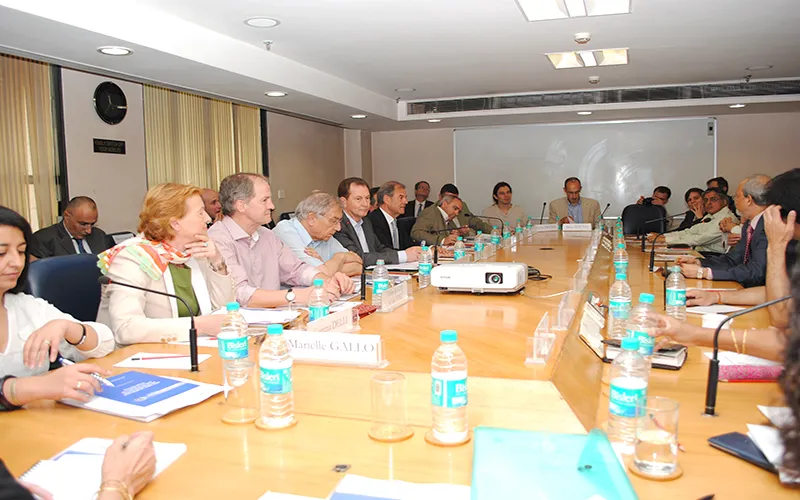
During a roundtable with a delegation of EU Members of Parliament, the ORF Director pointed out the great chance the international community has today in setting up electricity generating plants in India with green technology.
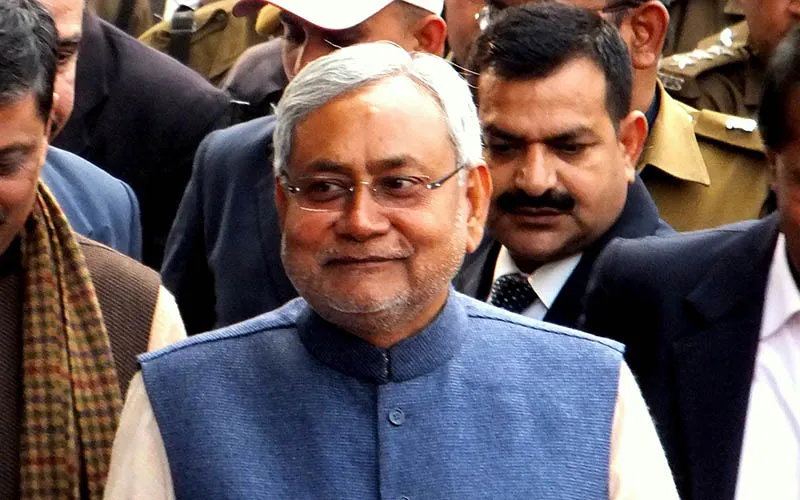
Nitish Kumar is already playing with one hand tied behind his back, by the RJD. Till very recently Kumar and the BJP developed Bihar in collaboration. They are, in fact, conjoined brothers in development. Modi must rise above his personal feelings and go all out to support Kumar.
That the Muslims in Bihar turned to Nitish Kumar of Janata Dal (United) despite his alliance with the BJP could well be another turning point in the country's political history. This confirms the extent of Muslim exasperation with the Congress. Nitish Kumar harnessed this disgust deftly.
Former Secretary (West) in the Ministry of External Affairs (MEA), Mr. M Ganapathi, has emphasised the importance of the Indian Ocean in global developments in the 21st Century and the importance now given to the region by the government.
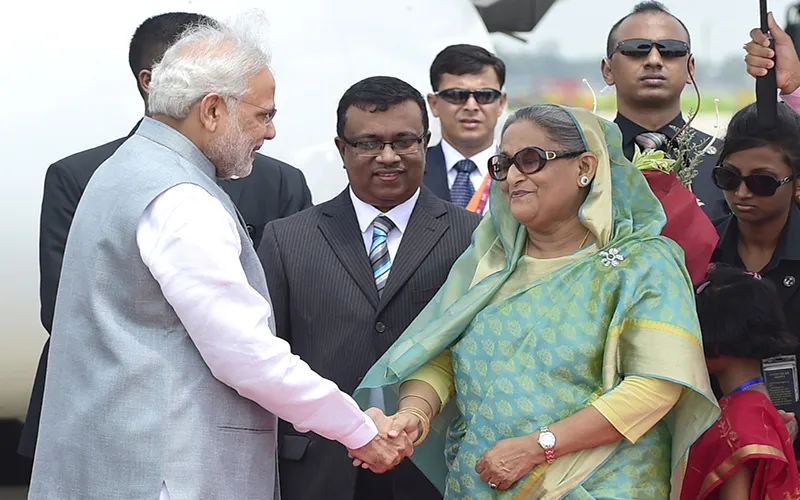
Bangladesh and India are standing at a take-off stage in their relationship despite anti-Indian groups and political parties trying to find fault with Hasina's moves. The Chinese and Pakistani lobbies are unhappy with this growing engagement.
Mr. Manish Tewari, Member of Parliament, has introduced a Bill in the Lok Sabha to regulate the functioning and use of power by the Indian intelligence agencies within and outside India and to provide for the coordination, control and oversight of such agencies.
The winter session of the Parliament, which has just commenced, is of critical significance to the country and its economy. While some may link the importance of this session to the much awaited Lokpal bill.
An audiotape purportedly from Osama bin Laden was aired on the Arabic network Al-Jazeera on January 3,2004. This is the third message exclusively relating to Iraq attributed to him since before the US-led invasion of Iraq by the coalition forces. The first, called a special message to the Iraqi people, was aired on February 11,2003, and the second
There was a massacre of hundreds of Shias of Gilgit in the Northern Areas (NA) of Pakistan (before 1947 called the Northern Areas of Jammu & Kashmir) in 1988 following a demand raised by them for the creation of an autonomous Shia state to be called the Karakoram State, consisting of the Shia majority areas of the NA, Punjab and the North-West Frontier Province (NWFP).
It is not difficult to imagine that the Chinese will be uncomfortable with the current scenario. China is against any "outside power" being involved in the South China Sea, though its own forces are regularly operating in the Indian Ocean region.
If the BJP stands by its leader Arun Jaitley's illogic, it must necessarily oppose any negotiation of India's land boundary disputes with any of its neighbours, including China, Pakistan and Nepal. If this is a considered position of a party that is in striking distance of power, one shudders to think what the foreign policy of a BJP government might look like.
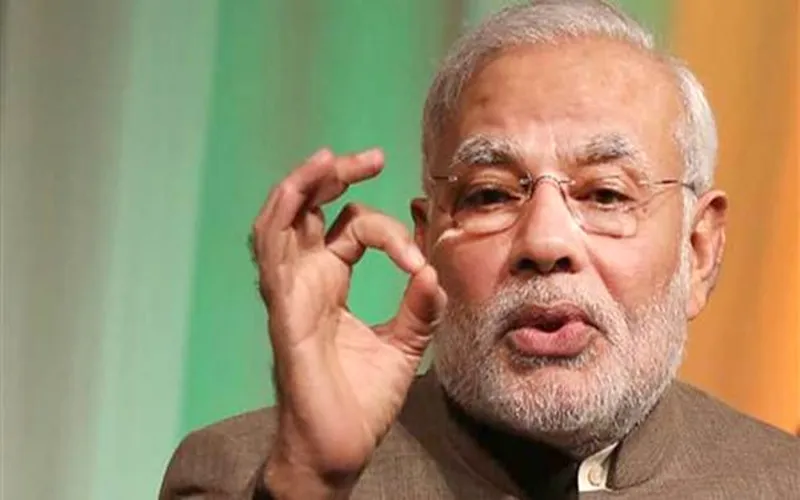
If Modi is a strong leader who is bringing greater purposefulness to India's China policy, Xi is even more powerful at home. He has conveyed a strong interest in transforming relations with New Delhi and is willing to explore opportunities with Modi.
India's 16th general elections, billed as the most expensive elections ever, are witnessing an unprecedented flow of black money into country's electoral process. Analysts claim that a mammoth 400 billion rupees, roughly 0.35 percent of India's GDP, has been pumped into the democratic process.
Nepali political leaders have missed a self-imposed deadline for promulgation of the country's new Constitution. Last year, in the wake of the election to the second Constituent Assembly (CA), the lawmakers had kept January 22 as the deadline.
Intelligence is the first line of defence in any war, be it a conventional war or a war against terrorism. The American security apparatus has readjusted itself well, in almost all the areas of modern warfare in the post cold war era. However, the recent American failures indicate that still much needs to be done in of the areas of modern day warfare, and that is intelligence gathering.
At least two people were killed and 50 others injured in a series of 300 simultaneous small bomb blasts in 50 cities and towns, including Dhaka, the capital, across Bangladesh on August 17,2005.

After Independence, none of the national parties - the Congress, the Janata Dal, leave alone the BJP - have ever had anyone other than a Hindu as their supreme political leader. The only recent exception is Sonia Gandhi of the Congress. But even her links into politics are exceptionally pucca, upper caste Hindu.
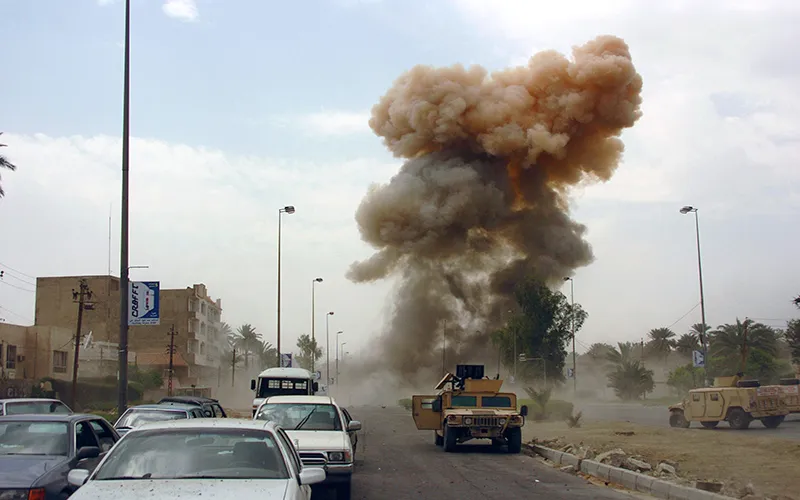
Terrorism, like almost every other human activity that involves production and creation of goods and services, needs money. Described by experts like Raymond Baker as Gross Criminal Product, this included illegal capital flight, narcotics trade, smuggling of arms and other goods, human trafficking, counterfeiting and computer crimes.
A constitutional court must not outsource its judgement on freedom of expression online to an industry association even if it convenes others to help make this decision. It must also avoid allowing the executive to take over this role, determining without any transparency what content is blocked.
The DRDO has done a commendable job as evident from the initial tests of the Missile Defence system, but its net worth as a truly viable option can only be assessed when the claims made about the system are realized and it is serial produced for active deployment.
The January 20, 2012 attacks in Nigeria's northern city of Kano, which left at least 185 police and residents dead, was the biggest attack carried out by Boko Haram, a Sunni extremist group which owed allegiance to al Qaida and called for an Islamist rule.