18 results found
সুন্দরবন সংরক্ষণের জন্য নয়াদিল্লি ও ঢাকার প্রচেষ্টা স�
सुंदरबनच्या संवर्धनासाठी नवी दिल्ली आणि ढाका सातत्याने
सुंदरबन के पर्यावरणीय तंत्र को सुरक्षित रखने के लिए भारत
Despite efforts by New Delhi and Dhaka to conserve the Sundarbans, institutional safeguards do not effectively translate into on-the-ground protection
ভারত ও বাংলাদেশ — এই দুই দেশেরই সুন্দরবনের পুর্ব-নির্ধা
Bangladesh and India should consider reviving the office of the Sundarbans commissioner with jurisdiction over the defined and agreed geographical are
The Ganges Water Sharing Agreement will expire in 2026. What awaits then?
Cyclones are a regular occurrence in the region and contrary to the commonly held perception, the mangrove ecosystem is quite resilient to momentary d
There is enough economic justification for pursuing a policy to achieve the Vision Scenario.
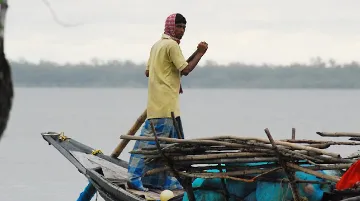
Sundarbans is facing twin challenges of increased population pressure in the north and rising sea levels in the south, occasionally teamed with cyclones from the Bay of Bengal.
The intersecting impacts of COVID-19 and climate change are compounding the vulnerabilities of coastal communities. This paper examines the disastrous effects of cyclone Amphan in the Bengal delta region of the Indian Sundarbans amidst a countrywide lockdown triggered by the pandemic, and their cascading consequences for a rural community inhabiting this climate hotspot. It highlights the livelihood crisis experienced by internal rural-urban mi
Storm strikes are common in the Indian Sundarbans Delta on the northern Bay of Bengal and will only become more frequent and intense in this era of climate change. Every time a cyclone has hit the Sundarbans, the attempt has been to adapt in situ by creating protective infrastructure, and later return to the same conditions prevailing prior to the disaster. Such reliance on the notion of ‘resilience’ has become increasingly unsustainable and
The Sundarban ecoregion, straddling India and Bangladesh, is home to the largest contiguous mangrove forest in the world. Parts of the forest are designated as World Heritage Sites in both countries due to their rich biodiversity. The natural areas of the Sundarban are influenced by human use and, in recent years, increasingly by climate change. This paper explores an institutional arrangement that could help identify and implement the options th
As if COVID-19 was not enough, Amphan has not merely damaged infrastructure, rendered many homeless, and affected small businesses — but has imposed a cost on the West Bengal economy whose indelible impacts will be felt in the long-run.
This paper argues in favour of integrating valuation of ecosystem services in development policy planning in India. The paper presents three cases where monetary values of ecosystem services have been estimated to illustrate the significance of the exercise: the Terai Arc Landscape (TAL) in Uttarakhand, the Kunigal Wetlands in Karnataka, and the Indian Sundarbans Delta (ISD) in West Bengal. The first two cases highlight the ecosystem-livelihoods
This paper highlights the importance of water valuation and pricing for sustainable and efficient water allocation and management in India. An efficient water-pricing mechanism could be a tool to address the impending crisis of water scarcity, which necessitates a robust, objective, and holistic valuation technique. Every unit of water consumed for economic purposes has an ecological footprint, and this opportunity cost or externality factor need