-
CENTRES
Progammes & Centres
Location
65 results found
The creation of Rudra brigades and Bhairav battalions marks India’s bid to refine its coercive doctrine and sharpen operational readiness against Ch
Operation Sindoor showcased the operational maturity of India’s indigenous defence capabilities. Turning this success into long-term self-reliance d
पहलगाममधील भीषण दहशतवादी हल्ल्यानंतर भारताने गेल्या आठ
The crisis in Balochistan escalates as Pakistan’s military crackdown grows harsher, suppressing activists and disregarding political solutions in fa
When the Western world looks disapprovingly at India’s pursuit or insistence on strategic autonomy for its foreign policy, especially vis-à-vis Rus
लष्करी पुनर्रचनेद्वारे आपल्या अंतराळ आणि सायबर क्षमतां
China’s efforts to bridge the disparities in its cyber and space capabilities by restructuring its military serve to widen the gap between China and
Four years after creating the Chief of Defence Staff (CDS) post, the landmark plan of integrated theatre commands still needs to be implemented
In recent times, India has extensively expanded its security partnerships. But will this kind of security cooperation suffice for India’s requiremen
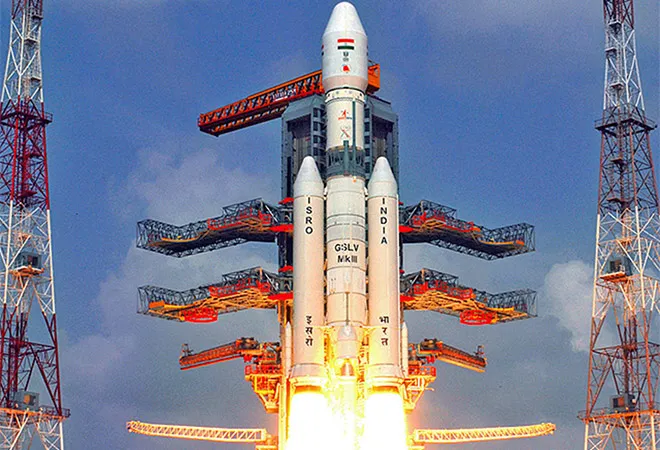
The entry of commercial enterprises or other state-owned enterprises can help augment the capacities of Indian space launch vehicle technology
It would seem worth the effort for the Indian military to invest well — in a sustained manner, over the coming decade — in high-end simulators.
Despite their growing usage in armed conflict, artificially intelligent unmanned combat systems raise questions of law, ethics and accountability
By announcing the creation of a chief of defense staff, New Delhi hopes to modernise India’s armed forces.
As China’s People’s Liberation Army (PLA) continues to undertake significant organisational reforms, the asymmetric inequalities between the Indian military and PLA are set to widen.
Military modernisation was the fourth and last of Deng Xiaoping’s ‘Four Modernisations’. Even before the third modernisation got underway—that of science and technology—China began using commercial technologies to advance its military capabilities. This strategy has gained salience since Xi Jinping came to power in 2012 and made it the state’s key goal to transform the PLA into a “world-class military”. Military-Civil Fusi
The long-term challenge for India is in ensuring deep and sustained investments in defence R&D and a defence industrial ecosystem that can, if not comprehensively, but for the most part, service the requirements of the Indian military.
No one believes that India would wipe out Lahore, if Pakistan used a low yield nuclear weapon against an Indian military formation, and that, too, in Pakistan.
Proactively taking advantage of China’s involvement in the Taiwan Strait to fight China in multiple theatres is something Indian military planners should think about.
The strong reactions to the non-inclusion of American firms in a major Indian military procurement tender, in the backdrop of proposed aggressive weapons sales by the Americans, paint a contrasting picture that could influence India-US defence relations in the near future. This Paper looks at the entire gambit of Indo-US Defence relations and, based on past experiences and ongoing deliberations, the challenges ahead.
The Integrated Defence Staff released the first-ever public joint doctrine for the Indian armed forces (JDIAF-2017) in April 2017. Absent a publicly articulated national security strategy, the joint doctrine presents important clues about what that strategy might be. This paper examines JDIAF-2017 in conjunction with other Indian military doctrines, public writings of leading Indian strategists, as well as foreign military doctrines and strategie
The Indian Army’s (IA) difficulties with regard to the acquisition of light tanks are as much self-inflicted as they are a product of fiscal constraints. The Army has exerted only half-hearted efforts in developing its light-armoured capabilities—inconsistent with current Army doctrine and in disregard of history. Indeed, the IA has used light armour in high-altitude operations in the past. This paper argues that the IA is hobbled by an infan
A decade of far-reaching defence reforms under Modi has transformed the Indian military’s reputation and capabilities
North Korean army, which is the fifth largest in the world with a very high artillery pile, should not to be under-estimated, according a former Indian military intelligence official.
India’s emergent techno-military doctrine is redefining calibrated escalation to impose the cost of ‘fighting without victory’ on Pakistan within the nuclear environment.
The divergent and cautious responses to the Pahalgam attack and Operation Sindoor pose a new challenge for Indian diplomacy
India has embraced an assertive strategy of escalation dominance to impose steep costs on future Pakistan-backed terrorism.
Aggressive red teaming would help discover gaps and vulnerabilities before India’s adversaries do. Against this backdrop, these seven questions are critical for the post-Op Sindoor strategic environment
Abstract On the battlefield, the enemy’s intent, will, capabilities, and plans are taken into consideration to achieve end goals. In peacetime simulations, wargaming centred on adversaries serves the same purpose. Red-teaming is used in the planning and decision-making of a military organisation to assess one’s plans by simulating adversaries’ cognitive and operational behaviour. The Indian military is undergoing organisational and capabil
Small satellites have gained considerable importance in recent years. Although small spacecraft have existed for decades, their military applications have recently gained prominence owing to technological advances in their development and integration into the armed services of the major spacefaring countries across the world. This paper analyses the significance of small satellites in the C4ISR capabilities of the three service branches of the In
The Union Cabinet announced in June this year the Agnipath scheme, designed to recruit youths into the Other Ranks (ORs) of the Indian armed forces. The scheme, which came into effect immediately, will enable new recruits, or Agniveers, to serve in the military for four years. While the stated aim is to turn the Indian military into a younger and more tech-savvy force, this brief argues that there is also a strong financial imperative beh