11 results found
भारताच्या नागरी भागात महिलांचे नेतृत्व हळूहळू वाढत असल�
Women’s leadership in India’s urban governance has steadily increased but they continue to face barriers such as limited experience, social stigma
The recent violence against student protestors can undermine the newly re-elected Hasina government's efforts and potentially erode its public support
मालदीवशी असलेले संबंध अस्थिर असले, तरी भारताने अलीकडेच म
Despite turbulent ties with Maldives, India recently extended budgetary support of nearly US$ 50 million
Women representatives have played a critical role in redefining local priorities, but proper measures need to be adopted to address the existing chall
The bill has to be a constitutional amendment as it overshoots the Supreme Court's 50% cap on quotas and takes the total to 60%.
India’s 73rd Constitutional Amendment Act, which empowered local self-governments (Panchayati Raj Institutions) and reserved one-third of electoral seats in these bodies for women, has elevated women’s participation in rural governance. India is among the foremost countries for women’s participation in local governments, with over 1.45 million women shaping local decision-making. Women leaders are a critical link between local governance, s
The quotas in textiles, enforced under the Multi Fibre Agreement (MFA) which was signed in 1994, are going to be lifted on December 31, 2004 and the trade in textiles would come under the WTO directly. It means that all forms of protectionism applied to textile industries the world over, would have to go.
Saudi Arabia's Nitaqat system has achieved some early success. It has been able to generate jobs for the Saudi population. But its long term success is open to question. It remains to be seen whether 'Saudization' will be successfully implemented long term through quotas and threats of punishment.
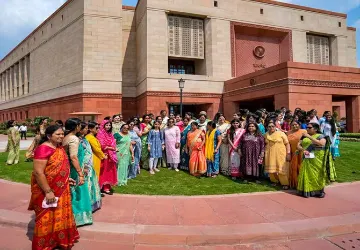
Women’s representation in local governance is a crucial indicator of gender inclusivity. Since 1993, the 74th Constitutional Amendment Act has reserved one-third of seats in Urban Local Bodies (ULBs) to women. Multiple states have since granted 50 percent reservation of seats for women in urban and rural local self-government bodies. Today, women have become a crucial political constituency, both as voters and as electoral candidates. This pape