20 results found
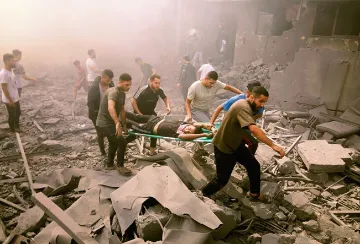
Gaza's reconstruction must be holistic, addressing infrastructure and essential services while prioritising economic rebuilding, currency stabilisatio
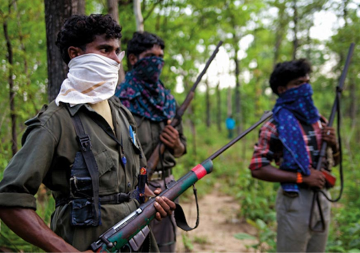
माओवाद्यांविरूद्धचा लढा तीव्र होत असतानाच, राज्याच्या �
Despite the recent series of successful operations against the Maoists, the state and its security forces have to entrench themselves in the state whi
नेपाळमध्ये देशांतर्गत आर्थिक संधींच्या अभावामुळे दररो�
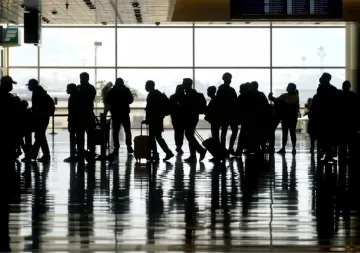
The lack of economic opportunities at home is forcing 1,700 Nepalis to fly abroad every day, including to the Russia-Ukraine War
इस्रायली सुरक्षा आस्थापनेचे निरीक्षण इतर देशांसाठी एक �
Evolution of the electoral space has somehow not been able to take place at the cost of “all retentionist” separatist sentiment and politics.
As the Biden administration grapples with the intricate interplay of domestic pressures and international obligations, particularly in the midst of an election year, there is a palpable sense of urgency to confront a myriad of challenges.
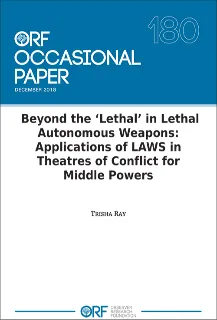
Even as Lethal Autonomous Weapons Systems (LAWS) promise to revolutionise the battlefield, very little analysis moves beyond the great powers to examine the interests that middle powers may have in these systems. Shaped by their own geostrategic contexts, demographic issues and geography challenges, countries like India, South Korea, Indonesia or the Philippines may find utility in LAWS for improving the efficiency of their forces, reducing both
This paper makes an assessment of the situation in eastern Ladakh following the Chinese occupation of several areas across the Line of Actual Control (LAC) in the summer of 2020. That occupation led to an incident in the Galwan river valley in mid-June, which resulted in deaths on both Indian and Chinese sides—the first such casualties since 1975. The paper outlines the course of events since then, and the negotiations that have been on
Israel has conducted multiple airstrikes over the past week, with reports claiming the deaths of senior Hezbollah military leaders, including Ibrahim Aqil and Ibrahim Mohammed Qubaisi.
In the recent history of terrorism, there have been four instances of well-planned, well-executed and well-synchronised multiple explosions by terrorist groups causing large casualties. These are the explosions in Mumbai (Bombay) in March,1993, which killed over 200 innocent civilians, at Coimbatore in Tamil Nadu in February,1998,
Despite the high number of casualties suffered in the Maoist attacks, the government's action unfortunately depends on the 'paradox of numbers'. And it clearly mirrors the phenomenon of "lumpy adjustment" instead of the needed incremental steps.
In the aftermath of the serial train blasts in Mumbai on July 11, in which 179 people were killed and 772 wounded, the question uppermost in public mind is ¿why has India become the most affected target of terrorism?¿ Ever since June 1985, when Air India¿s ¿Kanishka¿ was blown up over the Ireland coast, India¿s share of terrorists¿ incidents and civilian casualties has risen to become the highest in the world.
The ISIS has suffered very heavy casualties while defending Raqqa and their military and financial assets stand heavily degraded.
The proverbial Global South seems to be showing a fragmented approach to the crisis
It has become fashionable to forget the support that Hamas received from Israel during its formative years in the 1980s.
According to the Tsunami Laboratory at Novosibirsk in Siberia, there were 796 tsunamis in the Pacific Ocean region during the last century. Of these, only 117 caused human casualties and property damage. In the case of a majority of them, the human casualties and the property damage were near the source of the tsunami only.
The US's plan of reducing troop strengths abroad would be counter balanced by the new kinds of deployments. The trend now is towards intelligence weapons systems with precise missions that are network centric, capable of swift decision and superior performance in all echelons with fewer casualties.