-
CENTRES
Progammes & Centres
Location
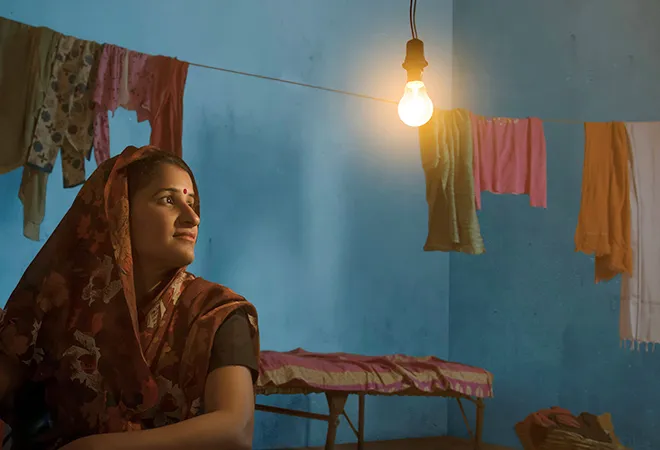 In 2011, only 55% of rural households in India were electrified (Census of India, As on February 2020). This percentage by now has increased to almost 100%. Traditionally the un-electrified households used to depend on kerosene lamps for illumination after sunset. Home based renewable energy (RE) solutions (such as solar lanterns, solar home lighting systems, solar torches) were introduced and promoted to provide quality and clean illumination to the rural households. Various models for promotion/dissemination and maintenance of these home based RE systems were adopted by the government and other civil society organizations. Many of these institutional models required and encouraged rural women to take more proactive roles in terms of ground level implementation. For example; The Energy and Resources Institute (TERI) engaged many rural women as entrepreneurs for Lighting a Billion Lives<1> (LaBL) programme, Barefoot College implemented their business model with rural women as the primary agents for change<2>.
There are also small scale community based renewable off grid plants such as solar micro/mini/small grids, and micro hydels. These systems were mostly installed by the developmental organizations or governments, with institutional models which in many instances involved women in decision making and other roles like awareness creation, maintenance, tariff collectors or marketing agents. In the rural localities, where now power is available for 18-20 hours in a day, the end users prefer inverters over home based renewable energy solutions.<3> In the rural electrified households with unreliable supply of conventional power, the role of home based renewable energy (RE) solutions has reduced as back up support during power cuts. With this, the role of women (and women groups) in promotion, management and maintenance of RE based household systems and off-grid power plants is also reducing. However, a few studies have been being conducted to identify the role of women in clean energy access . For example, in the year 2018 UNWOMAN conducted a survey in 100 villages across four states in India and mentioned that women are well situated to create community awareness about clean energy systems as they hold strong social capital (UNWOMAN, As on February 2020) .
On the other hand, the space of grid interactive renewable power is increasing. Today, the total installed electricity generation capacity of India is about 366 Gigawatts (GW) and 23% of this, about 84 GW, is from Renewable Energy Sources (RES) (Ministry of Power, as on January 2020). India showed significant growth in renewable based installed capacities in the last decade. The Compound Annual Growth Rate (CAGR) for installed generating capacity in electricity from 2008-2018 using RES stands at 18% (Ministry of Statistics and Programme Implementation, 2019). The Renewable Energy (RE) targets and the trends altogether show a promising future for grid interactive renewable power in India, and thus enhanced job opportunities.
The home based RE systems and off-grid power plants were engaging rural women in various roles. Will the expanding space of grid interactive renewable power be able to engage the rural women as the RE based off-grid power plants and households systems used to do? International Energy Agency (IEA) provided figures for solar rooftop companies in India. The study indicates that the share of female employees in office-based positions (such as design & pre-construction phase) and corporate segment is 18% and 34%, respectively (IEA and CEEW, 2019). In the area of construction and commissioning (where lesser educated and semiskilled rural women may be engaged) women constitute 3%, and, in operations and maintenance, a mere 1%.
The matrix below consolidates the conventional role of rural women, who generally are unskilled or semiskilled, in the RE based systems.
Table 1 Participation level of the rural women in RE space and utility level of RE based solutions (stand alone, off-grid & grid interactive) at different levels of rural electrification status
In 2011, only 55% of rural households in India were electrified (Census of India, As on February 2020). This percentage by now has increased to almost 100%. Traditionally the un-electrified households used to depend on kerosene lamps for illumination after sunset. Home based renewable energy (RE) solutions (such as solar lanterns, solar home lighting systems, solar torches) were introduced and promoted to provide quality and clean illumination to the rural households. Various models for promotion/dissemination and maintenance of these home based RE systems were adopted by the government and other civil society organizations. Many of these institutional models required and encouraged rural women to take more proactive roles in terms of ground level implementation. For example; The Energy and Resources Institute (TERI) engaged many rural women as entrepreneurs for Lighting a Billion Lives<1> (LaBL) programme, Barefoot College implemented their business model with rural women as the primary agents for change<2>.
There are also small scale community based renewable off grid plants such as solar micro/mini/small grids, and micro hydels. These systems were mostly installed by the developmental organizations or governments, with institutional models which in many instances involved women in decision making and other roles like awareness creation, maintenance, tariff collectors or marketing agents. In the rural localities, where now power is available for 18-20 hours in a day, the end users prefer inverters over home based renewable energy solutions.<3> In the rural electrified households with unreliable supply of conventional power, the role of home based renewable energy (RE) solutions has reduced as back up support during power cuts. With this, the role of women (and women groups) in promotion, management and maintenance of RE based household systems and off-grid power plants is also reducing. However, a few studies have been being conducted to identify the role of women in clean energy access . For example, in the year 2018 UNWOMAN conducted a survey in 100 villages across four states in India and mentioned that women are well situated to create community awareness about clean energy systems as they hold strong social capital (UNWOMAN, As on February 2020) .
On the other hand, the space of grid interactive renewable power is increasing. Today, the total installed electricity generation capacity of India is about 366 Gigawatts (GW) and 23% of this, about 84 GW, is from Renewable Energy Sources (RES) (Ministry of Power, as on January 2020). India showed significant growth in renewable based installed capacities in the last decade. The Compound Annual Growth Rate (CAGR) for installed generating capacity in electricity from 2008-2018 using RES stands at 18% (Ministry of Statistics and Programme Implementation, 2019). The Renewable Energy (RE) targets and the trends altogether show a promising future for grid interactive renewable power in India, and thus enhanced job opportunities.
The home based RE systems and off-grid power plants were engaging rural women in various roles. Will the expanding space of grid interactive renewable power be able to engage the rural women as the RE based off-grid power plants and households systems used to do? International Energy Agency (IEA) provided figures for solar rooftop companies in India. The study indicates that the share of female employees in office-based positions (such as design & pre-construction phase) and corporate segment is 18% and 34%, respectively (IEA and CEEW, 2019). In the area of construction and commissioning (where lesser educated and semiskilled rural women may be engaged) women constitute 3%, and, in operations and maintenance, a mere 1%.
The matrix below consolidates the conventional role of rural women, who generally are unskilled or semiskilled, in the RE based systems.
Table 1 Participation level of the rural women in RE space and utility level of RE based solutions (stand alone, off-grid & grid interactive) at different levels of rural electrification status
| Un-electrified households | Electrified households with unreliable power supply | Electrified households with reliable power supply | ||
| RE based household systems/ off grid power plants | Utility level of the RE system | Primary source of quality illumination | Back-up during power cuts | |
| Rural women participation | Entrepreneurs, Awareness creators, Marketing agents as part of social marketing strategies, Managers, Operators | |||
| Renewable based grid interactive power plants | Utility level of the RE system | Power is supplied to the main grid | ||
| Rural women participation | Jobs based on individual’s education and skill level |
The views expressed above belong to the author(s). ORF research and analyses now available on Telegram! Click here to access our curated content — blogs, longforms and interviews.

Manjushree Banerjee was associated with the Social Transformation Division of The Energy and Resources Institute (TERI) for ten years. In total she possesses about fifteen ...
Read More +

 PREV
PREV