23 results found
केंद्रीय अर्थसंकल्प 2026 ने देशाच्या सागरी क्षेत्राला एक ध
Union Budget 2026 casts India’s maritime domain as a strategic engine, aligning inland connectivity, manufacturing, and heritage with economic resil
India’s re-election to the IMO Council underscores its growing influence in global maritime governance and its ability to shape a more inclusive, su
जागतिक महासागर प्रशासनाची चौकट 2025 मध्ये आकार घेत असताना, �
महासागर हमारी जलवायु, भोजन और आजीविका का आधार हैं लेकिन त�
With global ocean governance frameworks taking shape in 2025, the success of the Ocean Decade will hinge on stronger coordination, sustained investmen
जागतिक तापमानवाढ 1.5 अंश सेल्सियसच्या आत रोखण्यासाठी आणि �
Anchoring climate ambition in the ocean is essential to limiting global warming to 1.5°C above pre-industrial levels and to safeguarding vulnerable c
कौशल्यांची कमतरता भरून काढणे अत्यावश्यक आहे, जेणेकरून स�
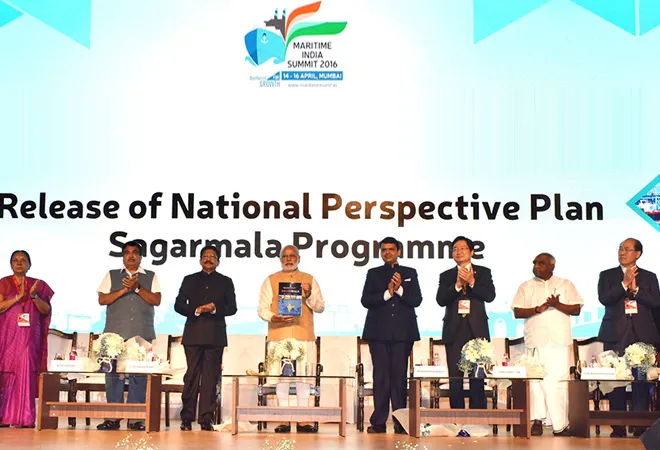
मार्च 2015 मध्ये भारत सरकारने (GOI) सागरमाला कार्यक्रम सुरू के
Closing the skills gap is essential to ensure that blue economy growth delivers durable, high-value, and equitable employment for coastal communities.
SIDS can strengthen Blue Economies by empowering coastal communities in policy, conservation, and innovation
With India’s growth story catching global attention, enhancing its shipping and logistics footprint becomes imperative
India’s drive to modernise and digitise its port infrastructure demands the urgent integration of robust cybersecurity measures, essential to safegu
म्यानमारमधील सितवे बंदरावर प्रभावीपणे नियंत्रण ठेवल्य�
Effectively managing Sittwe Port in Myanmar will allow India to play a vital role in promoting regional security and stability while also forging valu
If Sagarmala is to succeed, it must define steps to manage and contain pollution.
China’s maritime economic initiative, the 21st Century Maritime Silk Road (MSR) that is part of the larger One Belt One Road (OBOR), has been under considerable international focus recently. India, for its part, has remained non-committal despite China’s charmed offensive. However, with the signing of the Trans-Pacific Partnership and the proposed Transatlantic Trade and Investment Partnership, both of which exclude the growing economies of I

This paper examines India's maritime development pathway through the lens of the Blue Economy within the framework of Viksit Bharat 2047. Drawing on India's maritime legacy, it analyses how government-led initiatives such as Sagarmala, Maritime India Vision 2030, and Maritime Amrit Kaal Vision 2047 are strategically transforming the sector. The paper outlines the key components of the Blue Economy, focusing on port-led development and maritime in
India is strengthening its maritime presence and global trade links. New initiatives aim to boost shipbuilding and shipping capacity. India is also focusing on sustainable practices and digital transformation in its ports. These efforts position India as a key player in global maritime security and economic stability, fostering cooperative growth and reliable supply chains for many nations.
Port cities are playing an increasingly vital role in driving economic growth within the blue economy. This paper examines how these cities, particularly in the Global South, can strike a balance between economic development, social equity, and environmental sustainability. It emphasises the imperative of integrating local contexts—especially the needs of indigenous peoples and local communities—as well as cultural heritage into urban plannin
समंदर की गहराइयों में व्यापार की धड़कन बसती है और आज भी दुनिया के चार-पाँचवें से ज़्यादा माल इन्हीं लहरों के सहारे चलता है लेकिन जब भू-राजनीतिक तनाव इन जलमार्गों को झकझोर र�