6 results found
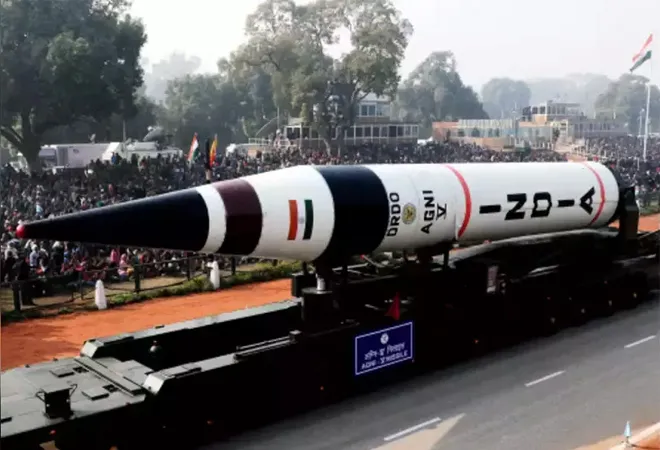
The 160 warheads and new delivery vehicles that India possesses are enough to convey resolve to opponents and make deterrence credible
China’s nuclear weapons arsenal has grown and modernised over the recent years, and current estimates say the country has 350 operational warheads ready for delivery, over 248 land-based ballistic missiles, and 72 sea-based ballistic missiles. China also has 20 nuclear gravity bombs and additional warheads intended to be armed on land- and sea-based missiles. This brief outlines a history of China’s nuclear weapons programme, scrutini

MIRV is a complex technology, and India’s test this week puts it among a small group of countries that have managed to develop it.
Ever since a crestfallen Dr. A Q Khan admitted sheepishly on PTV that he had masterminded the sale of nuclear designs and materials to other countries, there has been a tirade of articles and letters to the editor berating Pakistan for nuclear proliferation. However, no real analysis has emerged about the implications for India, particularly of the likelihood of Pakistani nuclear warheads falling into Jihadi hands.
Despite testing and confirming the acquisition of Kinetic Energy Weapons (KEW)—an integral part of strategic defence systems that are an alternative to nuclear warheads—India remains in need of a more robust military space programme. The country’s principal rival in the space military arena, China, has significantly more expansive and diverse capabilities. Although KEWs as part of its counter-space programme are not a panacea for India’s
India's nuclear doctrine and strategy still continues to harp on the mantra of "minimum credible deterrent", even though Pakistan has now overtaken India in the number of nuclear warheads it possesses. Some analysts say that there are no signs that the Pakistani buildup is slowing down.