This article is based on a paper that was published in ORF earlier this year. Read the paper
Spread over 3.477 million km2 the South China Sea is among the most resource-rich marine areas in the world. It is known to have 190 trillion cubic feet of natural gas and 11 billion barrels of oil reserves. It is also home to diverse ecosystems – with 3,000 species of fish and 600 species of coral reef.
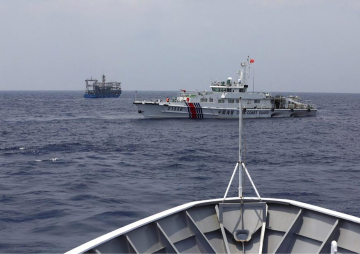
In recent times, the South China Sea has been in the limelight due to China’s claims over the waters and what some refer to as Chinese military expansionism, but its environmental impact remains underexplored. As one of the world’s busiest international shipping lanes, the South China Sea’s ecological system is unravelling amidst rampant overfishing, dredging for construction of artificial reefs and hydrofracking by China.
Although other players in the region have also undertaken environmentally damaging activities (with the exception of dredging) in the waters, the scale of China’s activities is immense and advanced, and has caused the most visible impairments.
Fishing
Fisheries in the South China Sea are a major source of food security and employment for millions of people. However, decades-long, unabated fishing has resulted in declining fish stocks. China has lost half its coastal wetlands, 57% of mangroves and 80% percent of coral reefs in its exclusive economic zone (EEZ). In the South China Sea, which accounts for about 12% of the global catch per year, fishing stocks have plunged by a third over the past 30 years and will fall further by 59% by 2045. This threatens food security in the densely populated region.
Fisheries in the South China Sea are a major source of food security and employment for millions of people. However, decades-long, unabated fishing has resulted in declining fish stocks. China has lost half its coastal wetlands, 57% of mangroves and 80% percent of coral reefs in its exclusive economic zone (EEZ)
In order to sustain fisheries demand, China has expanded its fishing fleets to reach as far away to the EEZs of Argentina, Somalia and South Korea. Many small Chinese vessel owners are given fuel subsidies for this. Chinese fishermen are alleged to have illegally harvested corals, marine turtles, clams, sharks, eels and other marine animals from the waters of other countries on several occasions.
As fish stocks near coastal areas deplete and the catch per unit effort (CPUE) also sharply decline, fishermen are moving farther deeper into the sea and utilising techniques such as cyanide and dynamite fishing, causing further damage to the marine ecosystem.
The South China Sea is one of three “epicentres” that is touted to be severely impacted by climate change and rising sea temperatures. Rising ocean-surface temperatures will force fish stocks to migrate farther north towards the East China Sea and the Sea of Japan, making fishing harder for countries like Vietnam, Malaysia, Indonesia and the Philippines that lack the resources to fish in distant waters.
Dredging and construction
Since 2015, China has reclaimed land in the islands and reefs within what it calls the “nine-dash” line, either by increasing their size or creating new ones (such as the Subi Reef on the Spratly Islands). It has constructed ports, military installations and airstrips – particularly in the Paracel and Spratly Islands. It has deployed fighter jets, cruise missiles and a radar system on the Woody Island in the Paracels.
Dredging on these islands is primarily responsible for the destruction of corals and reef flats, which sustain the entire marine ecosystem. In fact, 27% of shallow reef area of the seven reefs in the South China Sea have been permanently lost. Dredgers send up plumes of sediment and corrosive sand, which wash back into the sea and smother the species underwater by blocking sunlight and oxygen. Sediments from dredging of reef limestone reduce growth rates, cause lesions and inhibit sexual reproduction among species.
Hydrofracking
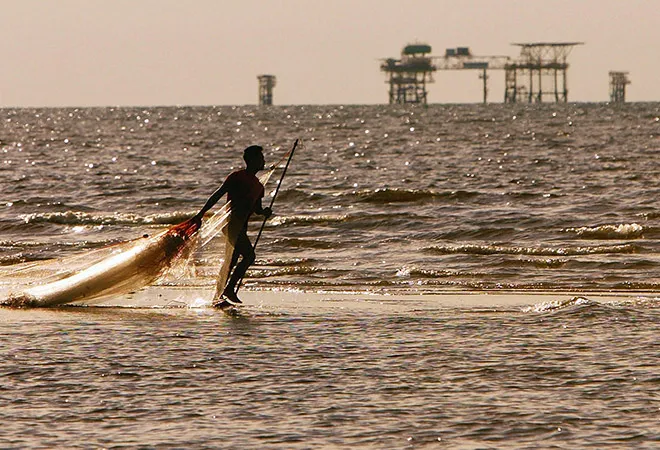
China has carried out oil and gas exploration activities in the region, mostly in the EEZs of other countries. In 1994, Crestone Energy Corporation, along with the China National Offshore Oil Corporation (CNOOC), commenced exploration activities in the Wan-an-bei-21 (WAB-21 block) in the Spratly Islands, which Vietnam claimed to be in its continental shelf.



 PREV
PREV