Relations between India and Korea have undergone major changes in recent years. Since President Moon Jae-in announced the “New Southern Policy (NSP)” in 2017, there have been significant changes in the South Korean government’s relationship with the Indian government. As part of a broader plan to bridge the gaps in terms of diplomatic, strategic, trade and cultural ties with its neighbors, the South Korean government has prioritized ties with India, widely viewed as a prominent power in South Asia. The Government of India and the Republic of Korea have developed a strong, multi-dimensional partnership that s issues ranging from economy and security to energy and anti-terrorism. Increasing reliance on maritime trade shows a shared commitment to freedom of navigation and undisturbed trade on the high seas. Our two countries' advocacy for an open, inclusive and free norms-based order underscores the shared need for an inclusive security and economic system in the Indo-Pacific region.
The main reason for the improved bilateral relations is, of course, economics. Trade and economic relations between India and South Korea have grown significantly over the past decade, with annual bilateral trade reaching $21.5 billion in 2018 (over $20 billion for the first time ever). In an attempt to improve bilateral economic relations, India and South Korea are seeking to expand a comprehensive economic partnership agreement (CEPA), with an ambition to increase bilateral trade to $50 billion before 2030. set cool goals.
The Government of India and the Republic of Korea have developed a strong, multi-dimensional partnership that s issues ranging from economy and security to energy and anti-terrorism.
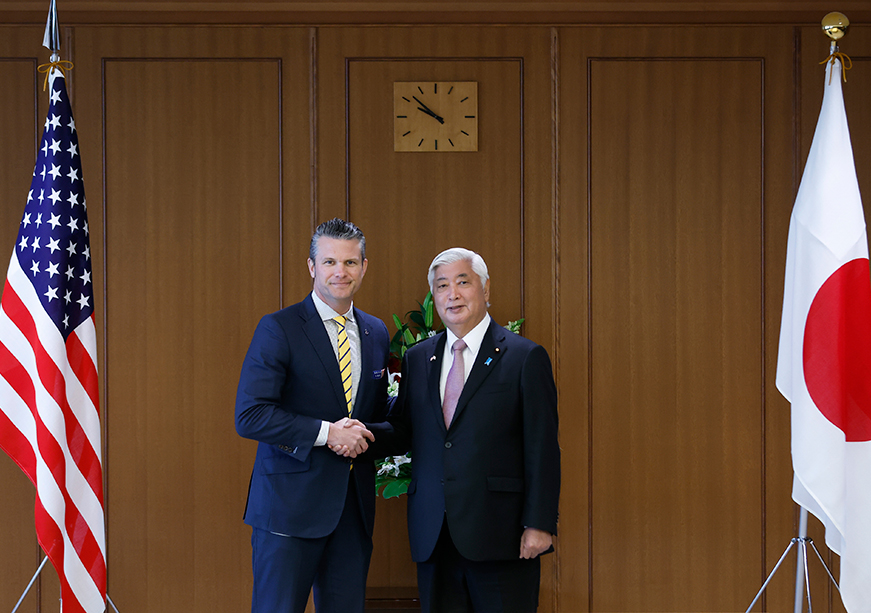
However, the areas where cooperation is most visible are in the areas of defense and security. After Indian Defense Minister Rajnath Singh's visit to Seoul in August 2019, there has been a strong perception within the Indian government that the strategic partnership with the Korean government is growing. Minister Singh's visit yielded two agreements that will have a profound impact: first, a commitment to expand logistical support to each country's navies, and an agreement to deepen defense education exchanges. The promise of naval logistics support is noteworthy, with India currently having such agreements with a select group of countries, including the United States, France, Japan, Australia and Singapore. For some time now, India and South Korea have agreed to jointly produce and export military equipment, improve information sharing, and increase cooperation in the cyber and space domains.
India's introduction of South Korean military equipment has helped advance defense and security relations. In November 2019, the Indian Army introduced the K9 VAJRA-T 155mm/52, a caterpillar self-propelled howitzer that has its roots in the South Korean military's main beam, the K9 self-propelled howitzer. Two years ago, South Korean defense contractor Samsung-Techwin and India's Larsen & Toubro signed a sale agreement for 100 self-propelled artillery units. In February 2020, 10 Korean companies participated in Def-Expo 2020. Hanwha Defense, Korea Aerospace Industries, LIG, Hyundai Rotem and other South Korean companies displayed their equipment in an effort to attract potential customers. Meanwhile, the India-Korea joint task force has begun to explore military systems and equipment to be produced in India with the participation of the South Korean defense industry. Experts in India predict that efforts to jointly produce military equipment will in particular stimulate strategic partnerships between the two countries.
Korea’s Indo-Pacific Expansion Activities
According to the views of many Indian experts, Korea's expansion activities toward southern countries are driven by its desire to expand relations with key Asian countries. Trade is still a significant component of bilateral cooperation as South Korean companies rush to move manufacturing plants out of China (following rising business risks, rising labor costs and a pandemic-induced recession), but the South Korean government has It has also been eager to explore strategic opportunities with India also recognizes the importance of Korea as a bridge to East Asia. India's political elite is leading the Korean government to lead economic growth and to ensure peace, stability and security in the Asia-Pacific region, Prime Minister Narendra Modi's 'Act-East' ' I see it as the key driving force behind the strategy. Going beyond the 3Cs (culture, connectivity, commerce), which are the persistent characteristics of India's regional political activities, India intends to cooperate with Korea in other strategic areas. As there is no realm of discord between the two countries, the South Korean government appears to be an ideal defense and security partner to the Indian government.
India's political elite is leading the Korean government to lead economic growth and to ensure peace, stability and security in the Asia-Pacific region, Prime Minister Narendra Modi's 'Act-East' ' I see it as the key driving force behind the strategy.
According to some views, the Indian Prime Minister's visit to Seoul in February 2019 reaffirmed the special position of the Republic of Korea in India's diplomatic matrix. The seven agreements signed at the time of the visit, including infrastructure development and cross-border and international crime prevention, testify to the growing importance of the Korean government in India's strategic calculations. Prime Minister Modi, who had a separate meeting with President Moon Jae-in at the G20 summit held in Busan in June 2019, said that South Korea's New Southern Policy and India's Act East Policy are increasingly converging towards a stable, safe and prosperous Indo-Pacific Order. point was re-emphasized. Recalling President Moon Jae-in's visit to India in 2018, Prime Minister Modi said, "The coordination of the Indian and Korean approaches in the region is deepening and strengthening the Special Strategic Partnership." As he put it, the essential premise of the strengthened India-Korea partnership is a shared vision of development in Asia and a roadmap aimed at people, peace, prosperity and strategic balance.
Possibility of Maritime Partnerships
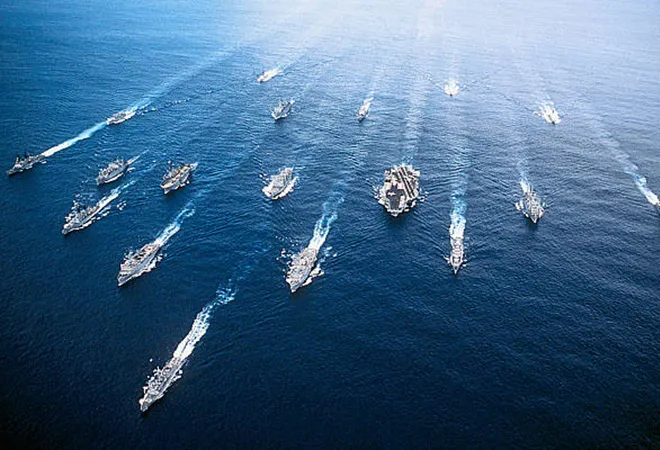
Korea's New Southern Policy reveals areas where maritime cooperation between the two countries can be further developed. These include shipbuilding (an area where India and South Korea already have Memorandum of Understanding), joint capacity building, maritime realm awareness, humanitarian aid and disaster relief, search and rescue, marine pollution, anti-piracy, anti-terrorism and anti-trafficking , and prevention of marine pollution. Considering the differences with China, India focuses on the Lakshadweep archipelago to the west and the Andaman and Nicobar Islands to the east, and naval forces in coastal and island areas of the mainland. , has been exploring ways to improve the capabilities of the Coast Guard and Air Force. For both of these systems, Korea can make a significant contribution to capacity building.
Another area with potential for cooperation is maritime domain awareness (MDA). The Indian Navy has also established an Information Fusion Center (IFC) in the Indian Ocean region to increase situational awareness in the maritime commons. Launched in 2018, the center processes radar and sensor information from participating countries, providing information to partners, including all members of the Indian Ocean Rim Association. India has been asking for support from offshore countries, and it would be helpful if South Korea were to participate in this project. The South Korean government could start by sending a liaison to the IFC, or it could provide assistance to India in improving the capacity of a small island nation in the Indian Ocean. The Korean government can also help increase India's capacity to provide humanitarian aid and disaster relief (HADR) in the region. This could gradually be extended to a plan of maritime governance of a wider coastal area.
The Indian Navy has also established an Information Fusion Center (IFC) in the Indian Ocean region to increase situational awareness in the maritime commons.
Naval capacity enhancement is the fourth area of maritime cooperation between India and the Republic of Korea. Under Project-75I (India), South Korean firm DSME's response to the Indian Navy's Expression of Interest (EoI) for six state-of-the-art conventional submarines has already thrilled Indian observers. India's state-owned company, Hindustan Shipyard limited, will also work with a South Korean-nominated shipyard on a joint shipbuilding project.
However, operational cooperation should be further expanded. Visits by Indian ships to Korea were intermittent. In June 2021, the Indian naval battleship INS Kiltan conducted military exercises with South Korean ships in the East China Sea. Two years ago, the Indian naval ships Kolkata and Shakti were sent to Busan to participate in the ADMM-Plus Maritime Security Field Training Exercise (ADMM) of the ASEAN Extended Defense Ministers' Meeting as part of the Eastern Fleet's deployment in the South China Sea. had visited
The South Korean government appears reluctant to over-expand its naval forces in the Indian Ocean. In January 2021, after Iran took control of a Korean tanker in the Persian Gulf, it dispatched a acclaimed anti-piracy unit to the Strait of Hormuz. However, South Korean battleships have avoided anchoring in ports in the Indian Ocean (the last time a Korean battleship visited an Indian port was in January 2017).
The South Korean government is prepared to forge partnerships with India to achieve its desired end state, but will cease militarily provocative moves in coastal areas.
Another opinion is that India is not completely convinced that South Korea has necessarily malicious political motives for China's strategic expansion in South Asia. In the view of some South Korean scholars and policy makers, China's growing economic interests in the Indian Ocean justify a corresponding Chinese naval presence in the region. The Indian government's proposal that South Korea could help reduce China's influence in the Indian Ocean is being received with skepticism from the South Korean government. Clearly, South Korea is eager to develop security relations with India, but this is not to stifle Chinese power. The Korean government seeks a 'strategic balance' in Asia, but does not want conflict with any power. The South Korean government is prepared to forge partnerships with India to achieve its desired end state, but will cease militarily provocative moves in coastal areas.
Resolving Constraints
Nevertheless, India and South Korea are likely to continue to seek opportunities to cooperate with India. Despite its conservative approach to military operations in the Indian and Western Pacific, the South Korean government is likely to do more to prepare for a possible confrontation in the littoral region, given the blow the Russian-Ukrainian war will inflict on the Asian arena. In fact, President Yun Seok-yeol's announcement last month that South Korea would consider joining the Quad to bolster its military position, rumors circulating among strategists that South Korea may be on the path to a strong security posture in the Indo-Pacific region. spread If that happens, India will be prepared to expand maritime cooperation with the South Korean government beyond the realms of non-traditional security.
However, the partnership in the maritime domain between India and South Korea will depend to a large extent on the United States' willingness to continue to contribute to Asia's strategic security. Following the war in Ukraine, the US government appears to be preoccupied with a Russian invasion of Europe. Should the Biden administration attempt to leave Asia's maritime arena, particularly the Indian Ocean (which is by far the most important to India), it would adversely affect the trajectory of Indo-Korea ties. Conversely, the US government could play a key role in facilitating partnerships between the Indian and South Korean governments, making a significant contribution to peace and stability in the Indo-Pacific region.
This commentary originally appeared in KIMS.
The views expressed above belong to the author(s). ORF research and analyses now available on Telegram! Click here to access our curated content — blogs, longforms and interviews.


 PREV
PREV