Last week saw the presence of German Defence Minister Boris Pistorius in India as he underlined his nation’s commitment "to support our (Germany’s) partners, our reliable partners", such as India. He also made the rationale clear when he suggested that Germany can and ought "to do more in that region (Indo-Pacific) in partnership with India … because we are approaching times we can't really predict what's going to happen in the next few years". New Delhi reciprocated the gesture when Indian Defence Minister Rajnath Singh said that, "India and Germany could build a more symbiotic relationship based on shared goals and complementarity of strengths—skilled workforce and competitive costs from India and high technologies and investment from Germany."
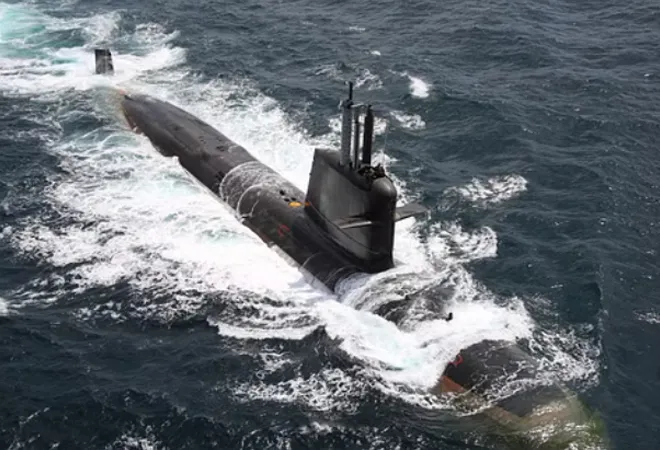
Perhaps in that spirit and in the presence of Pistorius, Germany’s ThyssenKrupp AG and India’s Mazagon Dock Shipbuilders Ltd. signed a Memorandum of Understanding to jointly bid for constructing submarines for the Indian Navy. Though the German Defence Minister reiterated that the process relating to the proposed procurement of six submarines is not yet complete, he strongly pitched for the German industry being at a "good place" in the race for the contract. He was also categorical that "this would be a big and important contract, not only for German industry but also for India and the Indian-German strategic partnership".
This is a new Germany at play here, and as the strategic realities evolve rapidly in Europe and beyond, Berlin’s attempt to carve a new role for itself in global politics is coming into ever sharper relief. The old strategic reticence has given way to a new reassurance about Germany's and Europe’s place in the global order. Russia’s war against Ukraine has forced German foreign policy thinking to jettison the post-Second World War constraints and allowed for the possibility of the emergence of Germany as a critical strategic actor on the global stage.
The speed and scale of the shift in German strategic thinking have been quite remarkable. Even as the rest of Europe was beginning to acknowledge the challenges posed by China and Russia to the global order, Germany was reluctant to join the chorus, given its strong economic ties with China and energy dependence on Russia.
Russia’s war against Ukraine has forced German foreign policy thinking to jettison the post-Second World War constraints and allowed for the possibility of the emergence of Germany as a critical strategic actor on the global stage.
The German Chancellor, Olaf Scholz, has been a revolutionary figure in so far as his drive to reimagine his nation’s strategic map despite facing criticism that his government had dithered in supporting Ukraine. Scholz has put forward an ambitious agenda for a substantial increase in defence spending and military aid to Ukraine, the largest in absolute terms for any European Union country. For a nation that has been reluctant about the idea of military power, it is indeed a leap of faith to be sending Leopard tanks to Ukraine. For Berlin, Ukraine’s invasion has been a historical turning point. Germany’s re-evaluation of its security posture is an inflection point in post-Second World War European thinking.
For India, this is good news, as this shift in Germany’s strategic posture aligns well with India’s willingness to play a larger global role, one that shapes the international order and is not merely shaped by it. The changing balance of power and concomitant emergence of conflicts in Asia and Europe, as well as weaponised interdependence in today’s globalised world, have posed serious challenges for both German and Indian foreign policy. The two nations have begun to acknowledge, perhaps a bit belatedly, that to shape and strengthen the multilateral rules-based order that has served both well, they must first build mutual trust and understanding. And with Germany recognising the centrality of the Indo-Pacific in the emerging geopolitical order and India’s critical role in shaping the regional equilibrium, this partnership has managed to gain momentum that few would have anticipated even some years ago.
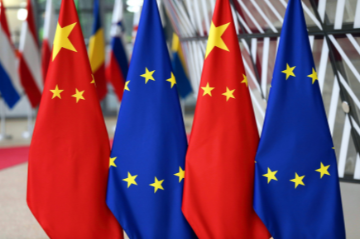
India figures prominently in Germany’s renewed Asia outlook, and its Guidelines for the Indo-Pacific region provide the outline for this engagement. While championing the "rules-based order", "inclusivity" and "multipolarity", Germany has mentioned that diversifying and deepening its relations are its top interests. Berlin has laid stress on the stability of supply chains and trade routes linking Europe and Asia, given their importance to its exports, which are vital for the economy. China’s economic growth, once seen as an opportunity, is now increasingly considered the rise of a systemic rival. The symbolic deployment of its frigate Bayern to the Indo-Pacific with a stopover in Mumbai showcases Berlin’s changing alignment with India as well as the potential for more substantial collaboration.
The two nations have begun to acknowledge, perhaps a bit belatedly, that to shape and strengthen the multilateral rules-based order that has served both well, they must first build mutual trust and understanding.
As the German Defence Minister has stressed, it’s not in Germany’s interest for India to remain dependent on Russian weapons. Acknowledging that "it is not up to Germany to change that (Indian dependence on Russian weaponry) on our own", Pistorius was keen to send a message during his trip that Germany is willing to emerge as India’s reliable defence partner in its P-75I project, whereby India is seeking to build six conventional submarines featuring air-independent propulsion technology.
India, too, remains keen on diversifying its defence partners, and the West is coming to terms with the reality that keeping New Delhi out of high-end defence technology has had a deleterious impact on the West’s own ability to shape the global order. Germany has been the last of the major European nations to recognise the new strategic alignments, but it is now likely to go all out to retain its space in an evolving strategic flux. New Delhi should make the most of this opportunity.
This commentary originally appeared in BQ Prime.
The views expressed above belong to the author(s). ORF research and analyses now available on Telegram! Click here to access our curated content — blogs, longforms and interviews.



 PREV
PREV