-
CENTRES
Progammes & Centres
Location
7 results found
United States and India must ensure their current trade and tariff issues do not lead to serious strategic disagreement. The two cannot afford to miss the emerging geopolitical realities driven by China’s growing power.
There are growing tensions in New Delhi’s engagement within this arrangement and its other alignments.
Together, Russia, India and China occupy around 50 percent of Asia's landmass. The three countries constitute some of the largest economies in Asia. There are a lot of potential synergies among the three countries, making a compelling case for their collaboration.
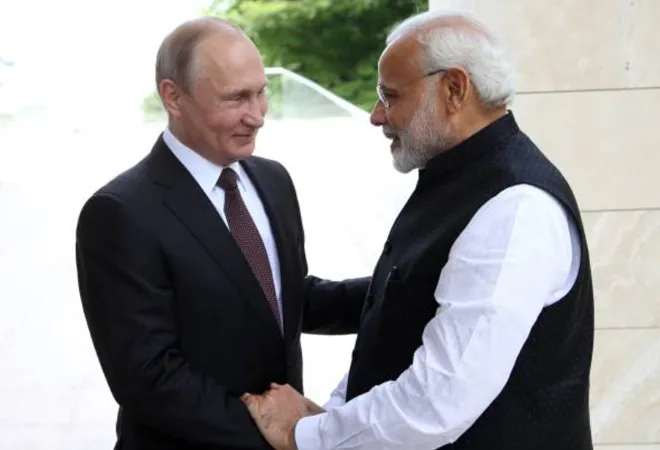
Despite the positive signs in India-Russia ties, one must be careful not to overestimate their significance when considered alongside some long-term trends in international affairs such as the relations of the US and its closest challengers China and Russia.
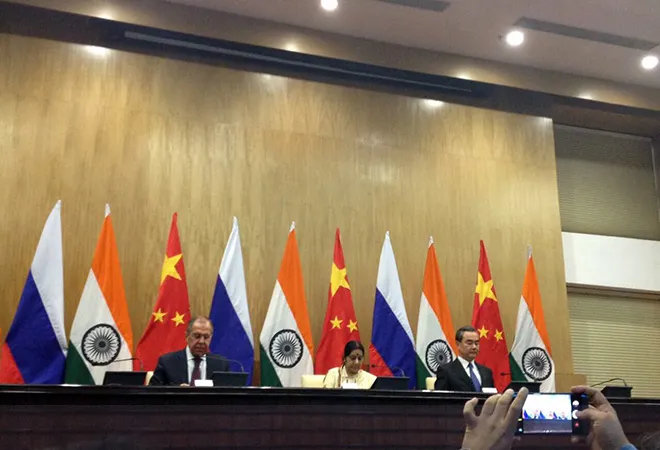
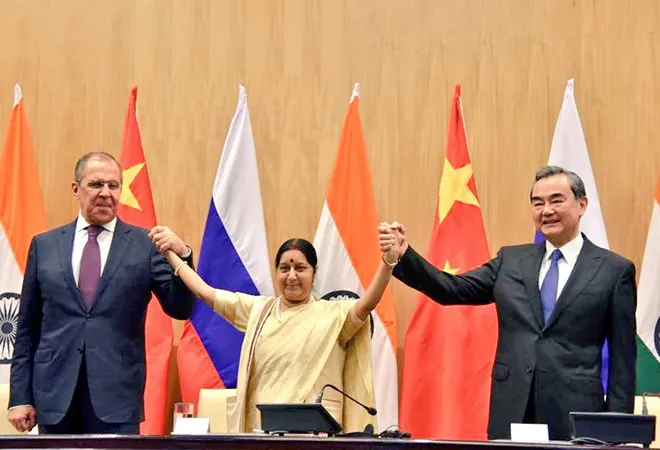
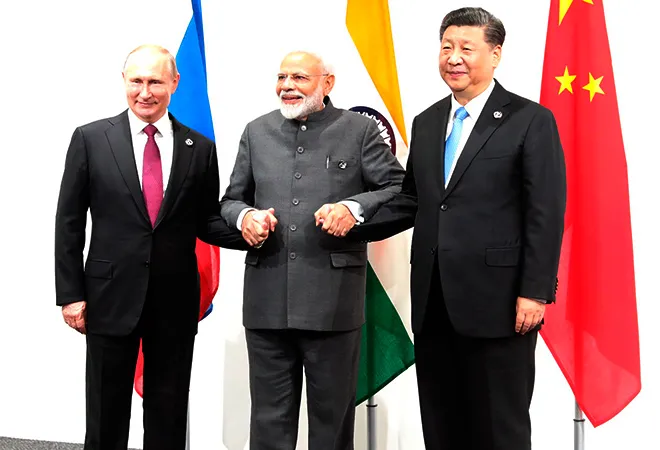
The Russia-India-China trilateral meet is New Delhi’s attempt to overcome challenges in ties with Moscow and Beijing

It's time economics replaced politics as the key driving force of the Russia-India-China (RIC) trilateral. The Big 3 of Asia has a major opportunity to create and drive an Asian Trading Region.